Revenue reconciliation: why reported revenue never matches the ledger
Published on :
August 10, 2026

Nicolas Marchais is co-founder and CEO of Phacet. After seven years at Spendesk, he built Phacet as the agentic layer that orchestrates across ERP, banking and email systems. Reliable, auditable, cross-system, what he calls a Finance Workforce.

Revenue reconciliation is a financial control process that arbitrates between the several systems recording the same sales, so the revenue a business reports can be defended line by line against the general ledger. It is not a comparison of two columns. It is a decision about which system tells the truth when they disagree.
Every finance team meets the same moment at close. The point of sale says one number. The payment processor says another. The booking platform sends a third, already net of commission. The ledger holds a fourth. Each system is internally correct, and none of them agrees. The gap is not a data quality accident. It is the structural consequence of running revenue through five systems that were never designed to arbitrate between each other.
Key takeaways
- Revenue reconciliation compares recorded revenue against the source systems that generated it, and it is also called sales reconciliation.
- Most businesses hold at least five revenue figures at once: point of sale, payment processor, marketplace or channel, billing system, and general ledger.
- Four mechanisms create almost every revenue discrepancy: cut-off timing, gross versus net reporting, chargebacks and credit notes, and deferred revenue.
- ARR is higher than recognised revenue by design, because it annualises contracts while accounting recognises service as it is delivered.
- Smartbox, operating in 14 countries with 800 employees, multiplied payment to invoice reconciliation productivity by four using Phacet agents.
What revenue reconciliation actually covers
Revenue reconciliation verifies that the revenue recorded in the general ledger matches the underlying transactions that produced it, across every system that touched those transactions. The scope is wider than most definitions suggest. It covers the sales themselves, the cash actually received, the fees deducted along the way, the refunds issued after the fact, and the portion of billed amounts that cannot yet be recognised.
The term overlaps with several neighbours, which is part of why the process is so often underscoped. Bank reconciliation matches ledger entries against the bank statement. Cash reconciliation matches takings against declarations. Revenue reconciliation sits above both: it establishes what the business actually earned in a period, which is a different question from what it collected.
This is a control activity, not a data activity. The distinction matters, because it determines who owns it. A financial reconciliation control exists to produce an assertion someone will sign, and to leave behind the evidence supporting that assertion.
You do not have one revenue, you have five
Here is the part the standard four step guides skip. When your reported revenue and your ledger disagree, the instinct is to look for an error. Usually there is none. Each system is measuring a real thing, correctly, according to its own rules.
A restaurant group closing the month holds the Z report from each site, the settlement file from the card acquirer, the payout statement from the delivery platform, the invoicing system, and the ledger. Five numbers, five definitions, five timings. A hotel group holds the same structure with the property management system and the OTA statements in place of the delivery platform. A subscription business holds it with the billing engine and the CRM.
None of these systems is wrong. What is missing is the layer that decides, transaction by transaction, which one governs and why the others differ. That layer is almost always a spreadsheet maintained by one person who understands the rules and has never written them down.
The practical consequence is that reconciliation cannot be delegated by handing someone two exports. Whoever does it needs to know that the acquirer reports gross and settles net, that the channel deducts commission before payout, and that the point of sale closes at 4am while the ledger closes at midnight. Those rules are the actual work. Matching is the easy part.
The four gaps that create the discrepancy
Almost every revenue variance traces back to one of four mechanisms.
Cut-off timing. Systems close on different clocks. A service delivered on the 31st and settled on the 2nd belongs to different periods depending on which system you ask. This is the single largest source of month end noise, and it resolves itself the following month, which is exactly why it gets ignored until an auditor asks.
Gross versus net reporting. Payment processors and marketplaces report on different bases. A PSP may show gross transaction value while depositing net of interchange and scheme fees. A booking platform may remit net of commission without ever showing you the gross. Recording the deposit as revenue understates the top line and hides the commission cost entirely.
Chargebacks and credit notes. These arrive after the period they relate to. A refund issued in March against a February sale sits in a different period from the revenue it reverses, unless someone links them explicitly.
Deferred revenue. Amounts billed in advance are a liability until the service is delivered. Annual prepayments, gift cards, deposits, and prepaid packages all create a balance that has to unwind on a schedule. Getting the schedule wrong does not show up in cash, which is why it survives so long undetected.
Why your ARR never matches accounting
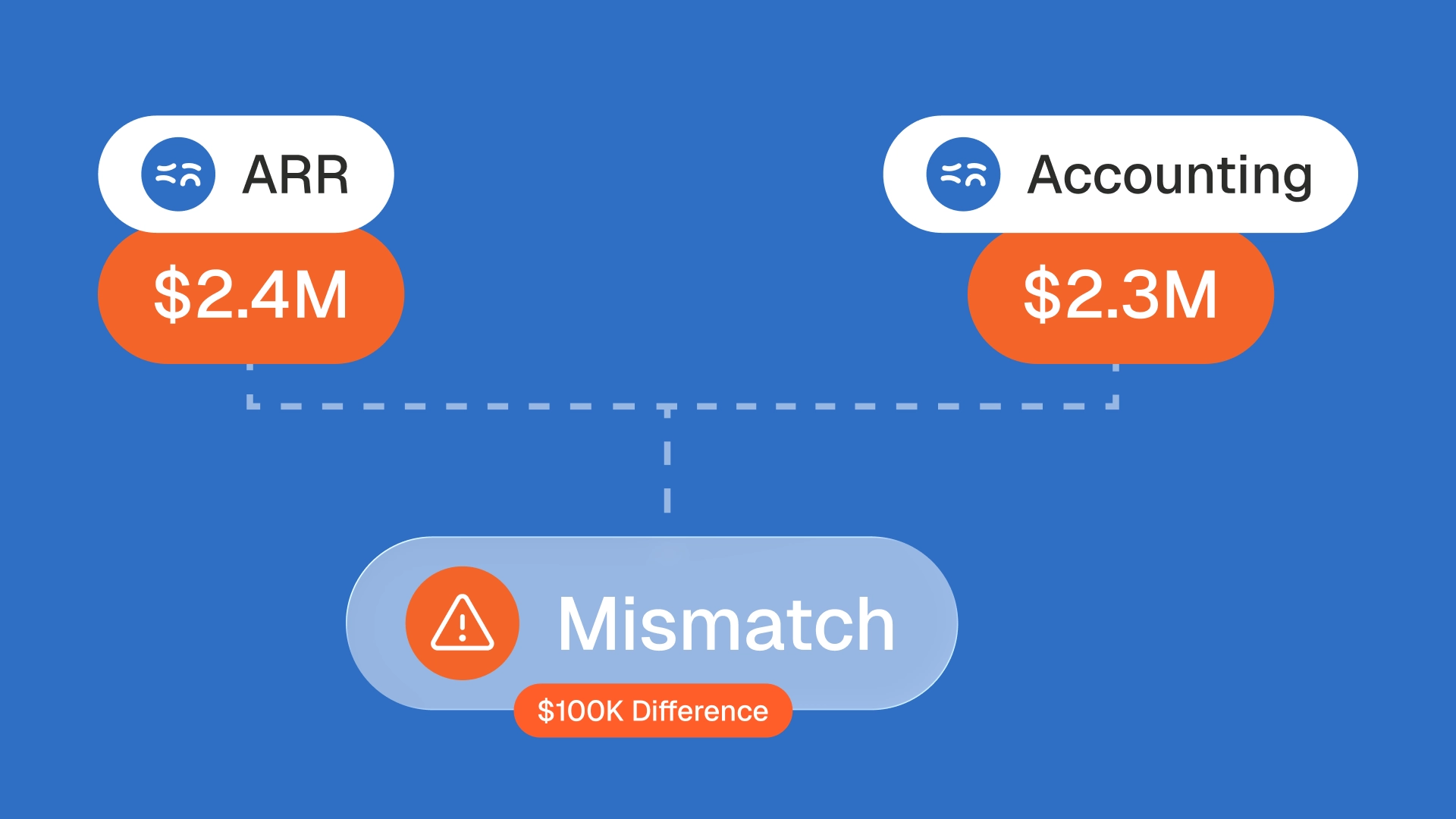
Ask a subscription business what its revenue is and you will hear a number. Ask its accountant the same question and you will hear a smaller one. Both are correct.
ARR annualises the value of active contracts at a point in time. Recognised revenue records service as it is delivered, over the periods it is delivered. The first is a forward looking run rate. The second is a historical accounting record. They answer different questions, and the difference between them is not an error to be eliminated.
The gap is structural and predictable. ARR excludes one time fees, setup charges, and professional services, which recognised revenue includes. ARR normalises a signed contract to a full year on the day it is signed, while recognition spreads it across the months of delivery.
Take a concrete case. A business signs a 24,000 dollar annual subscription on 15 December, plus 6,000 dollars of onboarding delivered in January. On 31 December, ARR shows 24,000 dollars, because the contract is active and annualised. Recognised revenue for December shows roughly 1,000 dollars, half a month of subscription, and nothing else. The onboarding fee never enters ARR at all, but it will appear in January revenue. Three legitimate numbers, one contract, and a variance of 23,000 dollars that has to be explained rather than corrected.
The problem is not the gap. The problem is being unable to explain it on demand. When an investor, an auditor, or an acquirer asks why the ARR in the board deck differs from the revenue in the accounts, the answer has to be a reconciliation, not an argument. That is what ARR reconciliation means in practice, and it is why accounting firms running due diligence rebuild it from source documents rather than trusting the dashboard.
What a controlled revenue reconciliation process looks like
A reconciliation you chase every month is not a control. A reconciliation that runs on its own and surfaces only what broke is.
The difference is where the human effort sits. In the chased version, someone exports files, aligns columns, hunts for differences, and reruns the whole thing when a number changes. In the controlled version, the matching rules are written down once, applied continuously, and the person only sees the exceptions.
Five things separate one from the other:
- The sources are defined, not discovered. Each system in scope is listed, with its reporting basis and its closing time.
- The matching rules are explicit. How a settlement maps to a sale, what tolerance is acceptable, what happens to partial matches.
- Exceptions are routed, not queued. A variance goes to whoever can resolve it, with the underlying documents attached.
- The evidence persists. Every match and every override leaves a trail an auditor can follow without asking a question.
- The cadence is continuous. Reconciliation runs through the period, so close starts from a short exception list rather than a blank page.
The fifth point is the one most teams underestimate. A monthly reconciliation gives you one chance to catch a problem, several weeks after it happened, when the people who could explain it have moved on. A continuous one catches the same problem while the transaction is still fresh and the supporting document is still findable. The work is identical. The timing changes whether it is a control or an archaeology exercise.
For a multi site operator, the mechanics of the first two points are covered in more depth in our guide to cash reconciliation software for multi-site businesses, and the bank side in bank reconciliation software.
Where automation earns its keep, and where it does not
Automation is genuinely good at volume matching, tolerance rules, and never forgetting a step. It is genuinely bad at deciding whether an unexplained variance is a timing difference or a loss. Any tool that claims otherwise is selling a black box to a function that cannot use one.
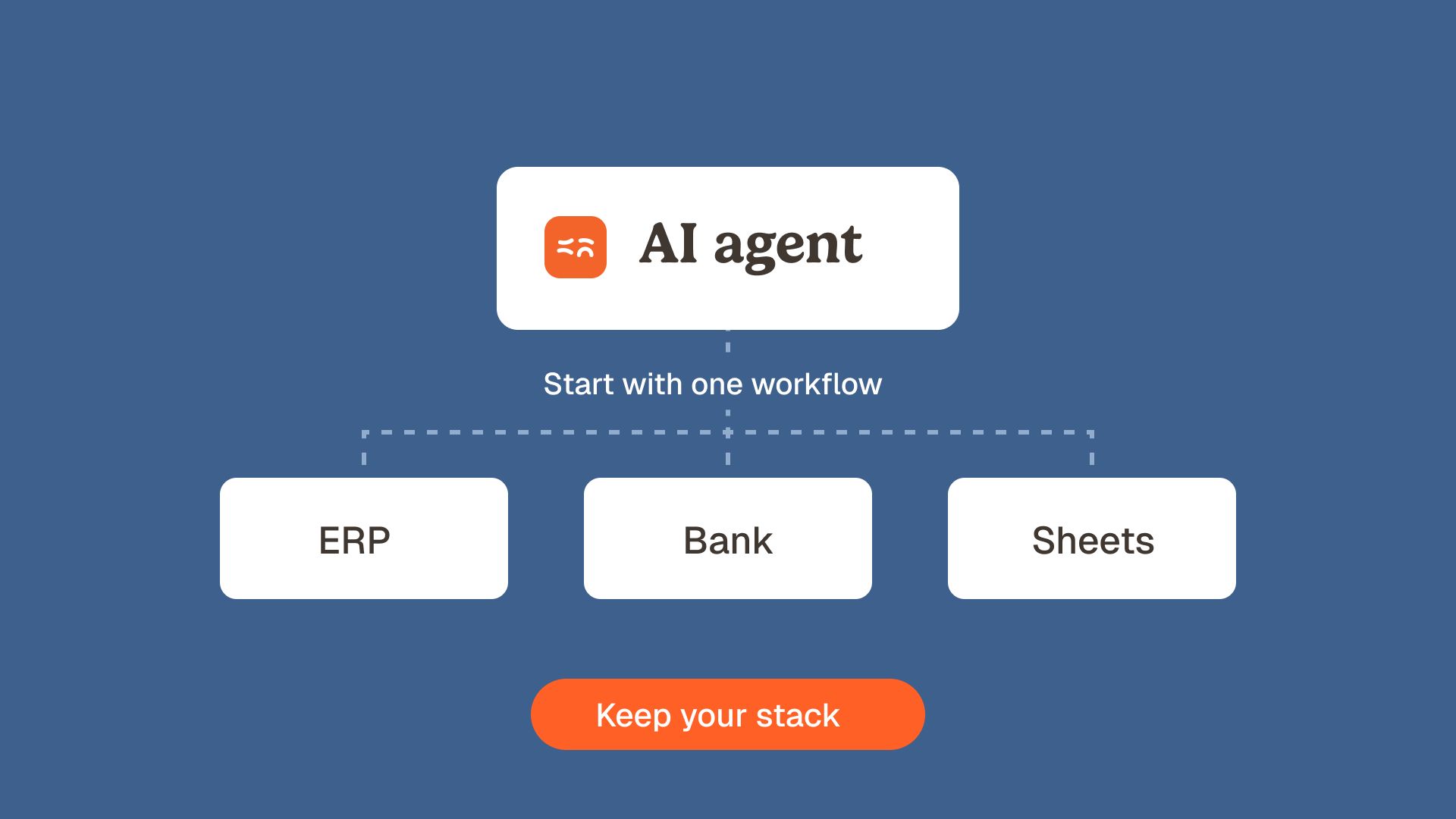
What a finance team should look for is not a matching engine. It is an agent that structures the incoming data, controls it against your rules, and hands you the exceptions with its reasoning attached. Your ERP records. Phacet controls.
That is what the revenue agents do in practice: bridging point of sale revenue to accounting, reconciling card payments against reported revenue, automating revenue recognition and cut-off, and rebuilding ARR from invoices when the dashboard number needs to be defended from source.
The results are measurable. At Smartbox, a European gift box leader with 800 employees across 14 countries, payment to invoice reconciliation productivity increased fourfold, with each use case operational within six weeks. "Phacet operates as an extension of our teams." Mourad Meraou, Operations Director.
In hospitality, where channel commissions make gross versus net reporting a daily problem, Astotel freed two hours a day across its 18 properties, with its purchasing director spotting errors she says she would never have caught alone. The full mechanics of that case are in our article on hotel revenue reconciliation and OTA commission automation.
Stop reconciling. Start controlling.
The revenue gap will not close, because it is not supposed to. Five systems measuring the same sales will always produce five numbers, and that is fine. What is not fine is being unable to explain the difference on the day someone asks.
The shift is from reconciliation as a monthly search to reconciliation as a standing control: rules written once, applied continuously, exceptions surfaced with evidence, and a finance team that reviews judgement calls instead of aligning spreadsheet columns. That is the difference between knowing your revenue and being able to prove it.
If you want to see where your own gaps sit, our financial control page walks through the agents built for exactly this work, and our guide to data reconciliation in finance covers the underlying logic.
Frequently asked questions
How do you reconcile revenue?
Reconcile revenue by listing every system that recorded the sale, defining the reporting basis and closing time of each, then matching transactions from the source system to the general ledger. Investigate variances against the four standard causes: timing, gross versus net, refunds, and deferred revenue. Document each resolution.
Does revenue need to be reconciled each month?
Monthly is the minimum for a credible close, but the reconciliation itself should run continuously rather than as a month end sprint. Phacet agents reconcile as transactions arrive, so month end starts from a short exception list instead of a full data pull. Businesses with daily settlement flows should reconcile daily.
What are the two types of reconciliation?
The two broad types are internal reconciliation, which compares records between a company's own systems such as point of sale and ledger, and external reconciliation, which compares company records against third party statements such as bank, acquirer, or marketplace files. Revenue reconciliation usually requires both.
Why is ARR higher than revenue?
ARR is higher because it annualises the full value of active contracts at a point in time, while recognised revenue only records service already delivered. A contract signed mid year adds twelve months to ARR immediately but contributes only the delivered months to the period. ARR also excludes one time fees.
Is ARR actual revenue?
ARR is not accounting revenue. It is a run rate metric that projects what annual recurring income would be if current contracts continued unchanged. Recognised revenue under accounting standards reflects delivered service in a specific period. Both are legitimate, but only recognised revenue appears in financial statements.
Latest Resources
Unlock your AI potential
Go further with your financial workflows — with AI built around your needs.