

Cash reconciliation software for multi-site businesses
Published on :
July 28, 2026

Nicolas Marchais is co-founder and CEO of Phacet. After seven years at Spendesk, he built Phacet as the agentic layer that orchestrates across ERP, banking and email systems. Reliable, auditable, cross-system, what he calls a Finance Workforce.

At a 10-restaurant group, every site closes its register at night, drops the cash with Loomis, and batches its card payments. On paper, the day balances. In practice, one site's Z-report reads €4,200, the deposit slip reads €4,020, and the bank credits €3,970 once card fees clear. Multiply that by 10 sites and 30 days, and finance is chasing gaps it cannot even see.
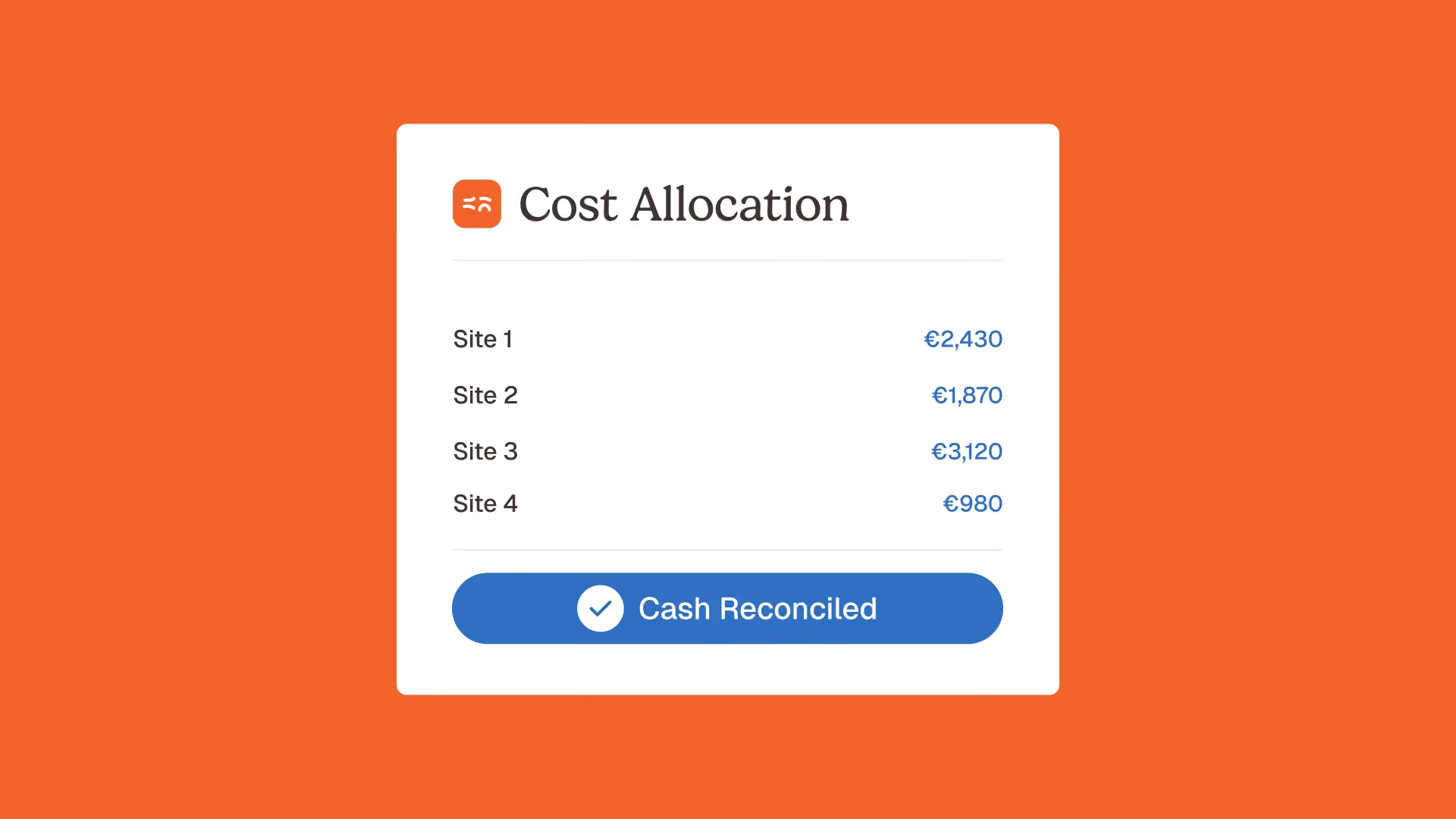
This is the job cash reconciliation software is supposed to do, and it is exactly where most tools built for treasury or month-end close leave multi-site operators behind. A Phacet AI agent that controls POS cash across all your sites reconciles what each location reported taking against what actually reached the bank, site by site, and flags the gap before it is buried in the consolidated books. At Smartbox, a retail group with 800 employees across 14 countries, that kind of reconciliation runs at four times the previous productivity.
What is cash reconciliation software?
Cash reconciliation software is a financial control tool that matches the money each site reports taking (POS totals, Z-reports and card settlements) against the cash and card amounts that actually reach the bank, then flags any gap before it is posted to the ledger. It turns a manual, site-by-site spreadsheet check into an automated control that runs daily.
The term carries two meanings, and the difference matters. In treasury and accounting, "cash reconciliation" often means matching bank statement lines against the general ledger, closer to bank reconciliation automation. For an operator running many locations, it means something more physical: proving that what each site rang up equals what was deposited, what the bank credited, and what your ERP records. This article is about the second job, the one that decides whether a missing €230 gets caught or written off.
Why multi-site cash reconciliation breaks down
The pain is not the matching itself. It is the number of moving parts, multiplied by the number of sites.
Each location produces a POS cash reconciliation trail every day: a Z-report (the end-of-day till total printed by the point of sale), a cash count, a deposit, and one or more card batches. Between the till and the bank, several things distort the number:
- Card settlement lag. A card batch rings up today but settles two or three days later, minus processor fees, so the bank amount never matches the till total on the same date.
- Loomis and cash-in-transit timing. A Loomis remittance collected on Friday can hit the account the following week, and the credited amount is net of collection fees.
- PSP and gateway fees. PSP reconciliation across Adyen, Stripe or SumUp introduces per-transaction deductions that quietly shrink the deposit.
- Unattributed variances. When the consolidated close finally shows a shortfall, no one can tell which site it came from, so it becomes a rounding note instead of an investigation.
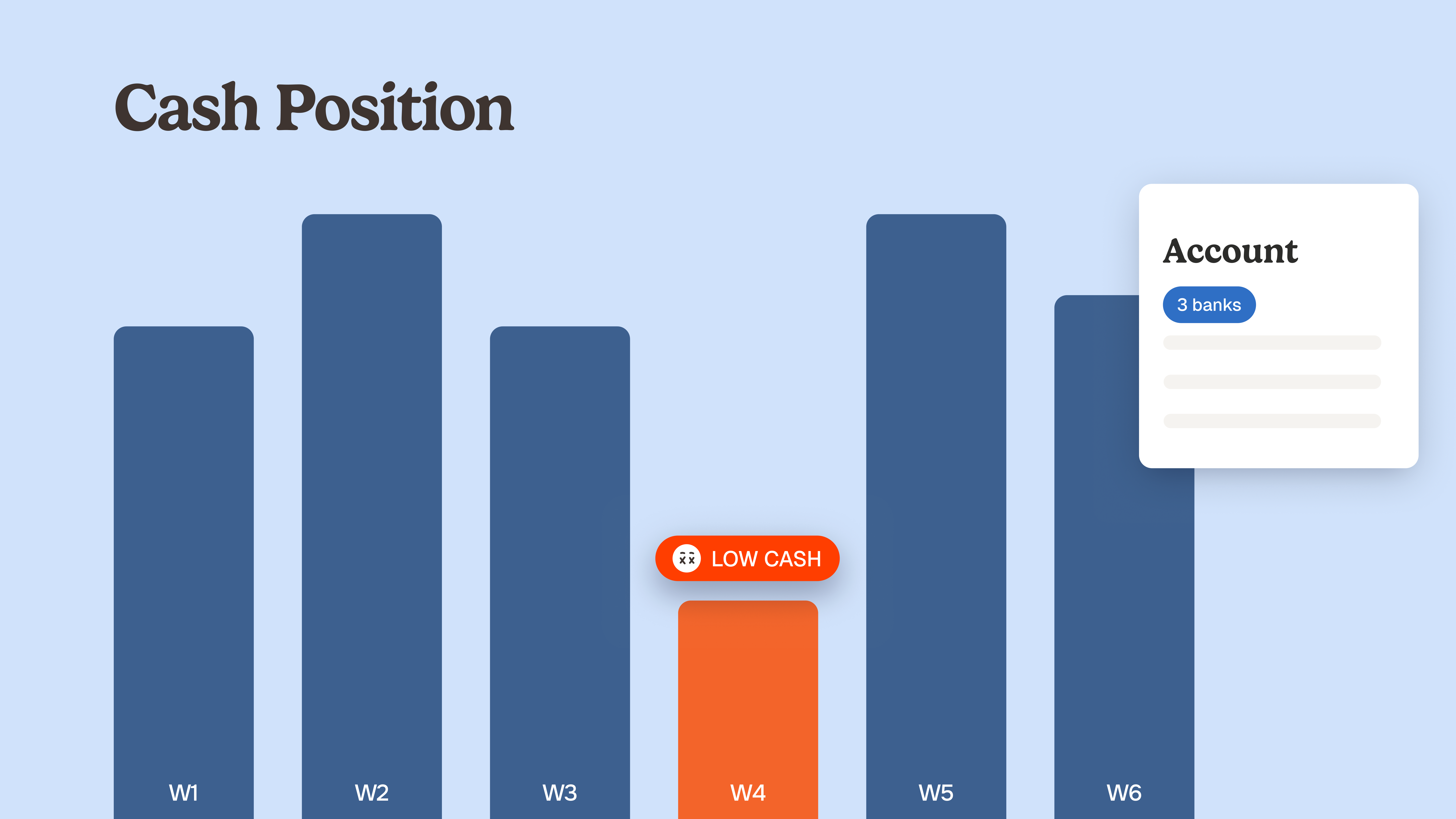
The result is a control that only works in aggregate. A €50 daily shortfall at one site out of twenty disappears into a group total that still looks roughly right. Over a year, that is real money, and it is exactly the kind of leakage manual reconciliation cannot surface.
Manual versus automated cash reconciliation
Manual reconciliation ties up finance staff and still misses site-level gaps, because a person comparing dozens of Z-reports, deposit slips and bank lines cannot hold every timing rule in their head. Automated, agent-driven reconciliation applies the same logic to every site, every day, and routes only the true exceptions to a human.
The point is not speed for its own sake. It is that automation makes control continuous and site-specific, so a gap is caught the day it appears and attributed to the location that caused it.
What cash reconciliation software must do for a multi-site operator
Most reconciliation tools were built for a single set of books or a treasury desk. A multi-site operator needs a shorter, sharper list of capabilities:
- Ingest every site's cash trail automatically. Z-reports, cash counts, card batches and deposit records from each location, without manual re-keying.
- Match across the timing gaps. Handle card settlement lag, Loomis delays and fee deductions so the tool compares like with like, not raw totals.
- Reconcile at the line and the site level. Break a bank credit down to the batch and the location it belongs to, using semantic matching rather than rigid one-to-one rules.
- Flag the anomaly, not the whole day. Surface the specific site and amount that do not tie out, and leave everything that reconciles cleanly alone.
- Attribute variance before the close. Detect and assign a shortfall to its source location before it is posted, not after it is consolidated.
- Keep an audit trail per site. Every match, exception and adjustment traced and timestamped, so the number is defensible to an auditor.
That list reframes the category. The winning capability is not a faster month-end, it is control that reaches down to a single register on a single night.
How agent-driven cash reconciliation works
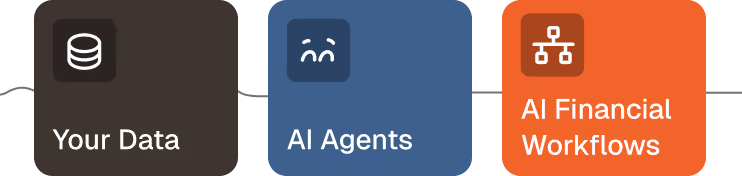
Phacet approaches cash reconciliation as a catalog of AI agents rather than a single black-box tool. An AI agent here is a specialized, finance-trained worker that runs a defined job end to end, with a human reviewing what it flags. Each agent follows the same three steps: it structures the raw data, matches it, then analyzes what does not tie out.
Underneath, the platform is what keeps these agents reliable in production. AI Match, Phacet's semantic matching engine, reconciles a bank credit to the right site and batch even when the amounts differ by fees or timing, and it exposes its reasoning at each step. A native audit trail records every transformation, and an AI confidence score tells the reviewer which matches to trust and which to check. The agent proposes, the human decides.
The results are measured, not theoretical. Astotel, an 18-hotel group, freed up two hours a day and recovered around €5,000 a year in errors on a single supplier once its controls ran automatically. La Nouvelle Garde, a group of 10 brasseries, reclaimed two days a week of finance time as its sites grew. You can browse the full catalog of finance AI agents or the cash reconciliation use case to see how the pieces fit together.
A control layer on top of your POS and ERP, not a replacement
Cash reconciliation software should sit on top of the systems you already run, not replace them. Phacet connects to your point of sale (Lightspeed, Zelty, Sunday), your cash-in-transit provider (Loomis), your payment platforms (Adyen, Stripe, SumUp) and your ledger (Pennylane, Sage, Cegid), then adds the control layer between them.
That means finance keeps its ERP as the system of record while gaining a daily, site-level check that the ERP alone never performed. Reconciled results flow back through the API, so the books stay clean without a migration or a rebuild. The same approach extends to adjacent jobs: reconciling card payments against reported revenue, bridging POS revenue into accounting, or matching payment gateway, bank and ERP flows. Hospitality groups can extend it further into hotel revenue and OTA commission reconciliation.
Frequently asked questions
What is cash reconciliation software?
Cash reconciliation software is a tool that automatically matches the cash and card takings each location reports against the amounts that actually reach the bank, then flags any discrepancy before it is posted to the ledger. For multi-site operators, it runs this check per site, every day, instead of once a month in aggregate.
What is the difference between bank reconciliation and cash reconciliation?
Bank reconciliation matches your bank statement against your general ledger to confirm the two agree. Cash reconciliation, in a multi-site context, goes one step earlier: it proves that what each site rang up equals what was deposited and what the bank credited, catching shortfalls at the register before they ever reach the ledger. The two are complementary controls, not the same task.
How do you reconcile cash across multiple locations?
You collect each site's Z-report, cash count, card batches and deposit records, then match them against the bank credits, accounting for card settlement lag and cash-in-transit fees. Doing this manually across many sites is slow and error-prone, which is why operators use agent-driven cash reconciliation to run the match automatically and attribute any gap to its source location.
How often should a multi-site business reconcile cash?
Daily. Reconciling once a month in a consolidated total hides site-level shortfalls, because a small daily gap at one location disappears into the group figure. A daily, per-site reconciliation catches the discrepancy while the trail (register, deposit, batch) is still fresh enough to investigate.
Can cash reconciliation software detect till shortages and shrinkage?
Yes. By comparing each site's reported takings against its actual deposits and bank credits every day, the software surfaces the specific location and amount where cash went missing, which is the signal a consolidated close cannot give you. It does not accuse anyone, it points finance to the exact register and date to review.
Does cash reconciliation software replace my ERP or POS?
No. It sits on top of your existing point of sale and ERP as a control layer, ingesting their data and pushing reconciled results back through the API. Your ERP stays the system of record, and you gain a daily, site-level check it never performed on its own.
Turning cash reconciliation into control
For a multi-site operator, cash reconciliation is not a back-office chore, it is where revenue quietly leaks or holds. The operators who get it right stop treating reconciliation as a monthly total to tie out and start treating it as a daily control that names the site, the shift and the amount.
That shift is what agent-driven software makes possible: finance moves from chasing gaps it cannot see to acting on the few that matter, with a human always in the loop. If you run several locations, start with the cash reconciliation use case, see the agent that controls POS cash across all your sites, or book a demo. Plans start at €299/month.

Latest Resources
Unlock your AI potential
Go further with your financial workflows — with AI built around your needs.


