AI for the CFO: where to start without rebuilding the stack
Published on :
September 21, 2026

Nicolas Marchais is co-founder and CEO of Phacet. After seven years at Spendesk, he built Phacet as the agentic layer that orchestrates across ERP, banking and email systems. Reliable, auditable, cross-system, what he calls a Finance Workforce.

This page is written for a CFO or head of finance in a company of 50 to 500 employees, with an ERP already in place and a board that has just asked what finance is doing about AI. This is not a page about trading, courses or credit scoring.
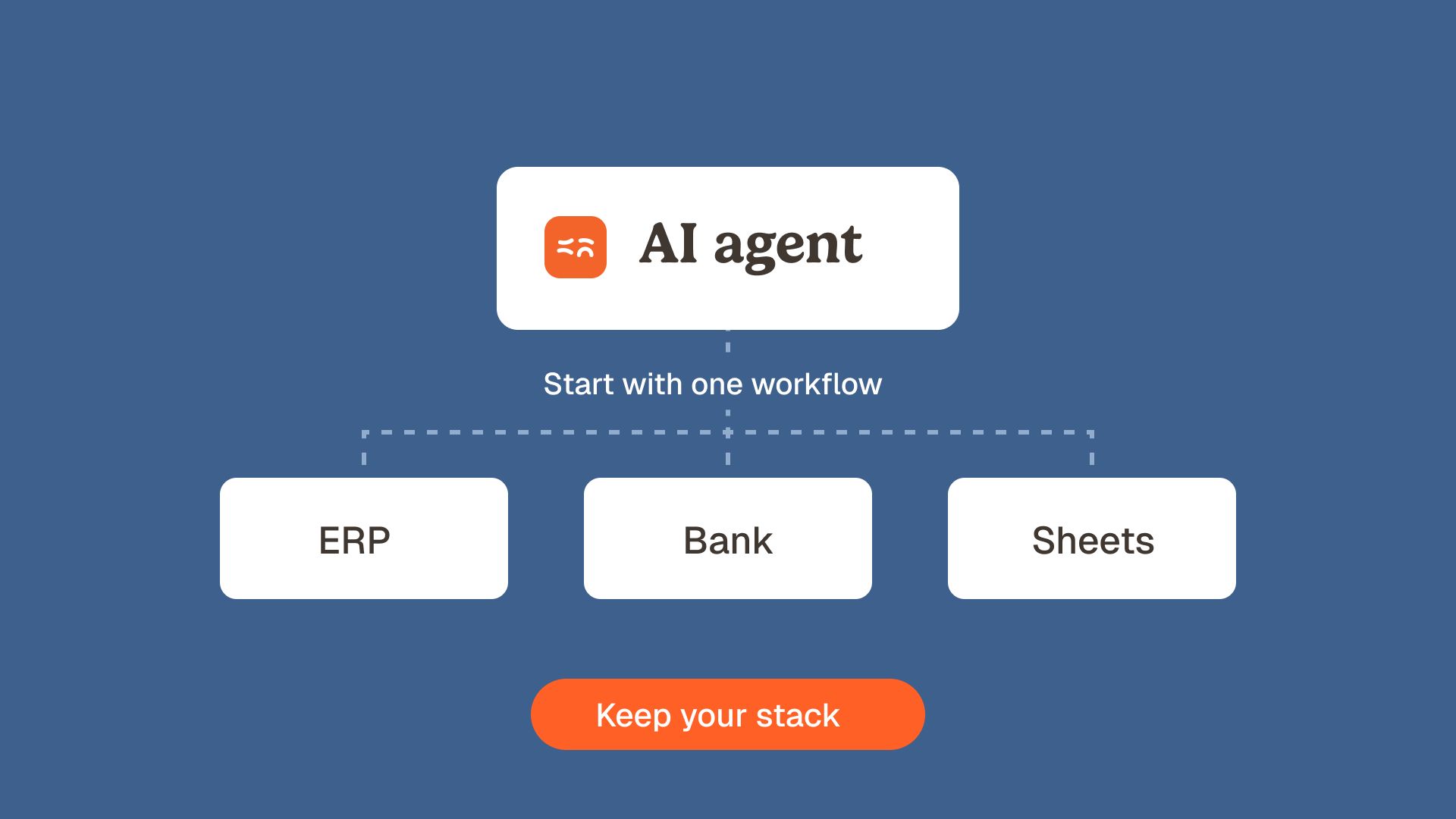
AI in finance starts with one job, chosen for how often it repeats and how easily its output can be checked, running on top of the ERP you already have. The right first job is a transactional control: supplier invoice verification, bank reconciliation, accounting inbox triage. Forecasting and dashboards come later, because they inherit the quality of the data produced upstream. A first agent of this kind reaches production in under two weeks, with no migration.
Last updated 20 September 2026.
Key takeaways
- The right first AI project in finance is a repetitive transactional control whose output can be verified, not a chat assistant and not a dashboard.
- At Astotel, a group of 18 Paris hotels, an agent checking supplier prices line by line surfaced close to €5,000 of billing errors a year on a single supplier.
- Agicap built an AI assistant into its own product and then removed it: "There was initial curiosity-driven adoption, but very little recurring usage," says co-founder Sébastien Beyet in March 2026.
- An agent that sits on top of your existing ERP (NetSuite, Sage Intacct, QuickBooks, SAP) requires no migration and reaches production in under two weeks.
- Three questions are enough to qualify a project: does the task repeat weekly, can its output be checked line by line, and does the input data already exist somewhere?
Why the first AI project in finance is a sequencing decision
An AI project in finance is a scope of work handed to an agent, bounded by one task, one identified data source and one verification criterion. What decides whether it works is not the model you pick, it is the order in which you launch.
A word on vocabulary, because it clouds the decision. Classic automation runs a rule written in advance and breaks as soon as the document changes shape. Generative AI interprets a document it has never seen, which is what makes heterogeneous supplier invoices processable without configuring every format. An AI agent combines the two: it interprets, applies your rules, then records what it did. That combination is what turns work long assumed to be manual into work a machine can carry, and it is what separates an agent from a spreadsheet assistant that only helps with analysis.
The question is asked in the same words everywhere. A thread on r/FPandA puts it plainly: "You're the CFO. You get one AI engineer for 30 days. What process do you hand them first?" That is an allocation question, not a tooling question.
The answers split depending on who is talking. Published guides on AI in finance point overwhelmingly toward forecasting and reporting. A count run on 20 September 2026 across the three best-ranked or most-cited editorial pages on this subject, in the United States and in France, shows it in raw numbers: the longest page in that set, 4,547 words, contains 19 occurrences of the word "forecast" or its French equivalent and zero occurrences of the word "invoice". Across those three pages, the terms "reconcile", "purchase order", "audit trail" and "before payment" appear exactly zero times.
Practitioners answer something else. In an r/CFO thread about internal pressure to adopt AI, a finance leader writes that his first use case is the AP clerk role. In another thread, a CFO sums up why decision-support demos irritate the people who run finance departments: "AI use cases show everything as if it is your first day at work. Variances, report updates are mostly set up in any company that is not a startup."
That gap is the single most useful thing to understand before choosing. You do not sell a dashboard to someone who already has four. What a mid-market finance team lacks is not reporting, it is confidence in the data feeding the reporting.
The same reading shows up in what teams actually build when the choice is theirs. Across Phacet deployments, nine out of ten projects built by clients fall under financial control in the broad sense: accounts payable, procurement, back office and compliance. That is not what a vendor puts on its homepage. It is what teams pick when they decide for themselves where to start.
The three questions that qualify an AI project in finance
Qualification takes three questions, in this order. A project that fails one of them is not a bad project, it is simply in the wrong place in the queue.
- Does the task repeat at least weekly? Setting up an agent has a fixed cost, and the return scales with frequency. A monthly task takes ten times longer to pay back its configuration than a daily one. Accounting inbox triage happens every day, the close happens once a month: both can be automated, but not in the same order.
- Can its output be checked line by line? An agent that matches an invoice against a purchase order produces a result an accountant confirms or rejects in ten seconds. An agent that produces a cash forecast produces a result nobody can score for weeks. The first builds trust, the second spends it.
- Does the input data already exist somewhere? If the answer requires building a warehouse, cleaning a master file or merging three ERPs, this is not an AI project, it is a data project in disguise. Invoices already arrive by email, bank statements are already downloadable, the negotiated price list already sits in a spreadsheet. That is enough to start.
The second question is the one teams underestimate, because it is not about technology, it is about professional accountability. A CFO does not consume numbers, they answer for them. Sébastien Beyet, co-founder and CEO of Agicap, puts it in one sentence in an episode published in March 2026: "Even if a forecast is 99 percent accurate, if it cannot be explained, it's not really usable."
This is why traceability is not a comfort feature in an AI finance project, it is a selection criterion. A native audit trail, meaning a timestamped record of every transformation applied to a piece of data, makes the output presentable to an auditor or an external accountant. Without it, a correct answer stays unusable.
Which job to automate first: the triage table
These are the four candidates that come up again and again in finance teams of 50 to 500 employees, run through the three questions. The timings draw on production rollouts at Phacet clients whose cases are published.
| Candidate job | Repeats weekly | Output checkable line by line | Input data already available | Sequencing verdict |
|---|---|---|---|---|
| Checking supplier invoices against negotiated prices | Yes, continuously | Yes, every line against the price list | Yes, invoices arrive as attachments, prices sit in a file | Project one. Return measurable in currency within the first month. |
| Triaging and extracting the accounting inbox | Yes, daily | Yes, document by document | Yes, the mailbox already exists | Alternative project one. Pick this when lost time is more visible than billing errors. |
| Bank reconciliation and unmatched flow detection | Yes, weekly | Yes, transaction by transaction | Yes, statements and entries are accessible | Project two. Excellent, but assumes a clean counterparty master file. |
| Cash forecasting and dashboards | No, usually reviewed monthly | No, only verifiable after the fact | No, requires data already cleaned upstream | Defer. Inherits the quality produced by the projects above. |
The fourth candidate is not a bad one, it is misplaced. Steering on uncontrolled data means producing a clean chart on wrong numbers, which costs more than producing nothing. That is why the sequence holds in a simple order: structure, then match, then analyze.
Once the job is identified, the shortest path is to check whether the agent for it already exists. The Phacet agent catalogue holds more than 40 ready-to-use agents, built on the real needs of more than 100 clients in production, including the first three jobs in the table above.
Where not to start: the conversational assistant
The most common reflex in 2026 is to open a chat window onto financial data and let the team ask questions in natural language. It demos beautifully, it ships fast, and it is the project that produces the least recurring value.
The most instructive counter-example comes from a vendor that ran the experiment and documented it. Agicap, one of the European players in cash management, built a conversational assistant into its product, tested it with customers, then decided to remove it. Co-founder and CEO Sébastien Beyet described the sequence in March 2026:
"It was one of the experiments that didn't work well. We tried it, but eventually decided to put it aside. There was initial curiosity-driven adoption, but very little recurring usage."
The lesson is not that chat assistants are useless. It is that early curiosity looks like adoption without being adoption. An AI project is judged on its return rate at six weeks, not on how many people tried it in week one.
After that experiment, Agicap refocused its AI work on transaction categorization, bank reconciliation and extracting information from financial documents. In other words, on exactly the layer of repetitive, checkable work described above. "We focused on tangible value, the kind that is measurable for our users," Beyet says. Those use cases are less spectacular than a chatbot, and they fit inside existing workflows instead of asking teams to change them.
The same reflex shows up one level down, in the answer finance communities give each other. The thread Google's own AI Overview cites on this question is a CFO of a small company asking which AI to subscribe to, and the answer that comes back is a general assistant for working in spreadsheets. That answer is right for the question asked, and it stops exactly where a first project starts. Generalist tools are remarkable, but they do not know your suppliers, your price lists, your accounting rules or your ERP. They produce no audit trail, they do not connect to your mailbox or your SFTP, and they were not built on a hundred real finance deployments.
Do you need to replace your ERP to run AI in finance?
No. The opposite holds: an AI project that assumes an ERP migration is no longer an AI project, it is a systems replacement programme, with its own budget and its own multi-year horizon.
An AI finance agent sits as a layer on top of the systems already in place. It reads the mailbox, the SFTP drop or the ERP export, structures what it finds into an auditable table, applies the controls, and pushes the result back into the accounting system by API or by file. NetSuite, Sage Intacct, QuickBooks and SAP stay where they are, with their permissions and their habits intact. That absence of migration is what makes a two-week first agent realistic: there is nothing to move.
Connection methods, the limits of each approach and the vendor-specific pitfalls are covered separately in our article on AI and ERP integration in finance. If your question is first about the governance frame to set before launching, that is covered in implementing AI in finance step by step.
What the first two weeks actually produce
Two weeks is not a sales promise, it is a breakdown. Here is what it contains when the project has been properly qualified.
| Period | What happens | Deliverable at the end |
|---|---|---|
| Days 1 to 3 | Connecting the source (mailbox, SFTP, ERP export) and structuring documents into an auditable table, column by column. | Last month's documents are readable as a table, each with a confidence score. |
| Days 4 to 7 | Writing the control rules with the team: negotiated prices, tolerance thresholds, exception cases, who receives each alert. | A first set of controls runs and surfaces discrepancies on real data. |
| Days 8 to 12 | Running in parallel with the existing manual process. Comparing what the agent flags against what the team flags. | A measured agreement rate, and the list of rules to adjust. |
| Days 13 to 14 | Go live with human validation on alerts. The team stops processing documents and starts processing exceptions. | The project is running. The audit trail is queryable from day one. |
What comes out of that sequence is more concrete than a percentage of time saved. At Astotel, a group of 18 Paris hotels, supplier price checks used to be done on a sample basis. An agent verifying every invoice line against negotiated prices surfaced around €400 of billing errors a month on a single supplier, close to €5,000 a year. "I save up to two days a month, and I catch errors I would never have seen on my own," says Valérie, procurement director.
The same order of magnitude holds at larger scale. At Smartbox, the European leader in gift experience boxes operating across 14 countries, each use case went operational in six weeks, with a fourfold productivity gain on matching payments to invoices. Timelines stretch with the complexity of the scope, not with the technology.
One point matters as much as the gain: what the project changes about the work. The agent does not replace the accountant, it clears from their screen the documents that raise no question. What is left to handle are the exceptions, which is the part of the job that needs judgment. It is also what the teams themselves ask for, as Beyet puts it: "What we expect from AI is to advise and prepare the work, but we want to stay in control."
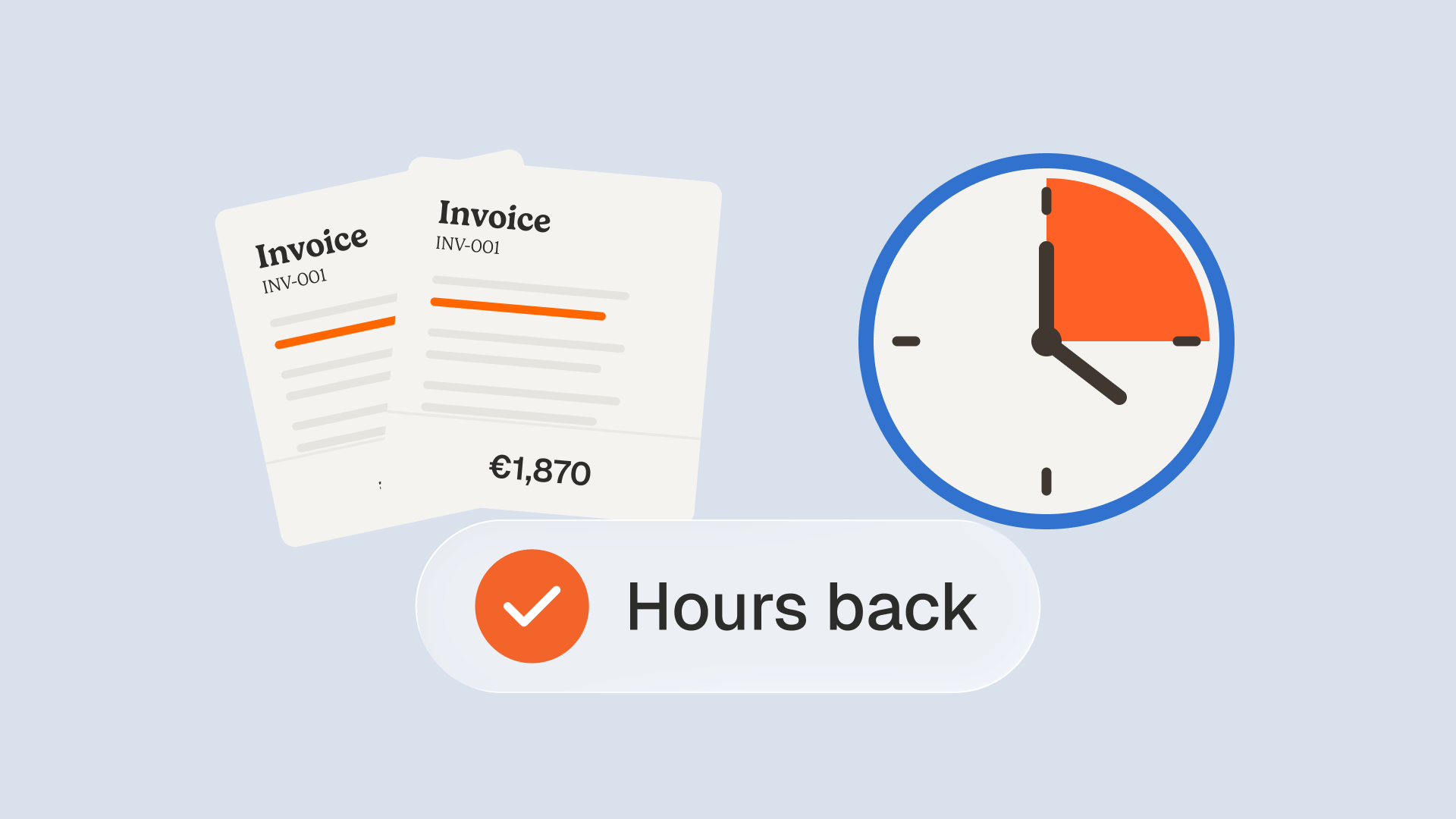
What teams do with the recovered time is the best indicator that a first project worked. At La Nouvelle Garde, a group of ten Paris brasseries, two days a week went back to the finance team, and 70% of the time spent moving between the mailbox and the accounting tool disappeared. That time moved to margin analysis and to reading trends site by site, which is the work these people were hired for. Faster reports are a by-product: the real gain is that the numbers behind them carry less risk, so decisions rest on figures that were checked rather than estimated.
What it costs, and what you need in place before you start
Three prerequisites, and none of them is technical.
- A named owner. One person in the finance team who decides the control rules and arbitrates exceptions. Not an IT project manager, not a committee.
- An accessible source. A mailbox, a folder, an export. If access takes three internal approvals, the project starts three weeks later than planned.
- A rule that already exists. A control agent applies a business rule, it does not invent one. If nobody can say what counts as an acceptable variance on a supplier price, that is the question to settle first, and it settles in one meeting.
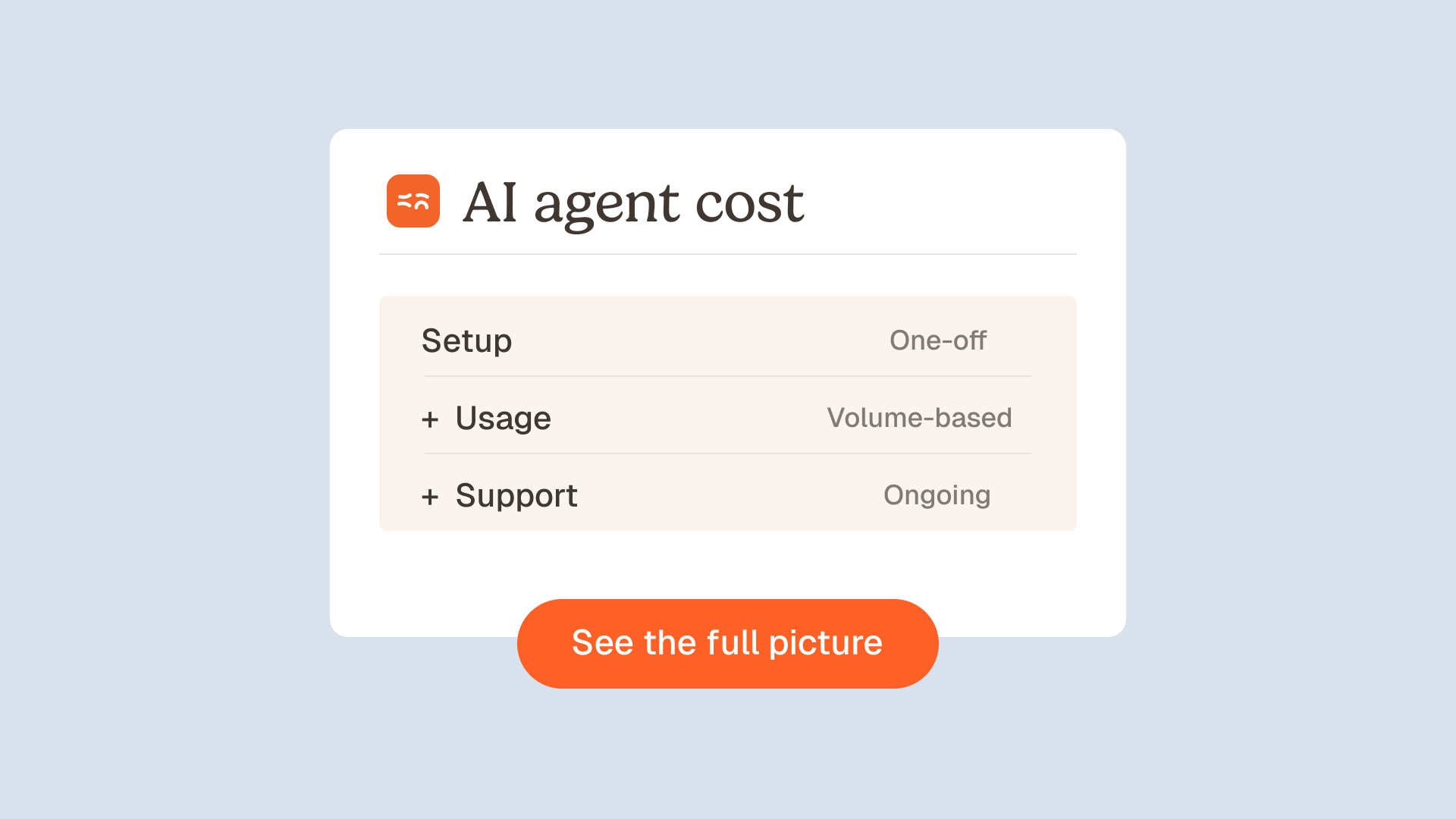
On budget, the entry point for a finance team of one to three people sits in the low hundreds per month. Plans and credits are detailed on the pricing page: entry is €299 per month, with a 14-day trial to test under real conditions before committing. The number to compare it against is not the cost of another software licence, it is the billing errors an exhaustive control recovers over a year.
For teams under compliance constraints, two points often decide before price does: data is hosted in Europe and the platform is ISO 27001 certified, and client data is never used to train the models. The concerns specific to finance leadership and the controls that apply to each flow are documented page by page.
Frequently asked questions
How can a CFO use AI?
By handing one repetitive finance task to an agent and checking its output line by line. The highest-return starting points are supplier invoice verification, accounting inbox triage and bank reconciliation. Analysis and forecasting come later, once the underlying data has been structured and controlled by those first agents.
What is the best AI tool for a CFO?
There is no single best tool, because the choice follows the job. For exploring a file or drafting, a general assistant is enough. For recurring work that has to be justified to an auditor, you need an agent connected to your existing systems, applying your own rules, with a timestamped audit trail behind every output.
Which AI should a CFO of a small company subscribe to?
For work in spreadsheets and one-off analysis, a general assistant subscription covers most needs and is what finance communities most often recommend. For anything that runs every week and feeds the accounts, a general assistant has no connection to your ERP and leaves no audit trail, so it will not carry the work.
Will CFOs get replaced by AI?
No. Agents absorb the processing, the checking and the matching, which is where most of the hours currently go. What stays human is judgment on exceptions, arbitration and accountability for the numbers. The role shifts from producing figures to using them, and the team handles exceptions instead of documents.
Which finance process should I automate with AI first?
Start with the process that repeats most often and whose result you can verify immediately. In practice that means checking supplier invoices against negotiated prices, or triaging the accounting inbox. Both use data you already have, need no ERP migration, and produce a measurable result inside the first month.
Latest Resources
Unlock your AI potential
Go further with your financial workflows — with AI built around your needs.