Invoice automation: how many hours it actually saves a finance team
Published on :
September 21, 2026

Nicolas Marchais is co-founder and CEO of Phacet. After seven years at Spendesk, he built Phacet as the agentic layer that orchestrates across ERP, banking and email systems. Reliable, auditable, cross-system, what he calls a Finance Workforce.

This is written for the person who owns accounts payable in a company of 50 to 500 employees: a Head of Finance, a financial controller, an AP lead, someone who has been asked to justify a tool and needs a number that survives a follow-up question. If you are comparing vendors on feature lists, this page will not help you much. If you have to defend a before-and-after figure six months from now, it will.
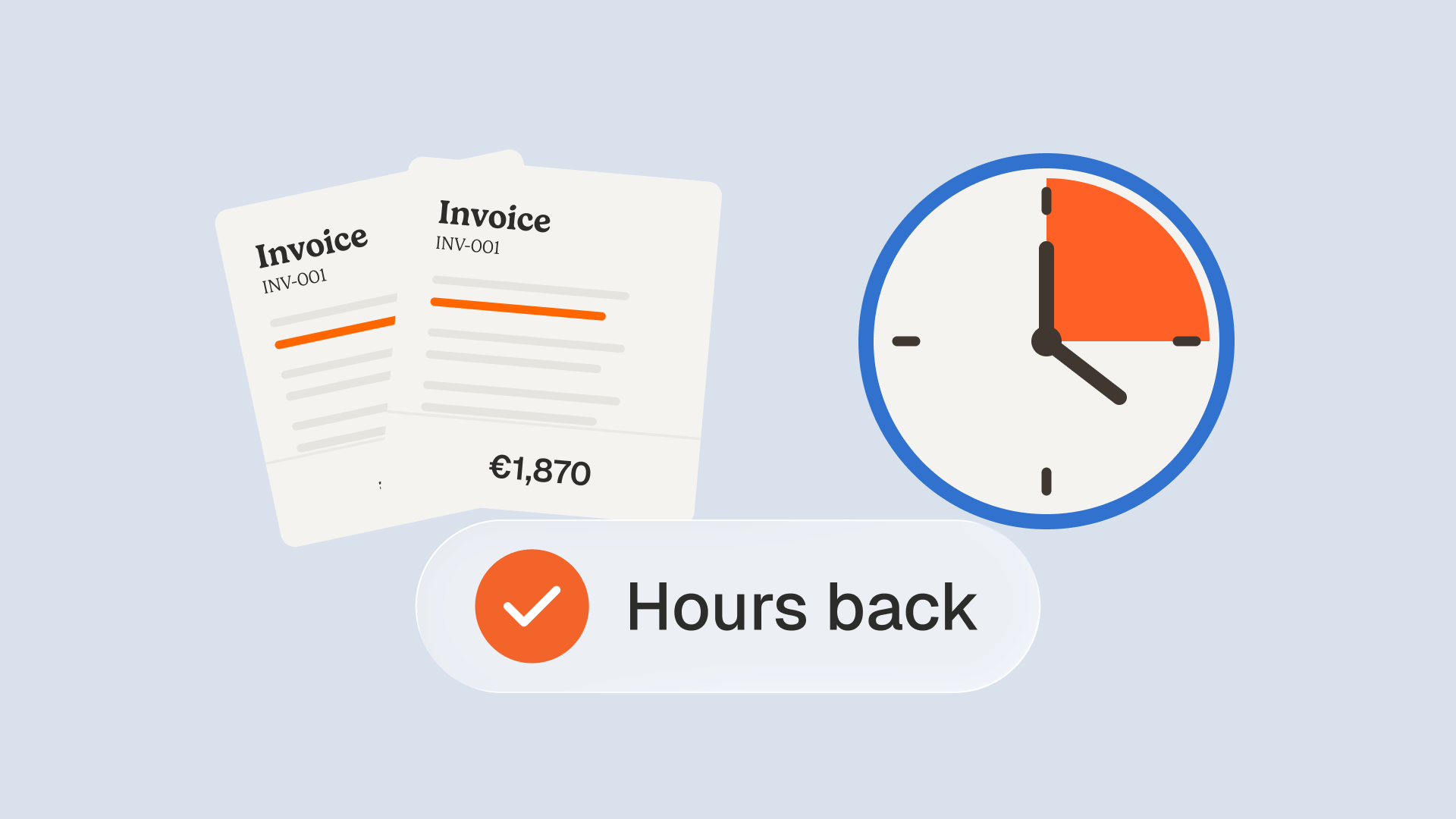
Invoice automation saves most finance teams between one and two hours of work per day, not a fixed percentage of their week. The hours come from three specific tasks: keying invoice data, sorting the shared mailbox, and chasing approvers. At Astotel, an 18-hotel group in Paris, the purchasing director measured at least two hours of work per day during the February test phase, on supplier price verification alone. The hours that automation should not remove are the control minutes before payment, because that is where the money is: one Astotel supplier was overbilling by up to €400 a month, close to €5,000 a year.
Key takeaways
- Invoice automation removes keying, mailbox triage and approval chasing. At Astotel that measured at least two hours of work per day during the test phase.
- Hours are saved per task and per day. A single percentage applied to a whole finance team's week is not a measurement, it is a slogan.
- The control minutes before payment are the hours worth keeping: one Astotel supplier alone was overbilling by up to €400 a month.
- A defensible before-and-after needs a baseline timed on your own invoice volume, task by task, over one full week.
- La Nouvelle Garde reinvested the time it freed instead of cutting headcount, and summarises the goal as working better, not faster.
What does a vendor mean when it says invoice automation saves 80% of your time?
It usually means one task, measured once, at one customer, with no baseline published. The number is not necessarily false. It is simply not transferable to your team, because you do not know what it was divided by.
Three questions turn any published percentage back into something usable:
- Percentage of what? Of the time spent keying one invoice, of an AP clerk's week, or of the finance department's total workload. These differ by an order of magnitude.
- Measured against which baseline? A team that keys invoices twice, once in the mailbox and once in the ERP, will show a spectacular gain. A team already using a capture tool will not.
- Over which invoice mix? Clean PO-backed invoices behave nothing like utility bills, subcontractor situations or multi-site supplier statements.
This matters more than it used to, because AI Overviews and assistants now answer the question before anyone reads a page. Ask Google what invoice automation does and the summary returns three benefits: speed, accuracy, visibility. None of them carries a number, even though several of the pages it cites publish figures of their own. The quantification is stripped out on the way to the answer, which leaves the buyer with an impression instead of a baseline.
How to read a published vendor figure
The numbers do exist further down the results page, and they are worth looking at closely, because their shape tells you what was measured. Two examples visible on the first two pages of results for this query, as indexed on 20 September 2026: one vendor advertises 80% less time spent on invoices, alongside 98% accuracy, 4.75 hour processing and 1.5 days to approval and export. Another announces that automation can cut process costs by 40 to 60%.
Neither claim is unreasonable, and neither is usable as it stands. The 80% has no stated denominator, so it cannot be applied to your own week. The 4.75 hour processing figure is more interesting, because it is at least a duration attached to a step, which means it could be compared with your own. The 40 to 60% cost range is a cost claim, not a time claim, and the two are routinely presented as interchangeable when they are not.
The practical rule: treat a published percentage as a hypothesis to test against your own baseline, never as a projection to put in a business case. A figure becomes evidence when you know the task, the unit, the volume and the starting point. Everything else is positioning.
Which hours actually disappear
Three tasks vanish almost entirely once invoices arrive structured and pre-controlled. They are the ones worth timing first, because they are also the easiest to time.
Keying and re-keying
Manual data entry is the largest single block, and the one most often double-counted. Roundtable, an investment platform handling SPV documentation, went from 30 to 60 minutes of manual extraction per document to roughly 30 seconds. That ratio holds when documents are dense and non-standard. On a clean two-line supplier invoice the absolute saving is smaller, but the volume is far higher.
Mailbox triage
Invoices arrive by email, by portal, by post and by photo from a site manager. Someone opens each one, decides what it is, and files it. La Nouvelle Garde, a group of ten Paris brasseries, reports 70% of its time freed on this class of work, which it had been doing by hand between Gmail and Pennylane. The accounting inbox agent sorts, extracts and routes what comes in, which is why triage is usually the first task to disappear.
Chasing approvals
The hardest hours to see, because they are scattered: a reminder here, a Slack message there, a call to a site manager who is not at a desk. They never appear on a timesheet and they are the reason teams feel busier than their invoice count suggests. Routing rules remove almost all of them, and the hours show up as fewer interruptions rather than as a block of freed time.
Which hours shrink but do not disappear
Matching is the honest middle ground. An invoice still has to be reconciled against a purchase order and a delivery note, and 3-way matching is the point where most of the value and most of the remaining work sit. What changes is the split: instead of checking every line by hand, the team checks the lines flagged as inconsistent.
Smartbox, the European gift-box leader with 800 employees across 14 countries, measured a ×4 productivity gain on payment and invoice reconciliation, with each use case operational in six weeks. A multiplier is a more honest unit than a percentage here, because the work does not go to zero. It gets divided.
Exception handling follows the same pattern. Exceptions are not a failure of automation, they are its output: the system's job is to produce a short, ranked list of things a human should look at. A team that reports zero exceptions after automating is not well automated, it has stopped looking.
Which hours you should refuse to save
This is where most invoice automation projects quietly lose their return. Capture, routing and posting can all be automated to the point where an invoice reaches payment without a human ever comparing its prices to what was negotiated. The invoice is processed faster and wrong.
The Astotel figure makes this concrete. Verifying supplier prices across 18 hotels had been done by sampling, because doing it exhaustively by hand was not realistic. Once every line was checked, the gaps surfaced immediately: up to a €6 per kilo difference on the same smoked salmon reference between two hotels, and up to €400 a month of billing errors on a single supplier, close to €5,000 across the year.
Those control minutes are the ones to keep and to make systematic. The distinction that matters is not manual against automated, it is before payment against after payment. Recovering an overcharge after the money has left is a credit note negotiation. Catching it before is a non-event. Validating invoices before payment is a different job from processing them quickly, and it is the one that pays for the project.
See the control step on your own invoices
What finance teams actually measured
Published figures from Phacet deployments, with the task they attach to and the unit they were measured in. Read the unit, not just the number: a gain per document and a gain per day answer different questions.
| Company | Sector and size | Measured result | Task it attaches to |
|---|---|---|---|
| Astotel | Hospitality, 18 hotels | At least 2 hours of work per day during the test phase, up to 2 days per month for the purchasing director | Supplier price verification |
| La Nouvelle Garde | Food and beverage, 10 brasseries | 70% of time freed | Mailbox and accounting triage |
| Maslow Restaurants | Food and beverage, Paris | 1 to 2 hours per day | Invoice processing |
| Roundtable | Investment platform, SPV documentation | 30 to 60 minutes per document reduced to about 30 seconds | Document data extraction |
| Smartbox | Retail, 800 employees, 14 countries | ×4 productivity, each use case live in 6 weeks | Payment and invoice reconciliation |
Two patterns are worth noticing. Every figure is attached to a named task rather than to invoice automation in general, and the denominations differ: per day, per document, per month, as a multiplier. That is what a real measurement looks like. A single number covering an entire finance function almost never is.
How to measure your own baseline in one week
You cannot claim hours saved without hours counted first, and the baseline takes a week rather than a quarter. Run it before you shortlist anything.
- Pick one full week of normal volume. Not month-end, not August. Count the invoices that actually arrived, by channel.
- Time four tasks separately: receiving and sorting, extracting and coding, matching against orders and delivery notes, chasing approvals. One line per task, in minutes.
- Count the exceptions you found, and the ones you found late. A duplicate caught at posting and a duplicate caught after payment are not the same event.
- Write down who does each task. Time saved for an AP clerk and time saved for a Head of Finance do not have the same value, and mixing them is how business cases become unfalsifiable.
- Record your starting error rate. If you do not know it, that is itself the finding: it means nothing is currently checking prices line by line.
Teams that run this week almost always discover the same thing: the hours are not where they assumed. Keying is visible and usually overestimated. Chasing and re-checking are invisible and usually underestimated.
Why the time savings and the business case rarely match
Because they measure different things, and the gap is predictable. Time saved is spread across many people in small slices, so it rarely converts into a headcount line. Money recovered is concentrated, traceable and easy to defend: €400 a month on one supplier is an invoice you can point at.
La Nouvelle Garde is the clearest illustration. Its freed time went back into work the team could not previously get to rather than into a reduction, which it summarises as working better, not faster. That is usually the right answer for a company of 50 to 500 people, where the finance team is already too small rather than too large, and where the real constraint is that growth adds invoices faster than it adds people.
So build the case on two lines, not one. The hours belong in the case because they decide whether the team can absorb the next site, the next entity or the next acquisition without hiring. The recovered money belongs in it because it is the part a CFO can verify against a bank statement. Accounts payable agents are worth judging on both.
Frequently asked questions
Is invoice automation software actually worth it for a small business?
Below roughly 200 invoices a month, the time saved alone rarely justifies a dedicated tool. The case usually turns on error rate instead: if nobody is checking prices against negotiated terms, a single recurring overcharge can cover the cost. Measure your invoice volume and your current control coverage before comparing products.
How many hours a week does invoice automation really save?
Published deployments cluster between one and two hours per day for a team processing supplier invoices across several sites, which is five to ten hours a week. The figure depends almost entirely on whether data is currently keyed twice and on how much time goes into chasing approvers.
Do you still need someone to check invoices after automating?
Yes, and that is the point. Automation should remove keying and triage, then present a short list of exceptions for a human to decide on. A setup that approves invoices with no one looking at price gaps processes errors faster rather than preventing them.
What percentage of invoices can realistically be processed without human intervention?
It depends on your invoice mix rather than on the software. Clean purchase-order-backed invoices go through at a high rate. Utility bills, subcontractor situations and multi-line supplier statements do not, and should not, because those are exactly the documents where pricing errors hide.
What percentage of invoices still arrive as PDFs that have to be handled by hand?
For most mid-sized companies, the majority, despite years of e-invoicing initiatives. That is why capture quality still decides the outcome: a tool that reads a PDF badly simply moves the work from keying to correcting, and the measured saving evaporates. Audit your own channel mix before trusting any automation rate.
What to do with this
Time your own week before you look at a demo, then judge tools on two questions: how many minutes they remove per task, and what they refuse to let through without a human decision. The first tells you whether your team can grow without hiring. The second tells you whether the project pays for itself.
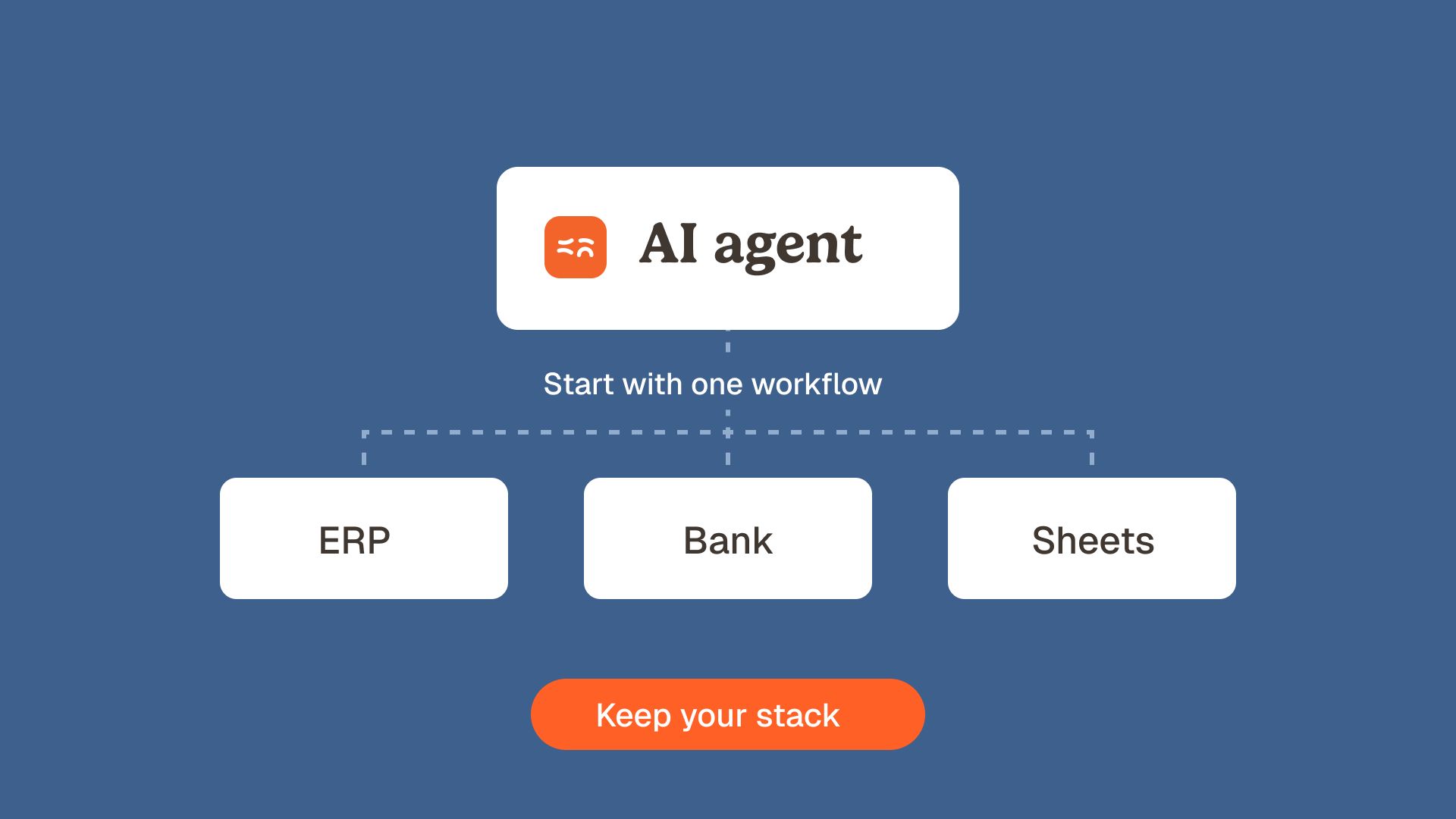
Phacet builds AI agents that structure invoice data, match it against orders and deliveries, and flag the gaps before payment clears, with a full audit trail on every step. Over 100 companies run them in production, and a first agent is usually live in under two weeks.
Sources
- Astotel case study, Phacet: phacetlabs.com/customers/astotel, consulted 20 September 2026.
- La Nouvelle Garde case study, Phacet: phacetlabs.com/customers/la-nouvelle-garde, consulted 20 September 2026.
- Smartbox, Maslow Restaurants and Roundtable case studies, Phacet: phacetlabs.com/customers/smartbox, maslow, roundtable, consulted 20 September 2026.
Latest Resources
Unlock your AI potential
Go further with your financial workflows — with AI built around your needs.