

Balance sheet reconciliation is the monthly control that verifies every asset, liability and equity balance in the general ledger against the evidence behind it: a bank statement, a subledger, a schedule or an external file. It is the step that turns a trial balance into a set of numbers a finance team can defend in front of an auditor.
Most published guides cover the easy half of that work. We measured it. Across the seven pages that currently hold the first page of Google in the US for "balance sheet reconciliation", roughly 22,000 words of content, the word "payroll" appears three times in total. "Accrued payroll", "HR", "PTO" and "substantiation" appear zero times. The accounts that actually hold up the close are the ones nobody writes about.
That gap is not editorial laziness. Payroll and accrual accounts are genuinely harder, because they do not reconcile against one external document. They reconcile against three internal systems that share no common key.
Key takeaways
- Balance sheet reconciliation compares every general ledger balance against its supporting evidence, and it fails most often on payroll, accrual and social accounts rather than on cash.
- Across the seven pages ranking on page one of Google US for "balance sheet reconciliation", the word "payroll" appears three times in total and "accrued payroll" never appears.
- Payroll and accrual accounts reconcile against three sources with no shared key: the GL journal, the HR system export and the monthly payroll file.
- The step that decides whether the pass is done or merely sampled is variance classification by materiality and by cause, not data collection.
- Phacet sizes this pass at ten person-days per month across 50 accounts, and its balance sheet accrual agent brings that down to around 2.5 days with full account coverage.
What balance sheet reconciliation actually covers
A balance sheet reconciliation covers permanent accounts only: assets, liabilities and equity. Profit and loss accounts close out at year end, so they are reviewed rather than reconciled. Within those permanent accounts, the difficulty is not evenly spread, and treating them as one homogeneous list is the first mistake.
The distinction that matters is not the account family. It is what the balance gets compared against. Some accounts have a single external document that settles the question. Others have no external counterpart at all, and must be rebuilt from operational data held outside accounting.
| Account family | Reconciled against | Real difficulty |
|---|---|---|
| Cash and bank | Bank statement, one external source | Low. One source of truth, mechanical matching |
| Accounts receivable | AR subledger and aging | Low to medium. Internal, but a single subledger |
| Accounts payable | AP subledger, supplier statements | Medium. Timing gaps between receipt and invoice |
| Prepaid expenses and fixed assets | Amortization and depreciation schedules | Medium. Rules based, but easy to automate |
| Invoice accruals | Goods receipts with no matching invoice | High. Requires operational data, not accounting data |
| Payroll, accruals and social accounts | GL journal, HR system export, payroll file | Very high. Three sources, no shared key, no external document |
Cash accounts get their own tooling, their own category of software and their own vocabulary because bank reconciliation is the tractable case. If you want the mechanics of that specific control, see our guide to bank reconciliation software. The last row of the table above is the one this article is about, and it is the row that no reconciliation guide covers.
The accounts every guide skips
We ran the measurement before writing this article, because the claim is easy to make and hard to back up. Method: we scraped the seven commercial pages ranking on page one of Google US for "balance sheet reconciliation" in August 2026, stripped navigation, footers and scripts, then counted term frequency with word boundaries so that substring matches would not inflate the result.
The socle vocabulary is uniform to the point of being interchangeable. "General ledger" appears on 7 pages out of 7, "discrepancy" on 7 of 7, "spreadsheet" on 7 of 7, "month-end close" on 7 of 7. Every page runs the same sequence: definition, importance, steps, challenges, best practices, automation, FAQ. They do not even agree on the number of steps, which ranges from four to seven depending on the source.
Then the counts collapse. "Payroll": 3 occurrences on 3 pages. "Accrued payroll": 0. "HR" and "human resources": 0. "PTO", "paid time off", "vacation": 0. "Bonus", "commission", "severance": 0. "Payroll register", "withholding", "timesheet": 0. "Suspense account" and "clearing account": 0.
Meanwhile, Phacet sizes the payroll and accrual pass at two people working five full days each month, so ten person-days, across around 50 balance sheet accounts and 300 to 500 lines, cross-referenced by hand in Excel. The work that consumes the most close time is the work with the least published guidance.
Why payroll and accrual accounts break the close
Three systems, no shared key
A bank reconciliation has one join key: the transaction. A payroll reconciliation has none. The GL journal holds an account and an amount. The HR system export holds an employee, a contract, a salary and variable components. The payroll file holds a payslip, a period and a set of contributions. Nothing joins them natively, and the join has to be rebuilt every month by account, by employee and by period at the same time.
This is why the work resists the usual automation. Rule engines assume a key exists. Here, the key is inferred, which is exactly the kind of problem semantic matching handles and VLOOKUP does not.
Accruals that nobody can trace back
Accrued payroll, bonus and commission provisions, vacation accruals, employer contributions payable and severance provisions share one property: they are estimates written into the balance sheet, and their supporting evidence lives outside accounting. Six months later, nobody remembers the assumption behind the number, and the account carries a residual balance that everyone rolls forward rather than explains.
The same pattern shows up on the supplier side with invoice accruals, where the estimate has to be checked against goods actually received. On the payroll side there is no goods receipt to check against, only the HR data.
The reconciliation that gets sampled instead of done
Ten person-days is more than most teams can spend, so the pass gets scoped down. Teams reconcile the ten largest accounts in full, review the rest by variation against the prior month, and sign off. That is sampling, and it is where audit findings come from: the account that moved by a small amount every month for a year, and drifted by a material amount in total. On paper the internal control exists. In practice it covers a fifth of the balance sheet.
It is also where payroll variances hide. A contract change not reflected in the accrual, a bonus provision released twice, a contribution rate updated in payroll but not in the accounting rule. None of these produce a visible monthly jump. See payroll variance control for how those gaps surface when the comparison is continuous rather than periodic.
How to reconcile payroll and accrual accounts in one pass
Published guides describe between four and seven steps for balance sheet reconciliation. The disagreement is real but mostly cosmetic: the versions differ in how they split data collection, not in what the control does. The five steps below are written for the payroll and accrual case specifically, where the difficulty sits in steps three and four rather than in step one.
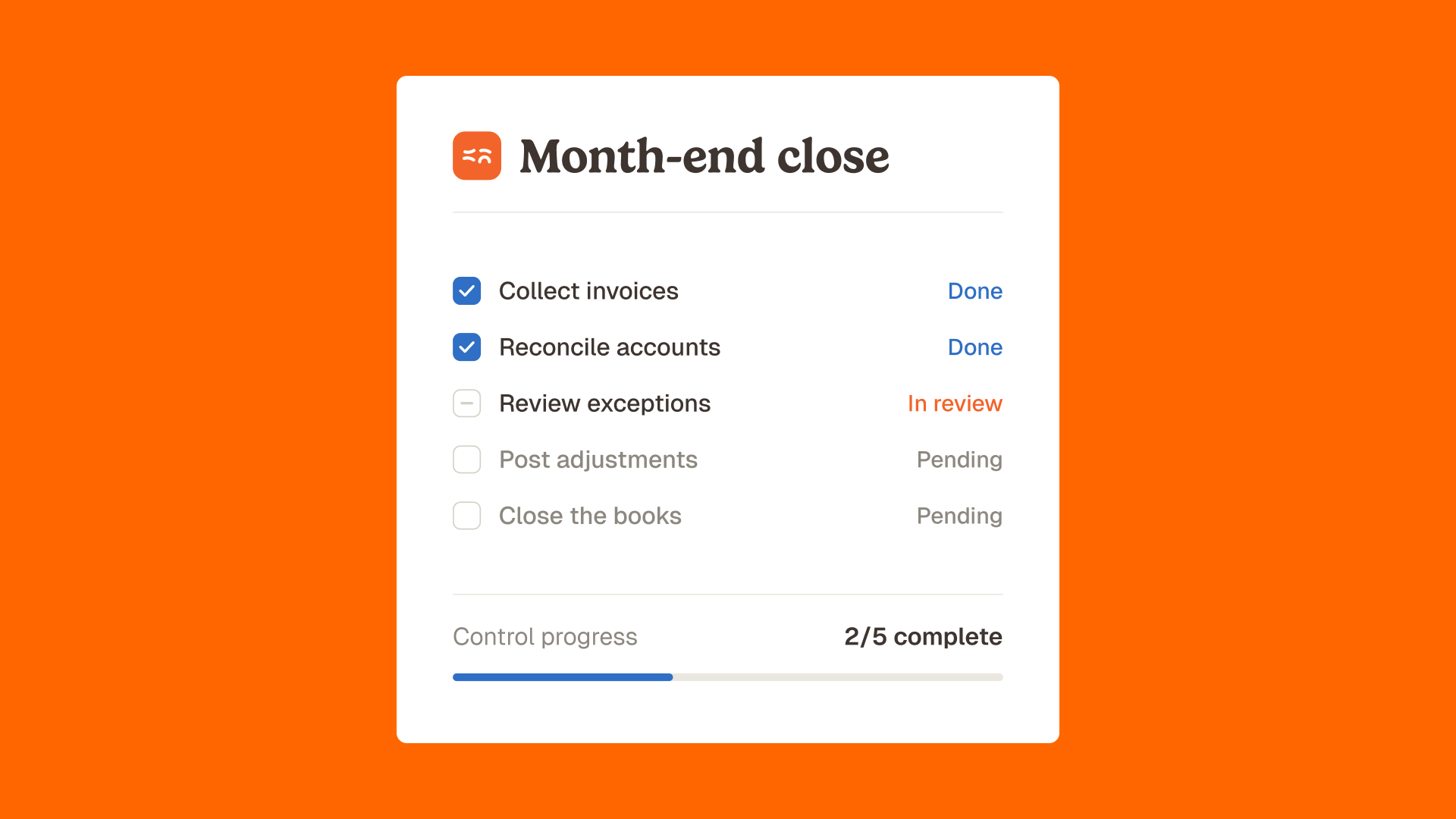
- Assemble the three sources for the same period. The GL journal for the accounts in scope, the HR system export with headcount, salaries and variable components, and the monthly payroll file. Cut-off matters more than format here: a payroll file closed on a different date than the GL produces variances that are not variances.
- Match by account, employee and period at once. A match on account alone gives a total that ties without telling you whether the underlying detail is right. The unit of reconciliation is the employee line within the account, not the account balance.
- Classify every variance by cause, not just by amount. A timing difference, a data quality issue and a genuine booking error require three different actions. Sorting by amount alone sends the team to the biggest number rather than the riskiest one.
- Rank by materiality and set a review threshold. Below the threshold, variances are documented and left. Above it, they are investigated and adjusted with an adjusting journal entry. The threshold is a policy decision made once, not a judgment call made 400 times.
- Document the pass so an auditor can follow it. Each variance keeps its account, its employee reference, expected and actual amounts, its source and its resolution. Preparer and reviewer are separate people, and the sign-off is dated. This is what turns a reconciliation into audit trail.
Step three is where most of the time goes, and it is the step that no template solves. A checklist tells you which accounts to open, and a reconciliation template gives you a layout to fill. Neither tells you why an account is off.
| Variance type | Likely cause | Source to interrogate | Action |
|---|---|---|---|
| Accrual higher than payroll actuals | Provision released late, or a departure not reflected | HR export, leavers for the period | Release the provision, document the trigger |
| Accrual lower than payroll actuals | Contract change, raise or new hire booked after the accrual | HR export, contract amendments | Top up the accrual, adjust the rule for next month |
| Employer contributions off by a fixed percentage | Contribution rate updated in payroll, not in the accounting rule | Payroll file, rate table | Update the rule, restate the periods affected |
| Balance that never moves | Legacy entry rolled forward with no owner | GL journal, opening balance history | Trace to origin, clear or justify explicitly |
| Vacation accrual drifting month after month | Days taken not fed back from the HR system | HR export, leave balances | Reconcile days before reconciling amounts |
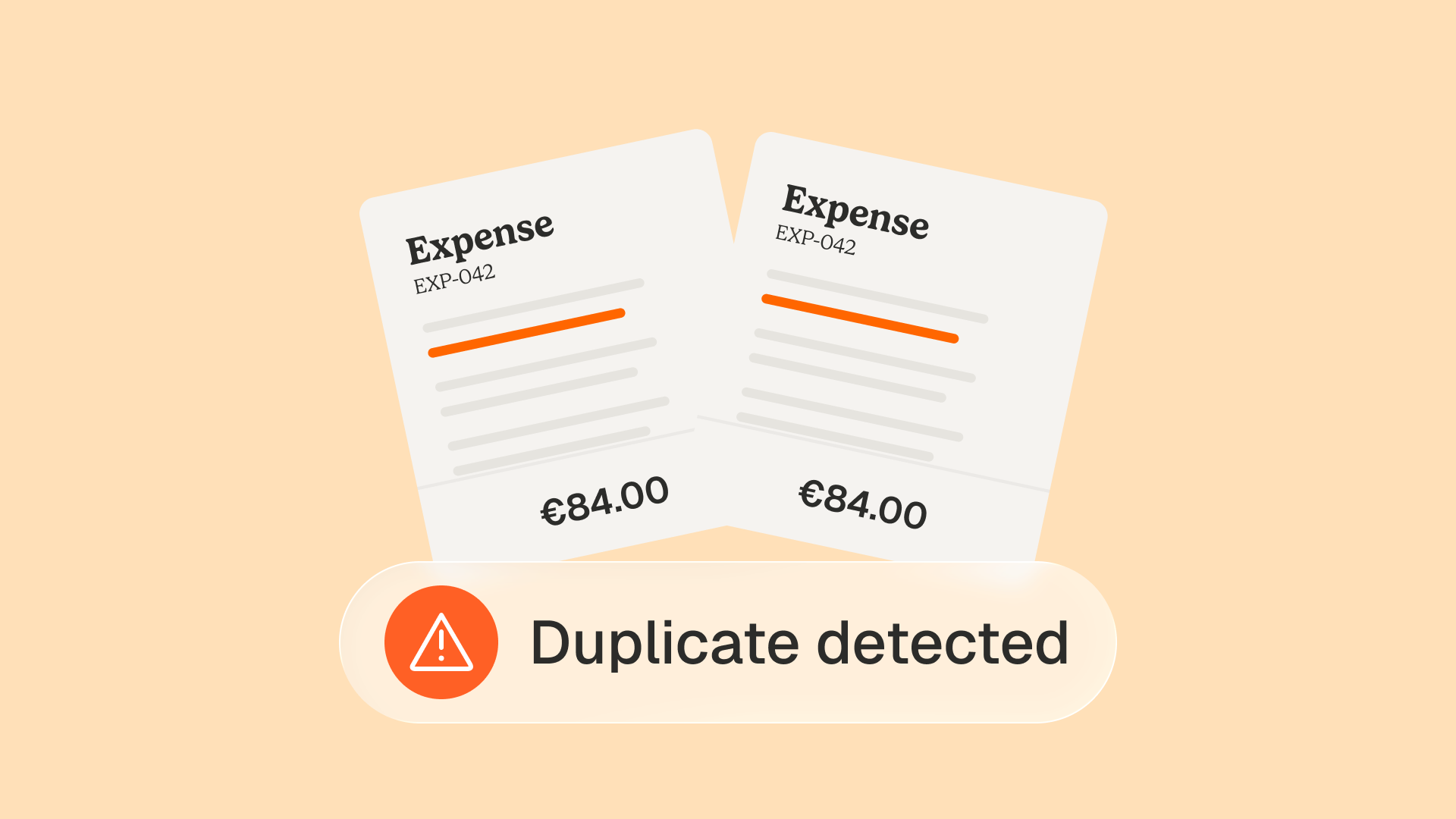
| Amounts tie, detail does not | Two errors of opposite sign inside the same account | All three sources, line level | Reconcile per employee, never at account total |
What an AI agent changes on this specific pass
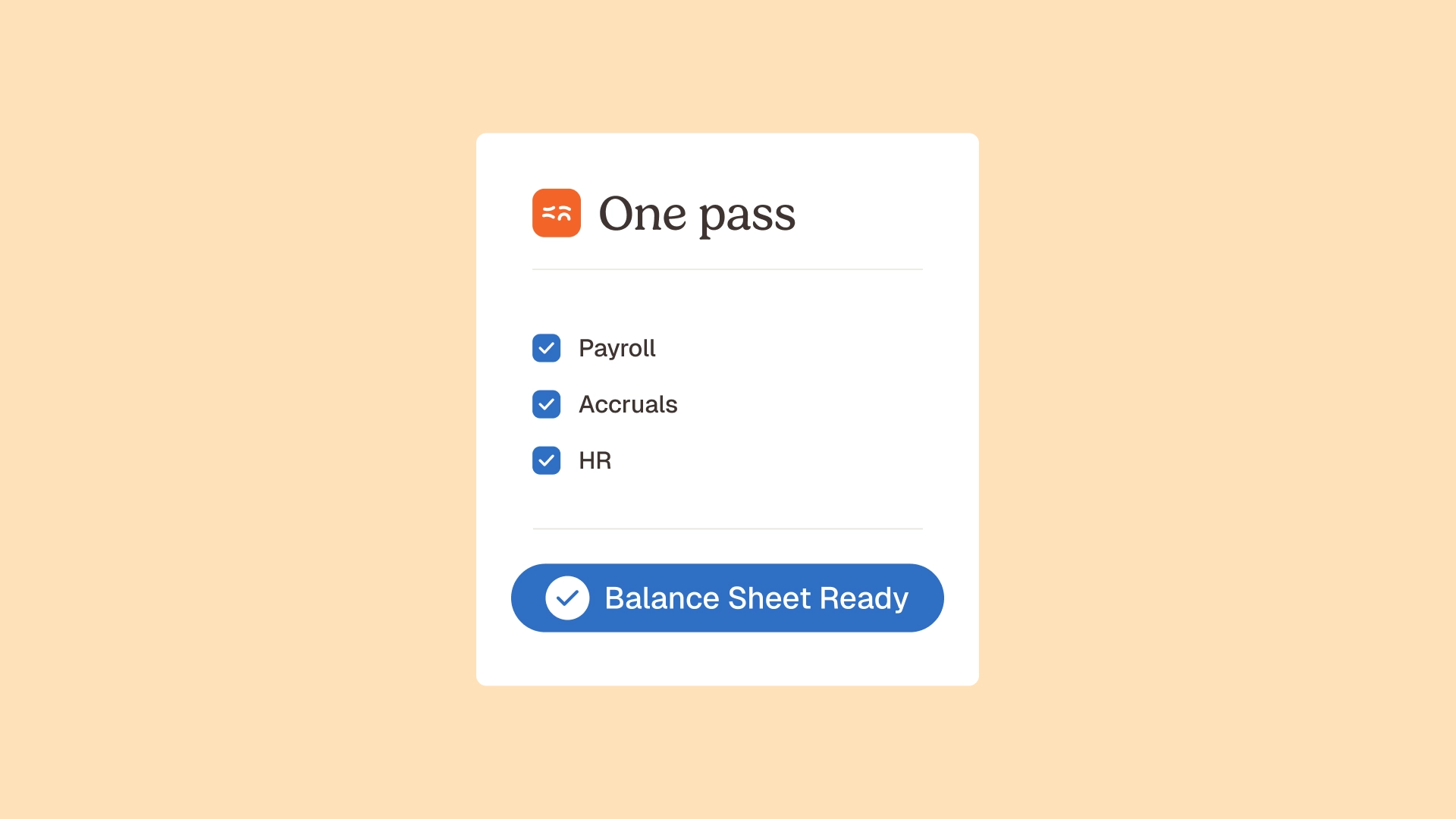
The Phacet agent Reconcile balance sheet accruals against HR and payroll runs the pass described above every month. It takes the GL export, the HR data and the payroll file, matches them line by line by account, employee and period, then surfaces each variance with its expected amount, its actual amount and its source.
The result Phacet reports on this agent is a reduction from ten person-days per month to around 2.5, with all 50 accounts covered every month instead of a sample. The team stops doing the matching and starts doing only the arbitration, which is the part that needs an accountant.
What makes it hold in production is not the matching itself. It is that every step is inspectable. AI Match exposes the reasoning behind each pairing, the Detail view keeps the unit-level trace per line, and the native audit trail timestamps every transformation. The output is a package an auditor can open, not a number a team has to defend from memory. The same logic drives the neighbouring agent that checks payroll consistency against employment contracts before the bank transfer goes out, and the one that prepares the audit file at year end.
On a different reconciliation, payments against invoices, Smartbox (800 employees, 14 countries) measured a fourfold productivity gain on the matching work itself.
"Phacet operates as an extension of our teams." Mourad Meraou, Operations Director, Smartbox
The payroll pass is not the same control, but the constraint is identical: high volume, multiple sources, and a monthly deadline that does not move. For the wider picture across every account family, see the Closing and Audit agent library, or our guide to shortening the close from day 15 to day 5.
Balance sheet reconciliation FAQ
What is balance sheet reconciliation?
Balance sheet reconciliation is the control that verifies every asset, liability and equity balance in the general ledger against its supporting evidence: bank statements, subledgers, schedules or external files. It confirms that each balance is not just arithmetically correct but genuinely justified.
What are the steps to reconcile a balance sheet account?
Assemble the supporting sources for the period, match the general ledger against them at line level, classify each variance by cause, rank by materiality and adjust above the review threshold, then document the pass with preparer and reviewer sign-off. Published guides split these into four to seven steps, with no material difference in the control itself.
How often should balance sheet reconciliations be done?
Monthly for high-risk and high-volume accounts including cash, payroll, accruals and intercompany. Quarterly is defensible for low-movement accounts with a documented risk assessment. Annual-only reconciliation almost always produces audit findings, because errors compound before anyone looks.
What is the difference between balance sheet reconciliation and bank reconciliation?
Bank reconciliation covers one account against one external statement. Balance sheet reconciliation covers every permanent account, most of which have no external statement at all. Bank reconciliation is one line item inside a balance sheet reconciliation, and it is the easiest one.
Why is payroll reconciliation harder than other balance sheet accounts?
Because there is no single external document to reconcile against. Payroll and accrual balances have to be rebuilt from three internal sources that share no common key: the general ledger journal, the HR system export and the monthly payroll file. The match has to be made by account, employee and period simultaneously.
Coverage is the real constraint, not speed
Every financial close guide sells the same promise: close faster. On payroll and accrual accounts, speed is the wrong target. A team that reconciles ten accounts in two days has not closed faster than a team that reconciles fifty in five. It has closed less.
The question worth asking at the end of the pass is not how long it took. It is how many accounts were actually justified, and how many were rolled forward because there was no time. When the matching runs on its own, that question stops being uncomfortable, and the finance team spends its month on the variances that deserve a decision. Start with the accounts you currently sample, and see what comes out.