
Phacet vs Agicap
Published on :
September 14, 2026

Nicolas Marchais is co-founder and CEO of Phacet. After seven years at Spendesk, he built Phacet as the agentic layer that orchestrates across ERP, banking and email systems. Reliable, auditable, cross-system, what he calls a Finance Workforce.

If you run finance in a company of 50 to 500 people, already use Agicap or are shortlisting it, and have watched a forecast get contradicted by what actually left the bank, this page is for you. If you are hunting for a cheaper treasury tool to replace Agicap, it will not help: Phacet is not one.
Phacet and Agicap are not competitors. Agicap is a treasury platform that forecasts your cash position once money has moved. Phacet is a catalogue of AI finance agents that verifies the data before it becomes cash. The two tools sit at different moments of the same cycle. The real question is therefore not which one to choose, it is which half of that cycle you currently leave uncontrolled.
Key takeaways
- Agicap forecasts cash after it has moved: it ingests what the bank reports, so a supplier overcharge that has already cleared enters the forecast as a correct outflow.
- Phacet verifies invoices, prices and flows before payment and exposes every step in a native audit trail, which is the input layer any forecast depends on.
- Across the five editorial pages ranking on this query on 13 September 2026, the terms "supplier invoice", "invoice control", "before payment" and "audit trail" appear zero times, against 43 mentions of forecasting.
- At Astotel, a group of 18 Paris hotels, price control on a single supplier surfaced up to 400 euros of billing errors per month, close to 5,000 euros a year.
- Sebastien Beyet, CEO and co-founder of Agicap, on the Phacet podcast in March 2026: "Even if a forecast is 99 percent accurate, if it cannot be explained, it's not really usable."
What Agicap does, and what it does not do
Agicap is a French SaaS company founded in 2016 that centralises bank account data, automates cash position tracking and lets finance teams build rolling forecasts, scenarios and payment schedules. Its site reports 8,000 client companies as of 13 September 2026, a figure its CEO also gave on the Phacet podcast in March 2026 and its own blog repeated in April 2026.
Its value sits in the forecasting and monitoring layer. It answers one question well: what will our cash position be in 30, 60 or 90 days? It aggregates bank feeds, categorises transactions and projects forward from known commitments and historical patterns. For a company managing tight liquidity or a financing decision, that is genuinely useful.
The scale of that job is worth stating, because it explains why the tool exists. On the Phacet podcast in March 2026, Sebastien Beyet described what his platform absorbs every day: "Our customers have on average around twenty bank accounts, sometimes multiple ERPs, and several forecasting sources. All of this data has to be aggregated, cleaned, and processed." Aggregating twenty bank feeds into one readable position is real engineering, and it is not something a finance team should rebuild in a spreadsheet.
What it does not do, by construction, is judge whether the amounts it ingests were correct in the first place. A treasury platform reads the bank. The bank reports what was paid, not what should have been paid. Nothing in that chain compares an invoice line against a negotiated price, a purchase order or a contract.
The blind spot: a forecast cannot see an error that has already cleared
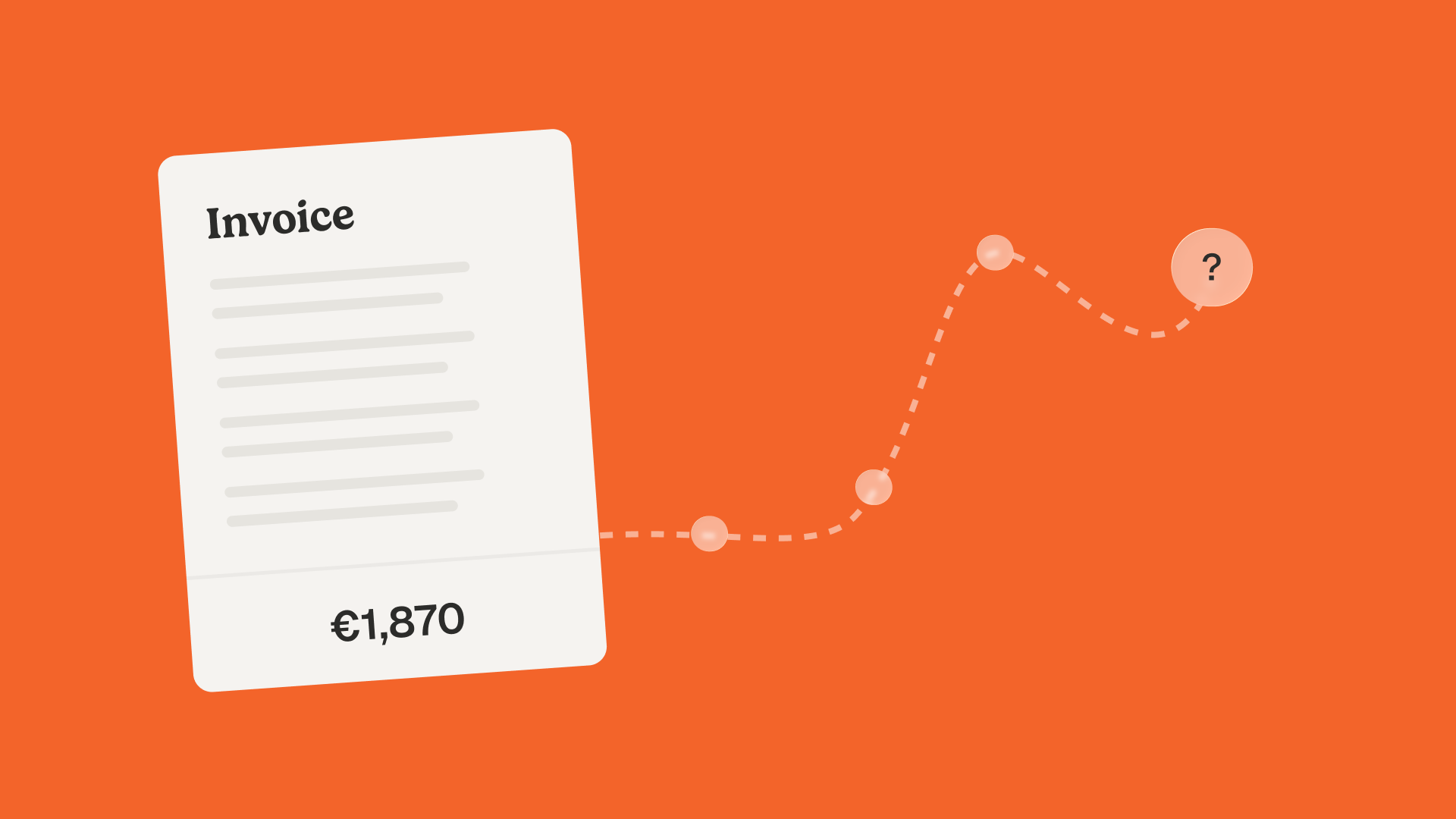
Picture a supplier who overcharges you on one invoice. The invoice is approved, paid, and the payment clears. From that second onward, the amount is a fact in your bank statement. Your treasury platform ingests it as a correct outflow, your position updates, your 90 day projection shifts by exactly the wrong amount, and every scenario you build on top inherits the error. Garbage in, forecast out.
The effect is not theoretical, and it is not small. At Astotel, a group of 18 hotels in Paris, purchasing director Valerie used to check prices by sampling invoices manually. On the same reference of smoked salmon at the same quantity, she found up to 6 euros of difference per kilo between two hotels working from a shared price list. Once a Phacet agent compared every invoice line against the negotiated prices, the picture changed: for a single supplier, up to 400 euros of errors per month, close to 5,000 euros a year, and two hours a day of manual control work removed. That case was published in June 2025, so treat the figures as an order of magnitude rather than a current benchmark.
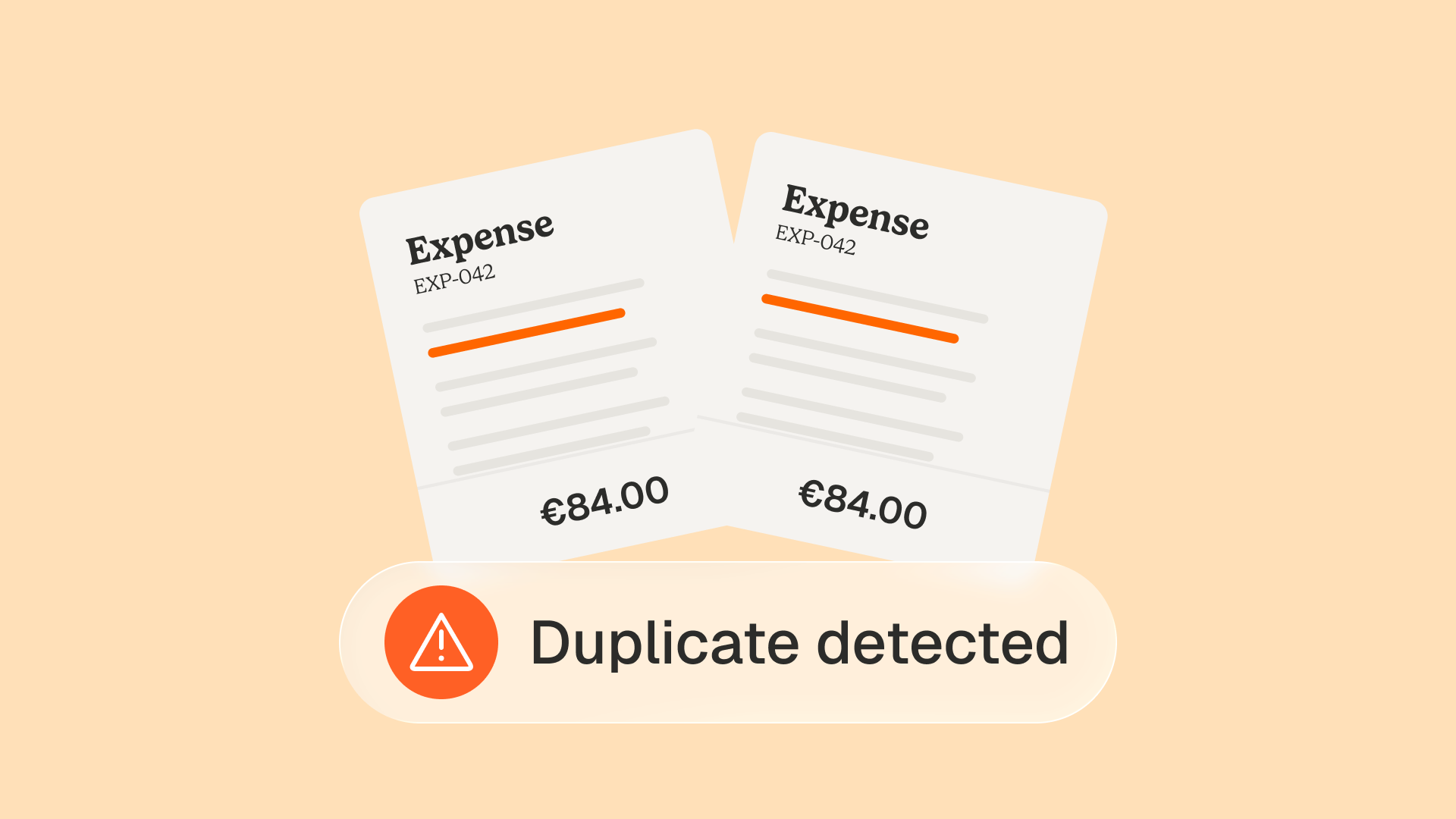
Now put that number back into the forecast. Five thousand euros a year on one supplier is not a rounding error in a cash plan, and no treasury tool on the market would ever have flagged it, because the money had already moved. This is what the supplier billing control agent is built for: comparing each line against the reference price list and raising the discrepancy before payment, not after.
What is striking is how absent this question is from the debate. We scraped the five editorial pages ranking on this query on 13 September 2026 (apogea.fr, agicap.com, tool-advisor.fr, euro-saas.com and commitly.com) and counted terms on 12,438 words of rendered text, excluding navigation and footers. "Invoice control", "supplier invoice", "before payment" and "audit trail" score zero across all five pages. "Data reliability" appears once. "Forecast" appears 43 times. The entire market conversation is about the projection, and almost none of it is about the input.
Does AI really add value in treasury?
Yes, but not where most people expect it, and the most credible answer to that question comes from Agicap itself. In March 2026, Sebastien Beyet, CEO and co-founder of Agicap, explained on the Phacet podcast why his team built a conversational AI assistant inside the product, tested it with customers, then removed it.
"There was an expectation and a strong initial adoption driven by curiosity, but very few recurring uses among our customers." Sebastien Beyet, CEO and co-founder, Agicap, March 2026.
His reasoning is worth reading closely, because it applies to every AI tool a finance team will be sold this year. First, the risk profile: "In a field as sensitive as finance, the risk of hallucination was simply not acceptable." Second, the accountability problem: a treasurer does not just consume numbers, they have to justify them. Third, and this is the sentence that should settle most AI buying debates in finance: "Even if a forecast is 99 percent accurate, if it cannot be explained, it's not really usable."
Where Agicap refocused its AI is telling too: transaction categorisation, bank reconciliation, extracting information from financial documents, automatic dashboard generation. In other words, the data preparation layer, not the conversation layer. "We focused on tangible value, the kind that is measurable for our users." That is the same conclusion Phacet reached from the other side of the problem, and it is why the two products end up complementary rather than overlapping.
Explainability is the requirement both sides share
The same sentence comes back from a finance team that bought Phacet. Guillaume Morin, CFO of Le Wagon, one of the global leaders in tech education, described in June 2026 why generalist AI tools failed on his reconciliation work between the company's proprietary student system and its accounting ledger, a job that used to cost his team several days a month.
"I had tested generalist solutions, but I couldn't audit the data or trace the calculations that led to the final result." Guillaume Morin, CFO, Le Wagon, June 2026.
His second sentence sets the bar for the whole category: "You cannot afford, as a finance professional, to have a black box: to hand over your data and receive an output in return. You have to understand how that output was constructed." His verdict on what changed with Phacet was blunt: "Phacet is the anti-black box."
Put the two quotes side by side. The CEO of a treasury platform and the CFO of a Phacet customer, interviewed three months apart, say the same thing: in finance, an unexplainable result is an unusable result. That is exactly the constraint AI Match is designed around. Semantic reconciliation matches an invoice to an order or a bank line to an entry even when labels differ, then exposes the data, the intermediate calculations and the reasoning behind each match. Every transformation is timestamped in a native audit trail, so the result can be defended at close rather than merely trusted.
Phacet vs Agicap: who does what, and when
The clean way to compare the two tools is not by feature list, it is by moment in the cycle. The table below is built from our own reading of both products on 13 September 2026.
| Moment in the cash cycle | Agicap | Phacet |
|---|---|---|
| Invoice arrives | Not its job | Sorts, extracts and structures the document into an auditable table |
| Before payment | Schedules and executes the payment | Checks each line against the price list, the order and the contract, and raises the discrepancy |
| Payment clears | Ingests the bank flow as a fact | Reconciles the bank line to the invoice and the entry, and flags what does not match |
| Cash position and forecast | Core strength: rolling forecasts, scenarios, multi entity consolidation | Not its job, and not a substitute for a treasury platform |
| Justification at close | History of team actions on documents | Native audit trail: every transformation traced, timestamped and reviewable |
| Question answered | What will our cash position be in 30, 60 or 90 days? | Is what we are about to pay, and what we just paid, actually correct? |
Read that table from top to bottom and the overlap disappears. Agicap owns the bottom half of the cycle, Phacet owns the top half, and the handover point is the payment. If your forecasting layer is already in place and the upstream half is still manual sampling in spreadsheets, the gap is where your next few thousand euros are sitting. That is the starting point of cash reconciliation with Phacet.
What changes now that e-invoicing is live in France
One regulatory shift makes this split more concrete. According to the French tax administration, since 1 September 2026 every company established in France must be able to receive invoices in electronic form, and large and mid sized companies must also issue them and transmit transaction and payment data. Small and micro businesses follow on 1 September 2027. The source is impots.gouv.fr, checked on 13 September 2026, and regulatory calendars do slip, so recheck the date before you build a plan around it.
The practical consequence is easy to underestimate. Invoice data arrives structured, in volume, and on a schedule. That removes the keying work, and it removes the excuse: when every invoice is machine readable, sampling a handful of them by hand stops being a reasonable control policy. Structured data makes systematic control possible, it does not perform it. A forecasting platform will consume the resulting flows faster. Whether those flows are correct remains a separate question, and it stays answered upstream.
There is a side effect worth anticipating. By speeding up how invoices circulate, the reform shortens the delay between receiving an invoice and paying it. The time available to spot an anomaly by eye shrinks at exactly the moment volume rises. A control that rested on one person's vigilance and a few monthly samples will hold up even less well once the chain runs fast.
How to run both together, in three steps
- Keep the forecasting layer where it is. If Agicap already gives you a consolidated cash position and rolling scenarios, replacing it solves nothing. The gap is not in the projection, it is in what feeds it.
- Put a control in front of the payment. Start with one supplier and one rule, the way Astotel did: invoice lines against the negotiated price list. One agent, one measurable result, and a first agent live in under two weeks.
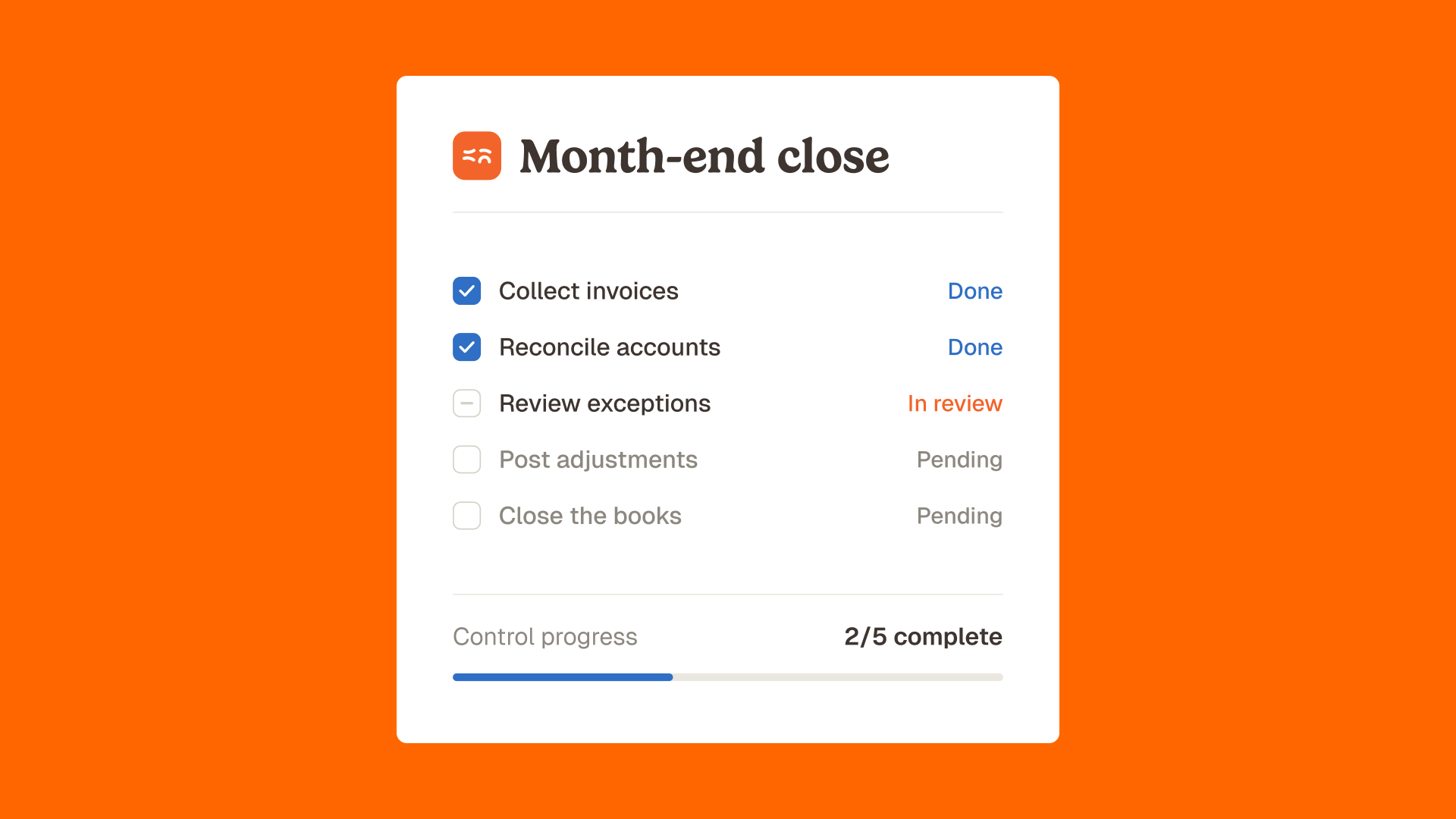
- Close the loop after the payment. Add bank transaction reconciliation so that what the bank shows, what the ledger records and what the invoice said are matched line by line, with the unmatched flows raised rather than absorbed.
Measure the result on one number, not on a feeling: the euro value of discrepancies raised before payment over a full quarter, supplier by supplier. That figure is the only honest answer to whether the upstream layer earns its place, and it is also the figure that tells your treasury platform how wrong its inputs used to be. If it comes back near zero on a real portfolio of suppliers, you have learned something useful and cheap.
None of this replaces your team. The agent prepares the work and raises the exceptions, a human decides. That is the same boundary Agicap's CEO drew: "What we expect from AI is to advise and prepare the work, but we want to stay in control."
Frequently asked questions
What is Agicap?
Agicap is a French SaaS treasury platform, founded in 2016, that centralises bank and ERP data to track cash position, build rolling cash flow forecasts, model scenarios and schedule supplier payments. Its website reported 8,000 client companies in September 2026. It is used mainly by SMBs and mid market companies across Europe.
How much does Agicap cost?
Agicap does not publish a public price list. Pricing is quoted per company after a demo and varies with the number of bank accounts, entities and modules activated. Expect a subscription negotiated annually rather than a self service plan. Ask for the quote to be broken down by module, since payment and collection features are usually priced separately from forecasting.
What is the best software for cash flow forecasting?
There is no single best tool, only a best fit for your structure. Compare on bank connections, multi entity consolidation, forecast granularity and the quality of the data feeding the model. A forecast built on unverified invoice and payment data will be wrong in a way no feature can fix, so audit your inputs first.
Can you use Phacet and Agicap together?
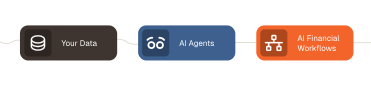
Yes, and that is the intended setup. Phacet runs upstream to structure documents, control invoices before payment and reconcile flows afterwards. Agicap runs downstream to forecast and monitor the cash position. Phacet orchestrates between your existing tools rather than replacing them, so no migration of your treasury platform is required.
The takeaway
Choosing between Phacet and Agicap is the wrong exercise. One predicts, the other verifies, and a prediction is only as good as the reality it reads. If your finance team spends its days securing data so the forecast can be trusted, that work is exactly what an agent should be doing, and the time it frees goes back into analysis. The treasury team page lists the agents that cover the upstream half of the cycle, so you can situate where yours stands today.
Sources used in this article: the Phacet podcast episode with Sebastien Beyet, CEO and co-founder of Agicap (March 2026), the Le Wagon customer story (June 2026) and the Astotel customer story (June 2025), all three linked above; Agicap and Phacet, forecasting versus upstream data control; agicap.com and the French tax administration page on when the e-invoicing reform applies, both checked on 13 September 2026. Competitor corpus measured on 13 September 2026 across five editorial pages and 12,438 words.
Latest Resources
Unlock your AI potential
Go further with your financial workflows — with AI built around your needs.


