Benefits of accounts payable automation, with real numbers
Published on :
June 29, 2026

Nicolas Marchais is co-founder and CEO of Phacet. After seven years at Spendesk, he built Phacet as the agentic layer that orchestrates across ERP, banking and email systems. Reliable, auditable, cross-system, what he calls a Finance Workforce.

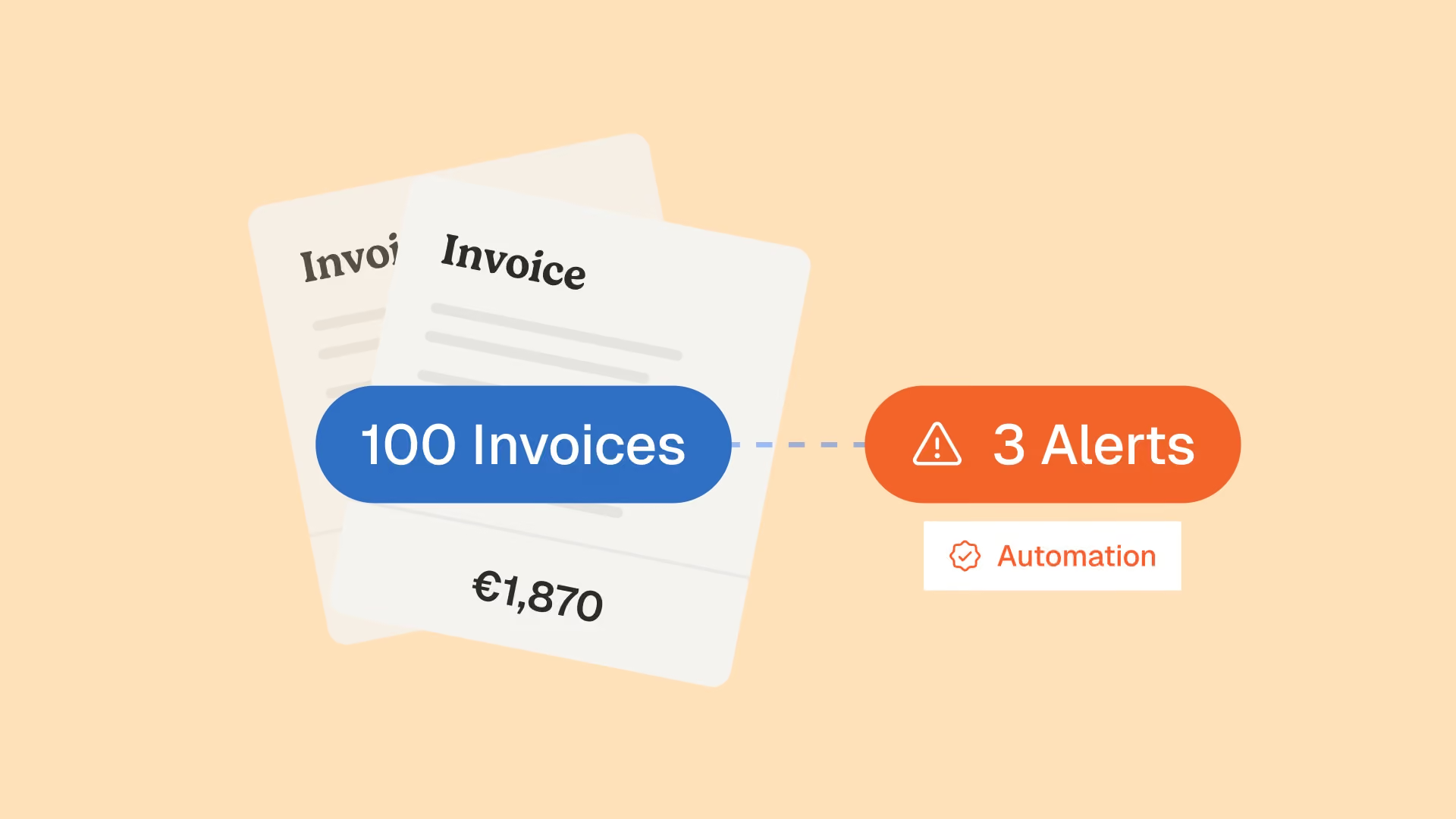
At Astotel, an 18-hotel group, supplier price checks used to happen by sampling. Then an accounts payable automation agent flagged €400 of billing errors in a single month, on one supplier alone. That is close to €5,000 a year the team would never have caught by hand.
This is the benefit most articles skip. Search "accounts payable automation benefits" and you get the same list everywhere: faster processing, lower cost per invoice, fewer typos. Those gains are real, and we will put numbers on them. But the largest return often sits somewhere else: the money you stop losing because every invoice is checked before it is paid.
The short answer: accounts payable (AP) automation cuts invoice processing cost (from roughly $10 to $15 down to about $3 per invoice), shortens approval cycles from weeks to hours, and frees finance teams from manual data entry. Its most underrated benefit is financial: catching pricing errors, duplicates, and fraud before payment, which protects margin that speed alone never recovers.
What is accounts payable automation?
Accounts payable automation is the use of software and AI agents to handle the invoice-to-payment cycle: capturing invoices, extracting and validating data, matching them against orders and contracts, routing approvals, and paying suppliers, with far less manual work.
Where a manual process depends on someone retyping invoice data and spot-checking a sample, an automated process structures every invoice into usable data, checks it, and surfaces only the exceptions that need a human. The finance team stops processing and starts reviewing. For a fuller map of the category, the accounts payable hub groups the specific jobs automation can take over.
The benefits everyone measures (and the real numbers behind them)
Most "benefits" articles converge on the same operational gains, because those gains are genuine. Here are the four that show up in every credible AP benchmark, with the numbers behind them.
- Lower cost per invoice. Commonly cited benchmarks put manual invoice processing at roughly $10 to $15, against about $3 for best-in-class automated teams. The savings come from eliminating data entry, paper, postage, and storage.
- Faster approvals. Automated routing moves an invoice from receipt to approval in hours instead of days or weeks, which makes early-payment discounts reachable and late fees avoidable.
- Less manual time. Finance teams report cutting up to 50% of the time spent on AP once capture and routing are automated, time that shifts to analysis and forecasting.
- Fewer errors. Validation against your records catches duplicate invoices and keystroke mistakes before a payment goes out, rather than after.
Figures reflect commonly cited AP benchmarks from research firms such as Ardent Partners and APQC. Actual results vary with invoice volume and how manual the starting point is.
These are worth having. But notice what they share: every one of them is about doing the same work faster and cheaper. None of them asks a harder question.
The benefit almost nobody counts: control before payment
A supplier invoice can be processed in three seconds and still be wrong. The price does not match what you negotiated. The quantity does not match what you received. The same invoice was already paid last month. Speed catches none of that. Control does.
This is the gap in the standard benefits list, and it is where the real money usually hides. Three control benefits matter most:
- Line-level price compliance. An agent checks each invoice line against your negotiated prices or price book and flags any drift before payment. This is the control supplier billing job, and for food operators, the supplier price list version of it.
- 3-way matching. The agent reconciles the invoice against the purchase order and the delivery note, so you only pay for what was ordered and received. See 3-way matching and the agent that runs it.
- Duplicate and fraud prevention. Automated checks catch duplicate invoices and verify supplier bank details, which blocks the fake bank-change fraud that slips past even experienced teams.
Each of these produces an audit trail: every decision is traced, timestamped, and reviewable. That is the difference between automation that moves invoices and automation that protects margin. The full set sits in the internal controls library, and the case for checking invoices before payment is worth reading on its own.
Real numbers from finance teams (not benchmarks)
Industry benchmarks tell you what is possible. The numbers below are measured results from finance teams running AP automation in production, with the company named.
At Astotel, the control benefit and the time benefit arrived together. "I save up to two days a month, and I spot errors I would never have seen on my own," says Valérie, the group's purchasing director. At Smartbox, reconciliation productivity rose 4x, with each use case live in six weeks. At La Nouvelle Garde, a 10-brasserie group, automation gave the finance team two days a week back and absorbed a doubling of outlets without new hires.
Across more than 100 finance teams, the pattern repeats: the time savings get people in the door, the control benefits keep money in the business.
How AP automation delivers these benefits
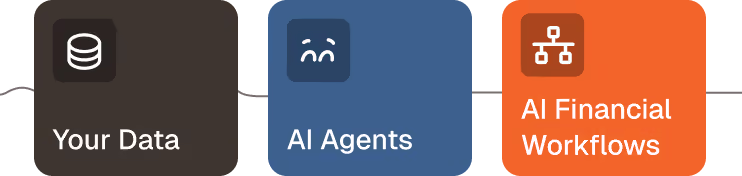
The mechanics behind every number above follow the same three steps: structure, match, analyze.
- Structure. Each invoice, in any format, is turned into auditable data: vendor, amounts, line items, dates, all extracted and standardized.
- Match. The data is reconciled against orders, contracts, prices, and prior payments, with the reasoning shown at each step rather than hidden in a black box.
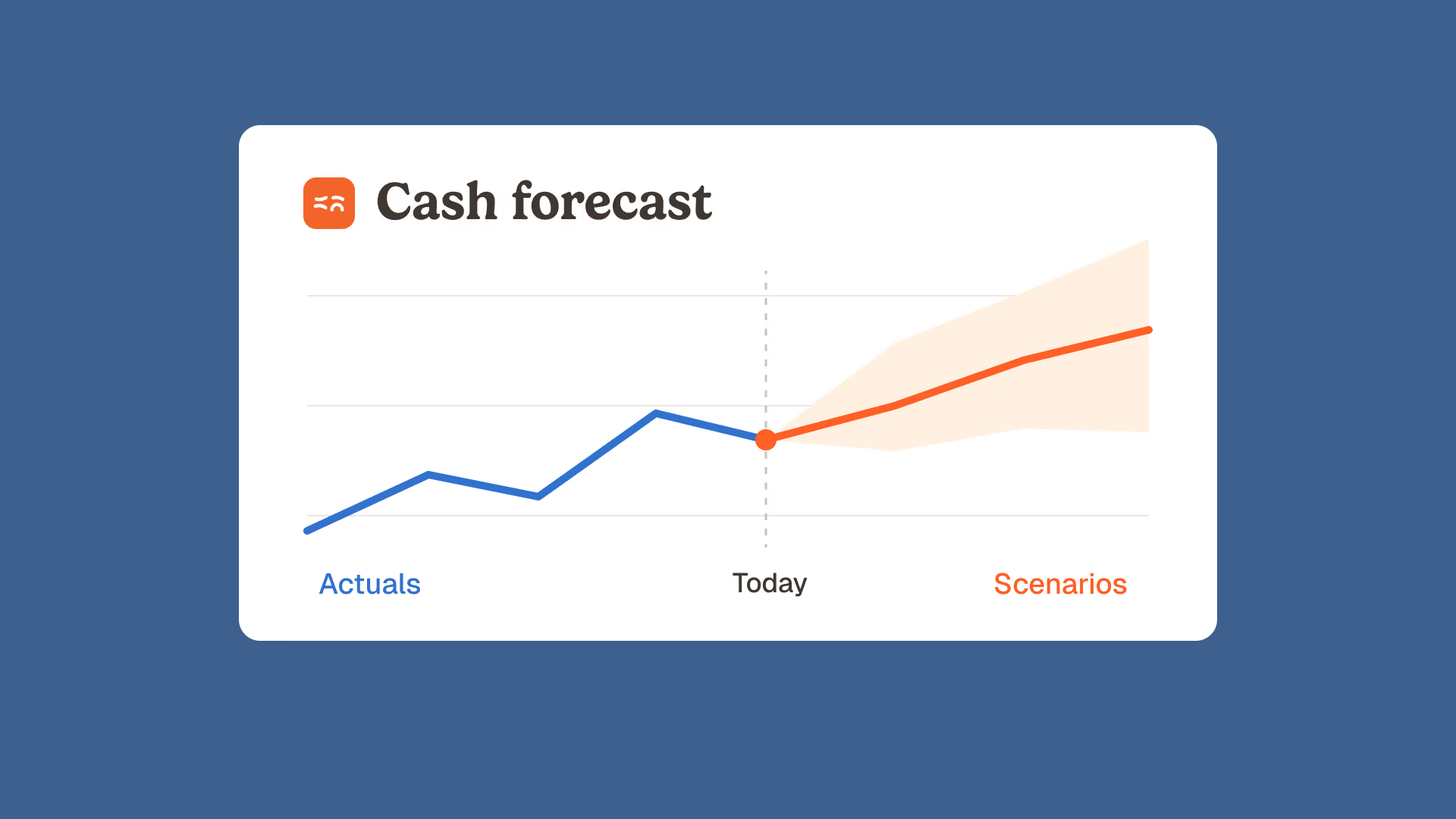
- Analyze. Clean, trusted data feeds dashboards and alerts, so the team sees bottlenecks, cash needs, and anomalies in real time.
Two points make this hold in production. The process is human-in-the-loop: the agent proposes, a person decides, and nothing is paid silently. And the data is hosted in Europe with a native audit trail, so every output is something you can show an auditor. Speed without that traceability is how errors get paid faster.
Who gets the most out of AP automation?
AP automation pays back fastest where invoice volume is high, suppliers are many, and the finance team is small. That describes most goods-heavy SMEs: hospitality groups, food and beverage operators, and retailers and distributors, where a single finance leader or procurement lead is accountable for thousands of supplier lines a month.
If your team still validates invoices by sampling rather than checking every line, the control benefits described above are not a nice-to-have. They are the difference between a number you trust and a number you hope is right. The accounts payable controls guide is a good next step.
FAQ
Is AI replacing accounts payable?
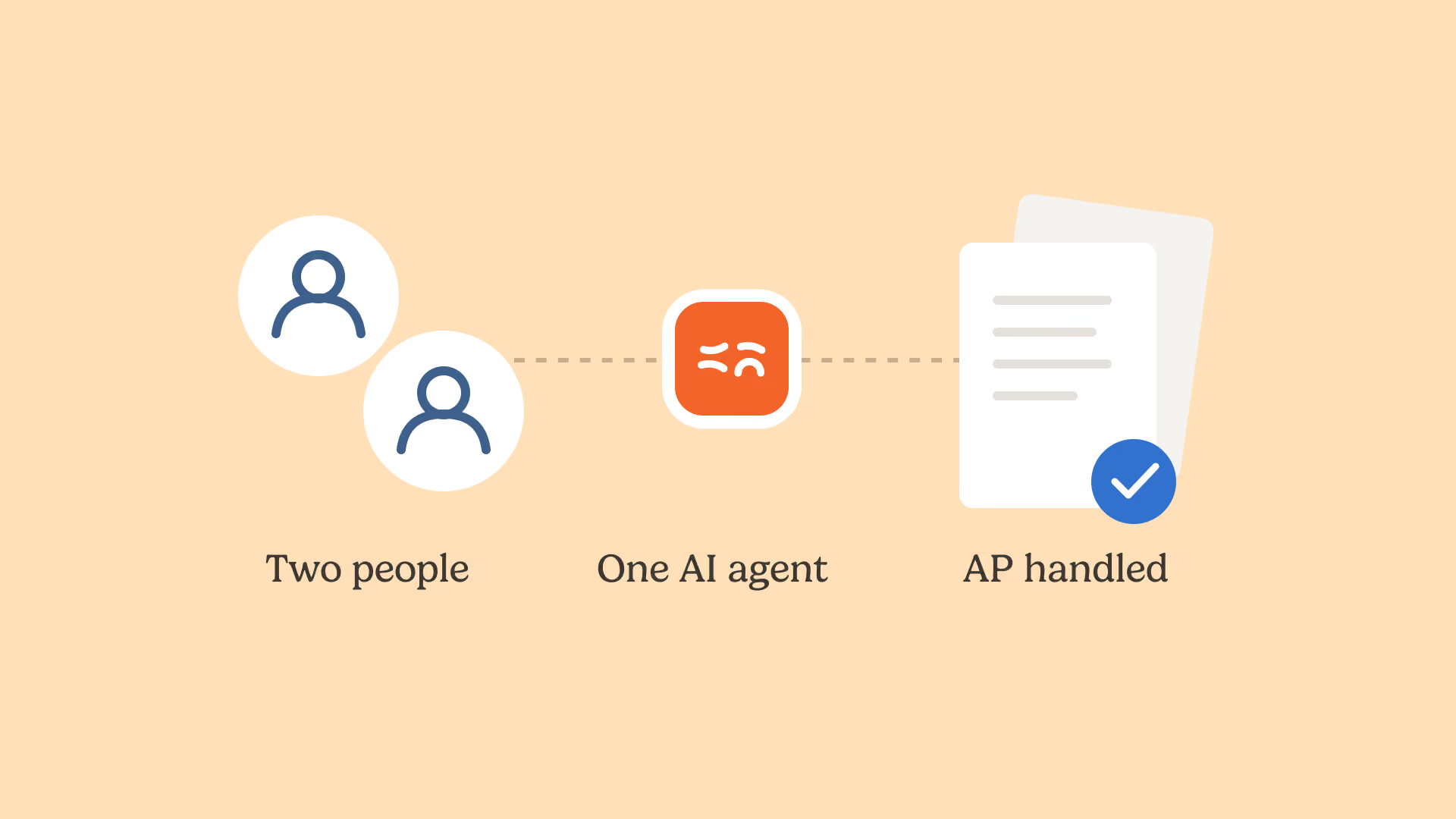
No. AP automation changes the work, it does not remove the people. The agent handles capture, matching, and routine checks, then surfaces exceptions for a human to decide. The AP role shifts from manual data entry to reviewing flagged invoices and analyzing spend, which is higher-value work. The principle is human-in-the-loop: the AI proposes, the person disposes.
How much does AP automation save per invoice?
Commonly cited benchmarks put manual invoice processing at roughly $10 to $15 per invoice, against about $3 for best-in-class automated teams. The gain comes from removing data entry, paper, postage, and storage, plus avoiding late fees and capturing early-payment discounts. Your actual figure depends on invoice volume and how manual your process is today.
How is AP automation different from AP controls?
AP automation makes the invoice-to-payment cycle faster and cheaper. AP controls make it correct: line-level price checks, 3-way matching, and duplicate and fraud detection before payment. The strongest setups do both, because processing a wrong invoice quickly only means paying the wrong amount sooner.
How quickly do you see results?
Finance teams typically get a first agent into production in under two weeks, and many measure time savings within their first monthly close. Control benefits, such as recovered overbilling, often show up on the first batch of invoices the agent reviews.
Accounts payable automation does save time and cost, and those benefits are easy to measure. The harder benefit to see, and the one that usually matters more, is the money you keep because every invoice is checked before it is paid. Speed gets your team out of data entry. Control keeps margin in the business.
To see both on your own invoices, book a demo.
Latest Resources
Unlock your AI potential
Go further with your financial workflows — with AI built around your needs.