

Regate alternative: Phacet vs Regate, data entry vs control
Published on :
October 12, 2026

Nicolas Marchais is co-founder and CEO of Phacet. After seven years at Spendesk, he built Phacet as the agentic layer that orchestrates across ERP, banking and email systems. Reliable, auditable, cross-system, what he calls a Finance Workforce.

This page is for finance leads and accounting firms whose Regate by Qonto contract is ending. Short answer: move Regate's data entry to Qonto or another pre-accounting tool, and use the migration to add a check of every supplier invoice before it is paid. If you came for sailing regattas, or you run a small business without purchase orders or delivery notes, this page is not for you.
Regate by Qonto is a French pre-accounting and payment platform for SMEs and accounting firms: it collected supplier invoices, pre-filled the accounting entries, sent them through approval circuits and scheduled the payments. Qonto is not renewing Regate contracts, and access closes on each contract's next anniversary date. Phacet is not a like-for-like replacement, because it keeps no books and pays no supplier. Phacet is a catalogue of AI agents that checks each supplier invoice against the purchase order, the delivery note and the negotiated price before payment, on top of whichever tool takes over the data entry.
Key takeaways
- Qonto does not renew Regate by Qonto contracts: access closes on each contract's next anniversary date, and data can be requested for three months afterwards.
- The history of customer invoices, expense reports and purchase requests does not move to Qonto automatically, so export it before your Regate access closes.
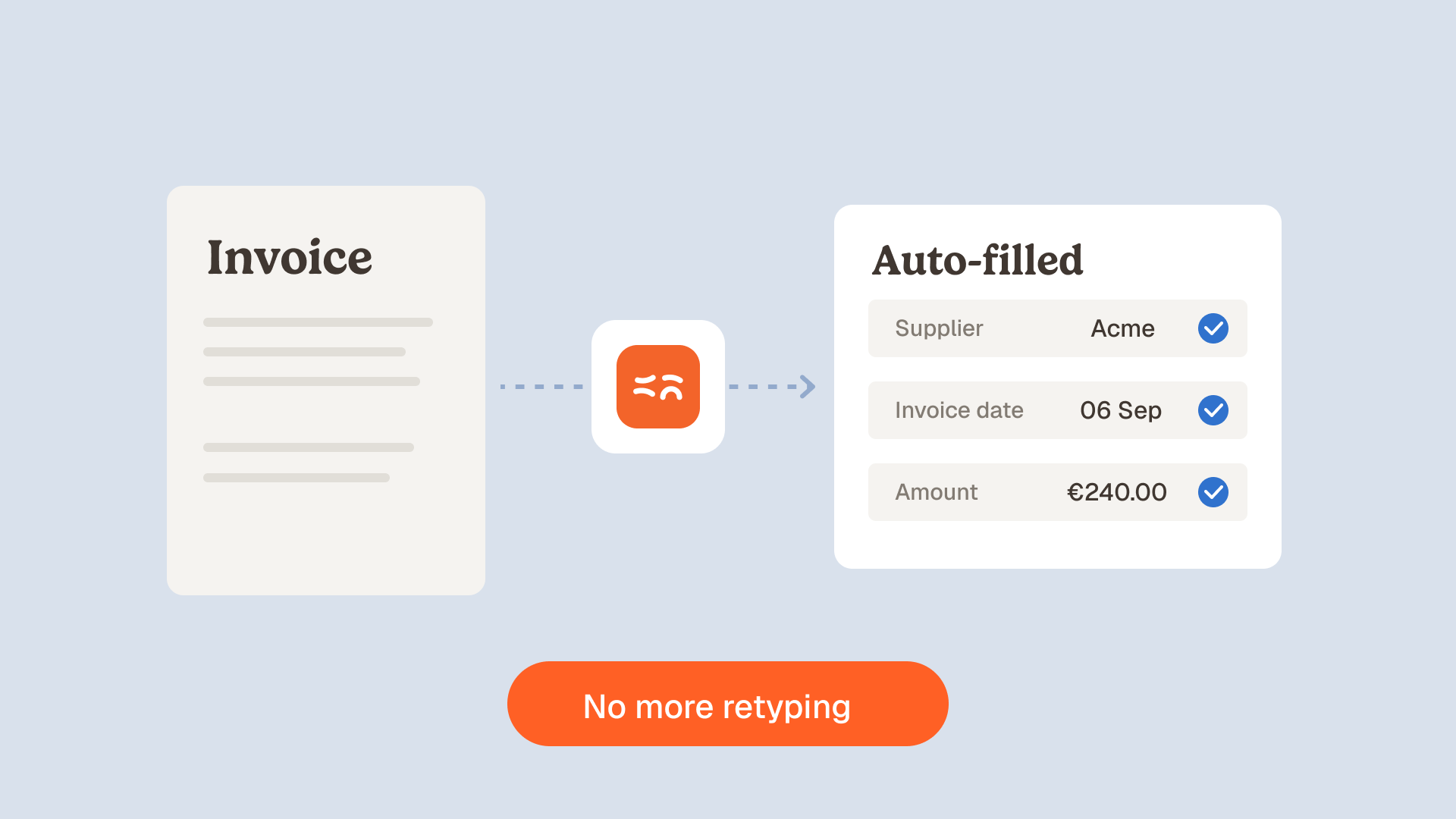
- Regate automated invoice capture, approval routing and payment scheduling, which speeds up entering an invoice but does not check whether the invoice is right.
- An approval records who agreed to pay; a control compares each invoice line with the order, the delivery and the agreed price.
- At Astotel, 18 Paris hotels, checking every invoice line against negotiated prices surfaced close to 5,000 euros a year of errors on one supplier.
What Regate by Qonto automated, and what it left to approvers
Regate was built to take manual entry off the finance team's desk. According to the product sheet published by Blog du Modérateur, it digitised supplier invoices and pushed them to the accounting software, ran customised approval circuits, and let the company schedule and validate payments by transfer, batch or card. It also tracked budgets and purchase requests with an assigned approver, reconciled bank transactions, managed expense reports and produced a cash plan. For accounting firms, Qonto's page for accountants presented Regate by Qonto as synchronised with the main production software: Sage, Cegid, ACD and MyUnisoft.
Read that list again and a pattern stands out. Every step either moves a document (capture, entry, export) or records a human decision (approval, payment validation). Blog du Modérateur's product sheet and Qonto's two pages for accountants, read on 26 September 2026, contain zero mentions of a delivery note, a negotiated price, a duplicate invoice or a check before payment. That is not proof that no such setting existed. It does show what teams bought Regate for: faster entry, and a clear record of who approved what.
One date needs fixing, because the sources disagree. Clubic and FrenchWeb write that Qonto bought Regate in 2022, and Heelio's comparison page says April 2024. Qonto's own LinkedIn announcement is dated 7 March 2024, and in May 2024 the product was renamed Regate by Qonto. Use 2024 when you brief your board or your clients.
When does Regate stop, and what happens to your data?
Your Regate access stops on your own contract's anniversary date, not on one national date. Qonto's help centre article on moving from Regate to Qonto states that all Regate contracts will not be renewed at their next due date, that access is closed automatically on that date, and that the Regate team gives each customer its own date. After it, you have three months to ask support for data from your account.
Do not read Qonto's marketing pages as a sign of continuity. On 26 September 2026, its software page for accountants still presented Regate by Qonto, its synchronisation with Sage, Cegid, ACD and MyUnisoft, and comparison pages against Pennylane, Tiime and Dext. The help centre article is the one that describes the end of your contract.
The press summarised it differently. FrenchWeb on 6 July 2026 and Clubic on 25 July 2026 reported that Qonto would end Regate "by the end of the summer", and migration guides repeat "end of August 2026". The help centre is the source that binds your contract. If yours renews in November, plan the cut-off for November, and do not assume either that access is already gone or that you have until the end of the year.
What moves, and what does not, according to the same help centre article:
- Accounting entries: their history stays in Regate and in your production accounting software; it is not rebuilt in Qonto.
- Customer invoices, expense reports and purchase requests: their history cannot be transferred to Qonto automatically. Everything can be downloaded, with the support team's help if needed.
- Chart of accounts, customer list and item list: exported from Regate, then imported into Qonto in bulk.
- Automation rules: Qonto's list of rule triggers is not identical to Regate's, so rules have to be rebuilt rather than copied.
- Exports from Qonto: CSV, XLSX, TRA for Cegid and MyUnisoft, IN for ACD, and formats for Cegid Quadra, Sage 50, EBP, Pennylane, Tiime and Agiris. API links with Sage GE, Cegid Quadra, Cegid Loop, MyUnisoft and ACD are reserved for accounting firms.
- Entities outside France: Qonto's pre-accounting module is currently available only on the French market.
The timeline below puts the dates side by side. It is built from primary sources, all read on 26 September 2026.
| Date | What happens | Source |
|---|---|---|
| 7 March 2024 | Qonto announces the Regate deal | Qonto on LinkedIn |
| 22 May 2024 | Regate becomes Regate by Qonto | Qonto on LinkedIn |
| 1 August 2025 | Qonto and Sage stop selling Regate by Qonto for Sage 100 | Sage knowledge base |
| 18 December 2025 | Qonto registered as an approved e-invoicing platform; Regate never appears on the list | impots.gouv.fr list, updated 22 September 2026 |
| July 2026 | The shutdown is reported in the press | FrenchWeb (6 July), Clubic (25 July) |
| 1 September 2026 | Every company in France must be able to receive e-invoices | impots.gouv.fr |
| Your contract anniversary | Regate contract not renewed, access closed | Qonto help centre |
| Anniversary + 3 months | Last window to request your data from support | Qonto help centre |
| 31 December 2026 | End of maintenance and support for Regate by Qonto for Sage 100 | Sage knowledge base |
| 1 September 2027 | SMEs must issue e-invoices and report transaction and payment data | impots.gouv.fr |
Which tools can take over Regate's data entry?
The default path is Qonto itself. Qonto appears on the list of approved e-invoicing platforms published by the French tax administration, registered on 18 December 2025, so a company that follows the migration keeps a platform able to receive e-invoices. Regate never had that status, which makes the shutdown a tooling problem, not a compliance one.
If you would rather leave, Google's own answer to "regate alternative" in France lists iPaidThat, Pennylane, Dext and Cegid Loop, drawn from a single software directory. Neither that answer nor the directory mentions that Regate is closing. We checked the names against the same official list: Pennylane (registered 11 December 2025), iPaidThat (6 January 2026) and Cegid (18 December 2025) are approved platforms. Dext is a capture tool that extracts invoice and receipt data and publishes it to an accounting software, so it replaces Regate's capture, not its link to your books.
Whichever you choose, you are replacing data entry with data entry. That is necessary, and it is worth choosing well: our guide to pre-accounting tools covers the selection criteria. Phacet is not on this list, and should not be. It does not collect receipts for your accountant, keep the books or pay suppliers. It sits on top of the tool you pick and checks what that tool is about to pay.
Why is approval not the same as control?
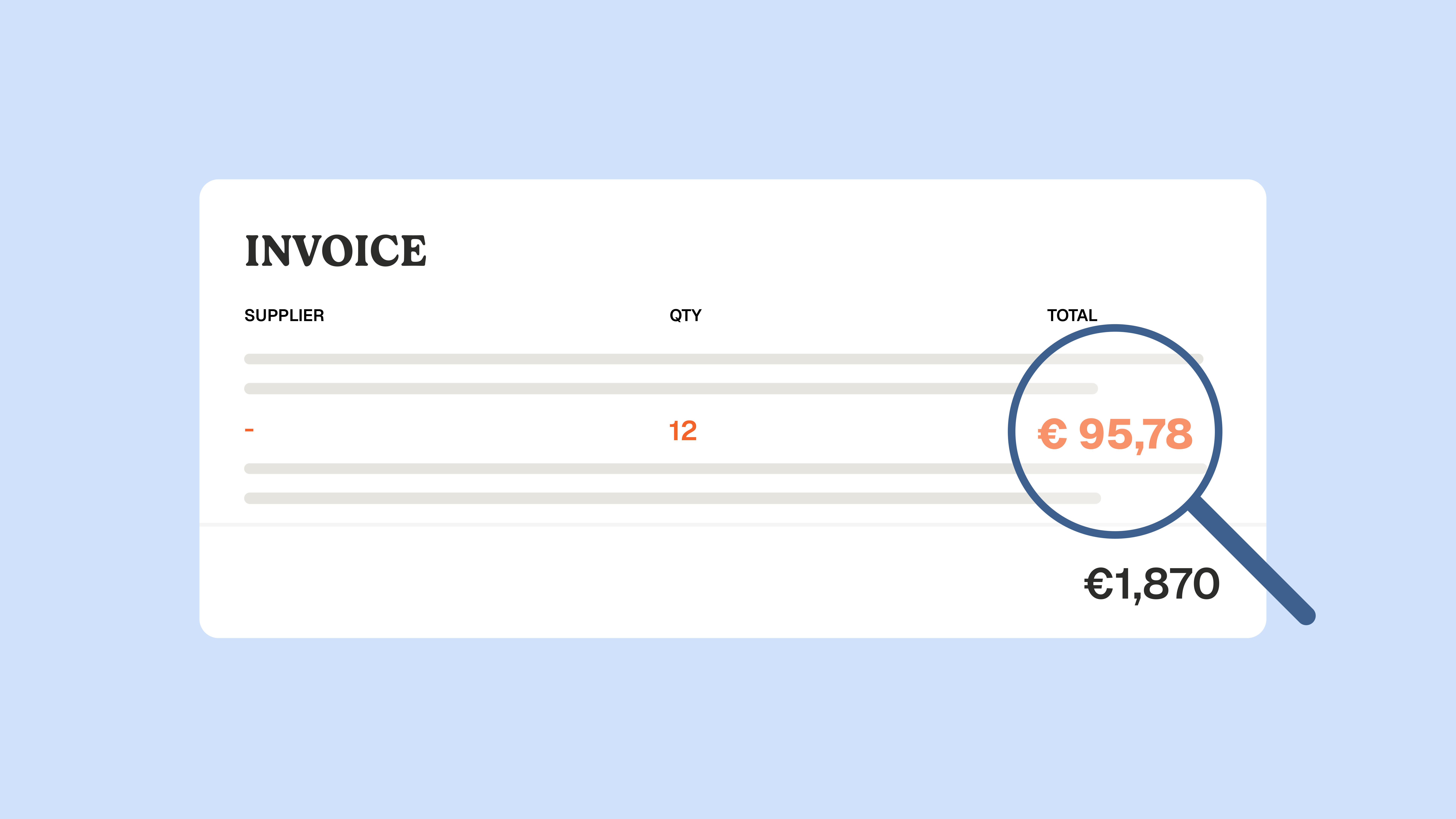
Approval and control answer two different questions. An approval records that a named person agreed to pay an invoice. A control checks that the invoice is right before anyone approves it: the quantity matches what was delivered, the unit price matches what was negotiated, the same invoice has not already been paid, and the bank details belong to the supplier. A circuit like Regate's handled the first question well. The approver still answered the second one by eye, invoice by invoice, or by sampling.
Phacet's co-founder puts the gap in one line.
"Tomorrow, no invoice will be paid without AI. Because suppliers deliver 80 units and invoice 100." Nicolas Marchais, CEO and co-founder, Phacet, on LinkedIn, 25 February 2026 (our translation).
The conversation around Regate's replacement has not reached that question yet. On the five French pages that currently cover Regate alternatives and the shutdown (5,509 words, read on 26 September 2026), the French terms for delivery, negotiated price, duplicate and "before payment" appear zero times. They all discuss where invoices should be entered next. None discusses what should be checked before they are paid.
That second question is the one Phacet's invoice validation agent answers. It checks every invoice before payment for duplicates, due dates and budget, routes it to the right approver, and logs each decision in an audit trail. Your approver keeps the final word, with the checks already done.
Phacet vs Regate, side by side
The table compares Regate by Qonto, as documented until its contracts end, with Phacet. Regate cells come from Blog du Modérateur's product sheet and Qonto's help centre, Phacet cells from Phacet's product pages, all read on 26 September 2026.
| Job | Regate by Qonto | Phacet |
|---|---|---|
| Invoice capture and entry | Core feature: digitises supplier invoices and pre-fills entries for the accounting software | Extracts and structures invoice lines to check them; keeps no books |
| Link to Sage, Cegid, ACD, MyUnisoft | Core feature for accounting firms | Hands verified data back to your existing tools through API, email or file |
| Approval circuits | Customised circuits, approver on purchase requests | Routes each invoice to the right approver with the result of every check attached |
| Payment execution | Transfers, batches, virtual and physical cards | None: Phacet does not pay suppliers |
| Invoice vs order and delivery note | Not documented in the descriptions reviewed | Line-by-line matching before approval |
| Invoice vs negotiated prices | Not documented in the descriptions reviewed | Checks each line against the price list or contract terms |
| Duplicates and bank-detail changes | Not documented in the descriptions reviewed | Flags duplicates and scores every new IBAN before payment |
| Approved e-invoicing platform | No (Qonto is, since 18 December 2025) | No: works on top of your platform |
| Price | From 110 euros a month for companies, per an undated product sheet | Studio 299 euros a month, Studio Max from 799 euros a month |
| Status in 2026 | Contracts not renewed; access closes at each anniversary date | Available; first agent live in under two weeks |
Read the table as two layers, not two rivals. The upper rows are Regate's job, and they need a new home whatever you decide about Phacet. The lower rows are the control layer. AI Match, Phacet's matching engine, compares each line with the order, the delivery and the price, and shows the data and reasoning behind every match, so the approver sees why a line was flagged. Every transformation is kept in a native audit trail that your auditor or accountant can read. Plans and credits are on the Phacet pricing page, with a 14-day trial on Studio.
What to check during the migration itself
A migration is the moment when control is weakest. Data is re-keyed, rules are rebuilt, and two tools run side by side for a few weeks. Five checks cover most of the risk.
- Export before the door closes. Download entries, supporting documents, the supplier list and the payment history before your anniversary date. The three-month support window is a fallback, not a plan.
- Re-check every supplier IBAN you re-import. The supplier master is usually moved through a spreadsheet, which is exactly where a changed bank detail goes unnoticed. Compare each imported IBAN with your Regate export and your payment history, or let the fake IBAN detection agent score each one against your supplier database before any payment.
- Rebuild rules after the cut-off, not before. Qonto's help centre advises importing rules only once you have stopped using Regate, "to avoid anything being forgotten or duplicated" (our translation). Two tools processing the same invoices is how the same invoice gets paid twice.
- Stop the automatic forwarding. The help centre also asks you to cut automatic invoice sending to Regate and tell your users to stop uploading invoices there.
- Watch the second channel. Since 1 September 2026, e-invoices reach you through an approved platform while some suppliers still email PDFs. A thread on r/impotsfrance posted days before the deadline named the usual culprit: duplicate suppliers and missing company numbers in the data. A duplicate check before payment costs less than a recovery afterwards.
What control catches in production
At Astotel, a group of 18 Paris hotels, supplier price checks used to happen by sampling. The invoices were already digitised and routed cleanly, which is roughly where a Regate user stands today. A Phacet agent then checked every line against the negotiated rates and surfaced around 400 euros of billing errors a month on a single supplier, close to 5,000 euros a year.
"I save up to two days a month, and I spot errors I would never have seen on my own." Valérie, Purchasing Director, Astotel (our translation).
At La Nouvelle Garde, a group of ten brasseries, finance recovered close to two days a week and removed about 70% of the time spent moving between Gmail and the accounting tool. "Phacet is like a team member that operates 24 hours a day," says Théo Richard, its CFO. At Jinchan, COO Alban Cacace describes the other half of the value: "We see exactly what is being done. Nothing is hidden."
None of these companies came from Regate. The point is the layer, not the migration: once entry is automated, control is what scales badly, and it is the part a new entry tool leaves where it was.
For accounting firms moving client files off Regate
Accounting firms carry most of this migration. Qonto claims 6,000 firms on Regate, according to Cabinet Digital (26 July 2026), and Clubic reports that firms will have to re-integrate the history of customer invoices, expense reports and purchase requests themselves. Qonto frames the decision as simplification.
"The decision to progressively stop this solution is independent of the ACASI acquisition. It is part of our wish to simplify our offer by concentrating our development on a single platform integrated into Qonto." Qonto, quoted by FrenchWeb, 6 July 2026 (our translation).
For a firm, the question is not only where the entries go. It is whether client files come out of the migration with the same checks as before, or better ones. Phacet's page for accounting firms puts deployment on a first client file at about four hours (one of presentation, two of configuration, one of refinement), after which the setup replicates to the following files. A migration that forces you to reopen every file is a good time to add that step once.
Frequently asked questions
What is Regate?
Regate is a French pre-accounting and payment platform for SMEs and accounting firms, sold as Regate by Qonto since Qonto announced the deal on 7 March 2024. It collected supplier invoices, pre-filled entries for accounting software such as Sage, Cegid, ACD and MyUnisoft, ran approval circuits and scheduled payments. Qonto is not renewing Regate contracts in 2026.
How much does Regate cost?
Regate's company plans started at 110 euros a month for supplier invoices, 160 euros with budgets and purchase requests, and 240 euros with company cards, according to Blog du Modérateur's undated product sheet. Accounting firm offers started at 12 euros excluding VAT. With contracts no longer renewed, the cost that matters is the replacement tool plus the migration.
What is Dext?
Dext is a data capture tool that extracts figures from receipts, bills and invoices and publishes them to accounting software. It is aimed mainly at accounting firms and bookkeepers. Google lists it among Regate alternatives because it can replace Regate's capture. It does not keep the books or pay suppliers, so it is paired with an accounting platform.
What has happened to Regate since Qonto bought it?
Qonto announced the Regate deal on 7 March 2024 and renamed the product Regate by Qonto in May 2024. Sales of the Sage 100 edition stopped on 1 August 2025, with maintenance ending on 31 December 2026. In 2026, Qonto stopped renewing Regate contracts and is moving the features into its own platform, which is an approved e-invoicing platform.
Can Phacet replace Regate?
No. Phacet does not collect receipts for an accountant, keep the books or pay suppliers, which were Regate's core jobs. Move that data entry to Qonto or another tool, then add Phacet on top: its agents check each supplier invoice against the order, the delivery note and the negotiated price before payment. Plans start at 299 euros a month.
The takeaway
Regate's shutdown forces a decision most finance teams did not plan for this year. Make it twice. Once for data entry, where Qonto's own platform or another approved tool will do the job, and the deadline is your anniversary date. Once for control, which an approval circuit does not replace and which shows up in your margins rather than in your inbox. To see what a control layer finds on your own invoices, book a demo with one supplier family before your Regate access closes.


Latest Resources
Unlock your AI potential
Go further with your financial workflows — with AI built around your needs.


