

Phacet vs Pennylane: complementary tools, not competitors
Published on :
October 12, 2026


Nicolas Marchais is co-founder and CEO of Phacet. After seven years at Spendesk, he built Phacet as the agentic layer that orchestrates across ERP, banking and email systems. Reliable, auditable, cross-system, what he calls a Finance Workforce.

This page is for finance leaders and accountants in companies of 50 to 500 people who run their books on Pennylane and wonder whether AI agents on top are worth it. Short answer: Phacet does not replace Pennylane, it checks what Pennylane cannot see. If you are a freelancer choosing between Pennylane and Indy, or want a cheaper Pennylane replacement, this page will not help. And if you came for PennyLane, the quantum computing library, you are on the wrong page.
Phacet and Pennylane do not compete. Pennylane is a French accounting and financial management platform that records, reconciles and pays: it is your system of record. Phacet is a catalogue of AI agents that checks supplier invoices before payment against documents Pennylane never receives, such as a delivery note kept in your stock tool or a price negotiated by purchasing, then hands the verified result back to Pennylane. The real question is not which one to pick. It is what your ledger cannot check on its own.
Key takeaways
- Pennylane controls what enters its own perimeter: approval circuits for invoices and purchase requests, mandatory approval of supplier bank details, and duplicate detection between an e-invoice and a manual receipt.
- A supplier invoice can only be checked against the documents the checker can read, and delivery notes kept in a stock tool or prices negotiated by purchasing usually sit outside the ledger.
- At La Nouvelle Garde, a group of ten Paris brasseries, a Phacet agent reconciles delivery notes from the Yokitup stock tool with the supplier invoices recorded in Pennylane.
- Pennylane includes API connections and third party integrations from its Essentiel plan upward, so check your plan before adding any agent layer on top of it.
What Pennylane does, and does well
Pennylane is a French financial management and accounting platform, launched in 2020, where a business and its accountant work on the same data. Its home page claimed more than 1,500,000 business leaders, freelancers and finance directors on 26 September 2026. It connects to banks, reads invoices by OCR, reconciles transactions with invoices, pays suppliers and produces the accounts. It is also a plateforme agréée, a platform approved by the French tax administration to exchange e-invoices, which matters now that every company in France must be able to receive them.
It also controls more than comparison pages give it credit for. Its help centre, updated in September 2026, documents approval circuits for supplier invoices and purchase requests from the Premium plan, and a mandatory approval step before any payment whenever a supplier IBAN is added or changed, also from Premium. In the purchase module, an approved purchase request generates a purchase order and receipts are logged against it. Pennylane blocks identical bank transactions on import and flags potential duplicates between an e-invoice and a receipt uploaded by hand.
AI is part of the product too. ComptAssistant, a chatbot enabled by default, answers product questions and, for accountants, runs read-only queries on the accounting data; users can also build custom AI agents inside it. A Pennylane MCP server lets an external assistant such as Claude or ChatGPT read Pennylane data, read-only for now, from the Essentiel plan. For accounting firms, Compta Online reported in May 2026 that Pennylane had launched Autopilot, an interface that measures the automation rate of each client file on invoices, transactions and reconciliations. That is a serious control perimeter. The point of this page is to locate its edge, not to deny it.
What are Pennylane's limits for supplier invoice control?
Pennylane checks what it holds. It routes an invoice to the right approver, secures bank details and detects a duplicate between two documents it has received. What its documentation does not describe is an automatic comparison between a supplier invoice line and the evidence that lives in other systems: the delivery note in the stock or operations tool, the price list negotiated by purchasing, the rate written in a supplier contract.
Its own help centre shows where that edge is. In the purchase module, "receipt and invoicing are independent: they can happen at different times" (our translation). Invoice rules, which pre-fill accounts, VAT and analytics, "are based on the third party" and offer no criterion based on the content of the invoice, so two invoices from the same supplier cannot automatically receive different treatments. On extraction, Pennylane is candid: its OCR "is not infallible", and users are encouraged to always reread the fields it fills in.
We downloaded the 781 French articles of Pennylane's help centre listed in its sitemap on 26 September 2026, 597,671 words in total, and searched them. "Prix négocié" (negotiated price), "mercuriale" (supplier price list), "écart de prix" (price variance) and any form of three way matching appear zero times. Absence from documentation is not proof that nothing exists in the product, so ask Pennylane about your own plan. It does show where the vendor itself draws its perimeter.
Its CEO describes the same boundary from the inside. Interviewed by Compta Online on 12 May 2026, Arthur Waller set out where Pennylane's AI is heading. The interview reports his view that the real time sink is not the accounting modules but the back and forth with documents outside accounting, such as a lease or a board resolution to match with entries.
"AI will search the corpus of available documents, parse the document and check on its own that you have the matching entries." Arthur Waller, co-founder and CEO, Pennylane, May 2026 (our translation).
The key word is available. Pennylane can reason on documents that are in Pennylane, and its advantage, as the interview points out, is native access to the client's documents inside the platform. A delivery note that never left your stock tool, or a price agreed in a purchasing email, is not one of them.
A real case: the delivery note in one tool, the invoice in Pennylane
La Nouvelle Garde runs ten brasseries in Paris, is preparing its arrival in Bordeaux and already has London in sight. Before Phacet, according to the case published on 18 September 2025, its finance team spent close to 70% of its time between Gmail and Pennylane. The supplier inbox alone took two full days a week for one person. Delivery notes and invoices were reconciled by sampling, because the delivery notes lived in Yokitup, the group's stock management tool, and the invoices in Pennylane.
"A ten-cent difference on a delivery note, at our volumes, can mean half a margin point lost." Théo Richard, CFO, La Nouvelle Garde, September 2025.
No setting in the ledger closes that gap, because the ledger never receives the delivery note. The group deployed two Phacet agents: automated processing of supplier emails, integrated with Pennylane, and systematic reconciliation of delivery notes against invoices between Yokitup and Pennylane. The first effect showed in the inbox: "Before, when an accountant came back from three weeks of vacation, they found 1,794 emails waiting. Today, everything is pre-processed." The case is a year old, so read it as a pattern rather than a benchmark; the full story is on the La Nouvelle Garde customer page.
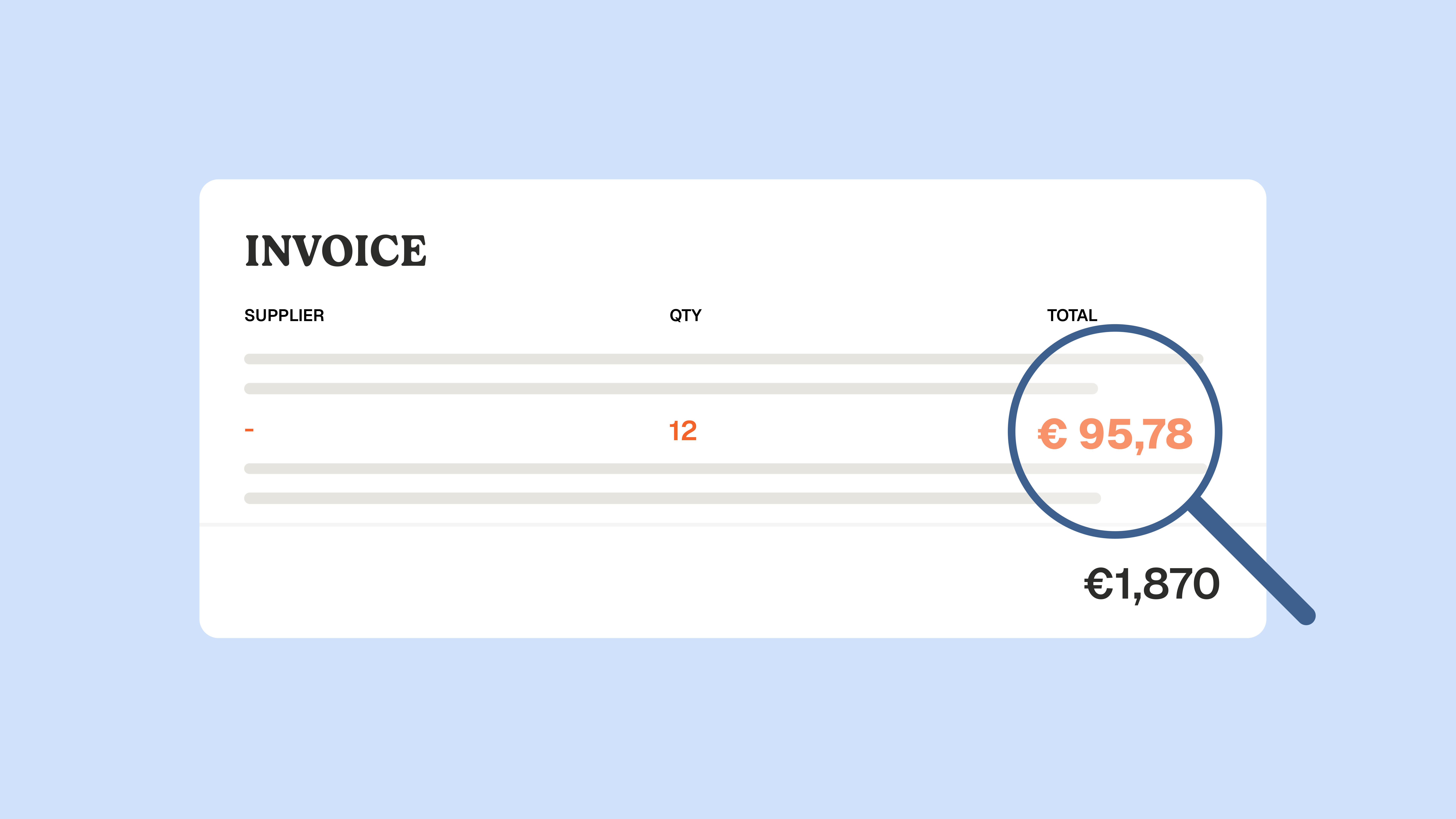
If your delivery notes, price lists or contracts live anywhere other than Pennylane, that is the gap 3-way matching with Phacet is built to close: each invoice line is compared with the order and the delivery before the invoice goes to approval.
Phacet vs Pennylane: who does what, from invoice to close
The fairest way to compare the two is by moment in the supplier cycle, not by feature list. The table below is built from Pennylane's help centre and Phacet's product pages, both read on 26 September 2026.
| Moment in the supplier cycle | Pennylane | Phacet |
|---|---|---|
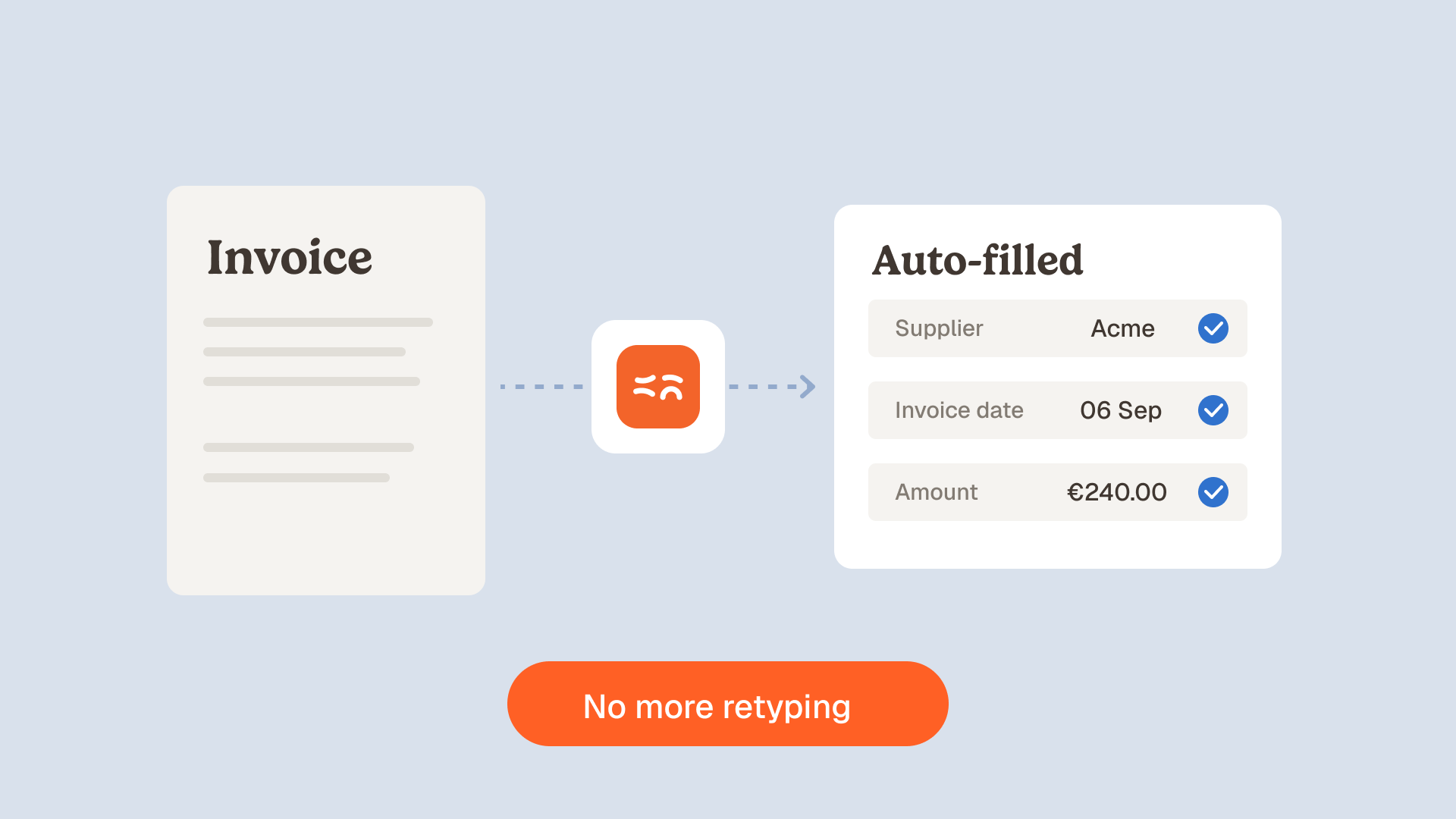
| Invoice arrives | Receives e-invoices as an approved platform, reads PDF invoices by OCR | Sorts the shared accounting inbox, extracts the lines and routes each document with its fields already structured |
| Before approval | Approval circuits by approver and amount, from the Premium plan | Checks each line against the price list, the purchase order and the delivery note held in other tools, and raises the discrepancy |
| Supplier bank details | Mandatory approval of any new or changed IBAN, from the Premium plan | Flags suspicious or fraudulent documents for review before they move on |
| Dispute | Lets you contest an e-invoice and set it to "in dispute" | Provides the evidence: which line, which price, which delivery |
| Recording, payment, reconciliation | Core strength: bookkeeping, supplier payment, bank reconciliation, accounts | Hands verified data back to Pennylane, or a ready-to-import file if the connector is down |
| Question answered | Is this invoice recorded, approved and paid? | Is this invoice correct before we pay it? |
Read it top to bottom and the overlap disappears. Pennylane owns the record and the payment. Phacet owns the check against everything the record does not contain. The handover point is the approval, and AI Match exposes the data and reasoning behind each match, so the approver in Pennylane sees why a line was flagged instead of trusting a black box. Every step is kept in a native audit trail, which is what the accountant reviewing the file at close needs.
Does Phacet replace Pennylane?
No, and it is not designed to. Phacet has no general ledger, does not produce the annual accounts, is not an approved e-invoicing platform and does not pay suppliers. It works upstream of the ledger and hands clean data back to it. Phacet's page for accounting firms answers the practical version of the question, whether the agent replaces the Pennylane connector: "No. If the connector is working, the agent reconciles the data. If the connector is not working, the agent produces a ready-to-import file."
Pennylane's own direction points the same way. On 17 July 2026, its CEO Arthur Waller was the guest of the Phacet podcast, in an episode whose notes list opening its data to AI agents as Pennylane's strategic bet against software vendors that close their doors. Two months earlier he told Compta Online that "any SaaS software vendor runs the risk of losing its value and becoming a simple database manipulated from Claude or OpenAI" (our translation). A ledger that opens its data through an API and an MCP server expects specialised agents to work around it, and Pennylane's integration marketplace already lists third party AI agent apps.
The confusion usually comes from the word AI, which both products use for different jobs. Pennylane's AI helps you use Pennylane and, for accountants, query and automate the files inside it. Phacet's agents specialise in control work between systems: price, order, delivery, contract, bank.
For accounting firms running client files on Pennylane
Pennylane is built around the collaboration between a company and its accountant, and many firms run their whole portfolio on it. Autopilot, as described by Compta Online, lets a firm see how much of each file is automated. Automation and control are two different measures, though. A file can be highly automated and still carry a supplier overcharge that nobody compared with a price list.
This is where firms use Phacet as a production and advisory tool. According to Phacet's page for accounting firms, deployment on a first client file takes about four hours, one of presentation, two of configuration and one of refinement, and the setup then replicates to the following files. Firms use it to open recurring engagements such as financial control, procurement monitoring or margin analysis, billed as added value rather than absorbed as production.
What running both costs
A Pennylane plus Phacet stack has two lines, and the first is often misquoted. Several comparison pages still show Pennylane prices by headcount band, 1 to 5 employees or 6 to 15 employees, as Finance Héros did in December 2025. Pennylane's help centre says otherwise: since February 2026, subscriptions are based on the number of users who actually access the platform, not on declared employees. On 26 September 2026, its French pricing page displayed 7, 14 and 24 euros excluding VAT per month for the Starter, Basique and Essentiel plans, before user tiers.
Two plan details matter if you add an agent layer. API connections and third party integrations are included from the Essentiel plan, and approval circuits for invoices and IBAN approval start at Premium. On the Phacet side, the Studio plan costs €299 per month with one user and 45,000 credits, and Studio Max starts at €799 per month with three users. Both are listed on the Phacet pricing page, with a 14-day trial on Studio, and credits are consumed per document processed.
How to run Phacet on top of Pennylane, in three steps
- Keep Pennylane as the ledger and the e-invoicing platform. Nothing moves: accounts, payments, reconciliation and your accountant's access stay where they are. Check that your plan includes API connections before you connect anything.
- Put one control in front of the approval. Pick one supplier family and one rule, the way La Nouvelle Garde started with delivery notes against invoices, or start with the supplier inbox using the accounting inbox agent. One agent, one measurable result, and a first agent live in under two weeks.
- Hand the result back and measure it. Verified data flows back to Pennylane, discrepancies go to a person who decides. Track one number per quarter: the euro value of discrepancies raised before payment, supplier by supplier.
None of this replaces your team or your accountant. The agent prepares the check and raises the exceptions, and a human approves the invoice in Pennylane.
What French e-invoicing changes for this split
Since 1 September 2026, every company established in France must be able to receive its invoices in electronic form, through an approved platform such as Pennylane. Large and mid-sized companies must also issue them, and small businesses follow on 1 September 2027, according to impots.gouv.fr (page updated on 16 January 2026, checked on 26 September 2026). Invoices now arrive structured.
Structured is not verified. Pennylane lets you contest an e-invoice by reporting an error on the products or services billed, such as price, VAT rate, receipt or delivery, which sets it to "in dispute". The supplier is notified automatically only if its own platform supports that status, which is not mandatory. The status carries the dispute. Someone still has to find the error, and that means comparing the invoice with a price and a delivery that are not written on the invoice.
Frequently asked questions
Who owns Pennylane?
Pennylane is a privately held French company led by its co-founder and CEO, Arthur Waller. Its investors include Sequoia Capital and CapitalG, Alphabet's growth fund, which joined in April 2025 during a 75 million euro round that valued Pennylane at 2 billion euros, according to CNBC. It is not listed on any stock exchange.
Is Pennylane an ERP?
Not in the classic sense. Pennylane describes itself as an all-in-one financial management and accounting platform covering invoicing, purchases, bank, payments and bookkeeping. Inventory and operations stay in dedicated tools connected to it, such as Stockpit for stock, according to its help centre. For goods-heavy companies, that split is where cross-system checks start.
Does Pennylane have AI features?
Yes. Pennylane includes ComptAssistant, a chatbot enabled by default that answers product and accounting questions and runs read-only queries on the data. Users can build custom AI agents inside it, and a Pennylane MCP server lets external assistants such as Claude or ChatGPT read Pennylane data, read-only for now, from the Essentiel plan.
What are the alternatives to Pennylane?
For French SMBs, the accounting platforms most often compared with Pennylane are Sage, Cegid, QuickBooks, Tiime, Indy and Axonaut, depending on company size and whether an accountant is in the loop. Compare them on approved e-invoicing platform status, multi-entity support, API access and pricing model, since several published comparisons still quote outdated prices.
Can Phacet and Pennylane be used together?
Yes, that is the intended setup. Pennylane stays the ledger, the approved e-invoicing platform and the payment tool. Phacet runs upstream, checks invoices against price lists, orders and delivery notes held in other systems, and hands verified data back through the connector. No migration is required on either side, and your accountant keeps working in Pennylane.
The takeaway
Choosing between Phacet and Pennylane is the wrong exercise. Pennylane records what happened and keeps it compliant. Phacet checks, before payment, whether what is about to be recorded is right, using the documents your ledger never receives. Keep the ledger you trust and close the gap around it. The quickest way to size that gap is to book a demo with your own Pennylane setup and one supplier family.


Latest Resources
Unlock your AI potential
Go further with your financial workflows — with AI built around your needs.


