

Modern CFO role: from control to decisions with AI agents
Published on :

Nicolas Marchais is co-founder and CEO of Phacet. After seven years at Spendesk, he built Phacet as the agentic layer that orchestrates across ERP, banking and email systems. Reliable, auditable, cross-system, what he calls a Finance Workforce.

Written for the CFO or finance director of a 50 to 500 person company, asked to be more strategic while the week still goes to checking. Not a page about CFO salaries.
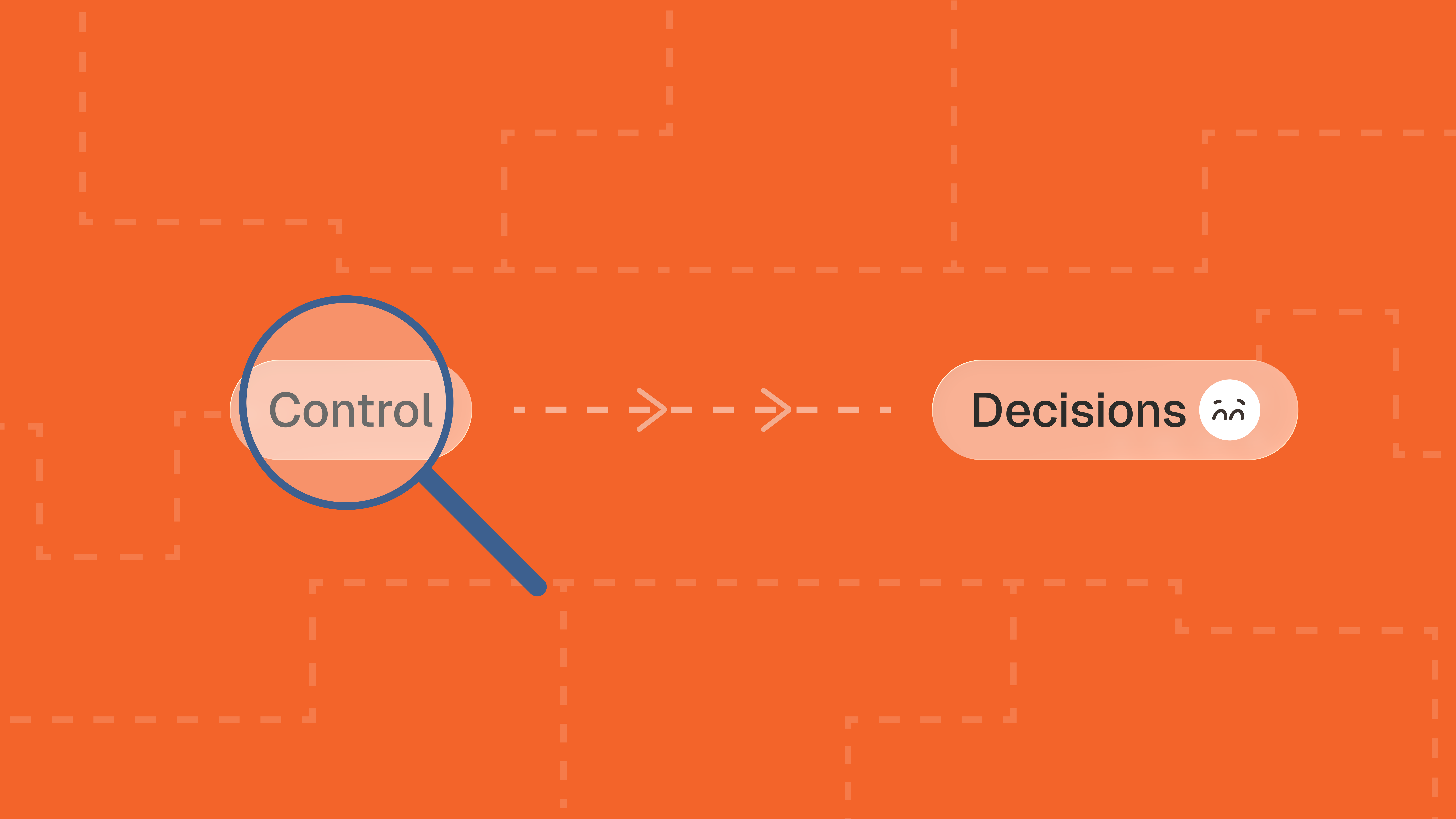
The modern CFO role is moving from executing controls to owning them. AI agents can now check every invoice line, every bank movement and every payment instead of a sample, so the work that fills a finance director's week turns into a short list of exceptions to decide on. Control does not leave the job: the CFO still sets the rules, arbitrates what the agents flag and signs off on the numbers. That is what frees time for decisions.
Last updated 26 September 2026.
Key takeaways
- The modern CFO role shifts from executing controls to owning them: agents check every transaction, the CFO sets the rules and decides on exceptions.
- Auditing standard ISA 530 defines sampling as testing less than 100% of a population, a limit that exhaustive checking by AI agents removes.
- Handing control work to software does not hand over accountability: the IIA Three Lines Model keeps responsibility for risk and controls with management.
- At Astotel, 18 Paris hotels, checking every supplier invoice line instead of a sample surfaced close to €5,000 a year of errors on one supplier.
- The metric that shows the shift is the exception rate and the time taken to close each exception, not the number of hours saved.
Why "be more strategic" is advice without a method
Every description of the role of the CFO now ends the same way: stop producing numbers, start shaping strategy. The advice is right about the destination and silent about the route. It never says what happens to the controls that currently fill the week.
The silence can be counted. Across five of the best-ranked editorial pages on the modern CFO role, read on 26 September 2026 (6,551 words in total), words built on "strategy" appear 63 times, on every one of the five pages. The words "invoice", "exception", "audit trail", "sampling" and "internal control" appear zero times. The pages tell a finance leader to become strategic without naming a single piece of the work that would have to move for that to happen.
For a finance director with a team of two or three, that silence has a practical cost. The board expects strategy on Monday, and the supplier invoices still have to be checked on Tuesday. Nobody explains which of the two gives way.
Meanwhile the work itself has not waited. In a post published on 4 March 2026, Phacet co-founder and CEO Nicolas Marchais summed up what he sees in production: "nobody uses AI in finance to make charts" (translated from French). His point: the agents that stay in production are control agents, not reporting or analysis. That gap between the strategic discourse and the daily reality is where the modern CFO role is really being redefined.
Does the control part of the CFO job shrink?
The execution shrinks, the ownership does not. That distinction is exactly where the published advice contradicts itself.
An article from the New Jersey Society of CPAs, published in March 2026, states that "as technology continues to automate and streamline reporting and compliance, that portion of the role is shrinking". Deloitte's Four faces of the CFO framework keeps "steward" as one of the four faces of the job, the one that must "close the books correctly". Paro's guide to the modern CFO says both on the same page: leaders should "shift their focus from backwards-looking reporting and compliance", yet "controls and compliance competency remain a core part of the CFO's job".
The governance frame settles it. The Three Lines Model of the Institute of Internal Auditors states that "responsibility for managing risk remains a part of first line roles and within the scope of management", and that management "establishes and maintains appropriate structures and processes for the management of operations and risk (including controls)". Software can take over the checking. It cannot take over that responsibility, which stays with the finance leader.
Here is what the split looks like on four controls a mid-market finance team runs every month.
| Control | Done by hand today | Done by an agent | What the CFO still decides |
|---|---|---|---|
| Supplier invoice against negotiated prices | A sample of invoices, often the largest ones | Every line checked against the price list or the contract | The tolerance per supplier, and which variances to dispute |
| Purchase order, delivery note and invoice match | Spot checks when something looks off | Every invoice matched before approval | Who may approve an invoice that does not match |
| Bank reconciliation | Monthly, line by line, just before the close | Continuously, with unmatched flows flagged | What an unexplained movement triggers, and by when |
| Payment run | Reviewed in a hurry the day before the transfer | The whole batch pre-checked for duplicates and changed bank details | Release, hold or split the run |
Read the last column again. None of it is data entry, and none of it is strategy in the abstract sense of the guides. It is judgment applied to what the controls found, which is the part of the job that was always the CFO's and that the checking kept crowding out.
From sampling to exceptions: what changes when every line is checked
Sampling was never a choice of method. It was a response to cost. The international auditing standard ISA 530 defines audit sampling as "the application of audit procedures to less than 100% of items within a population", so that conclusions can be drawn about the whole population from part of it. Finance teams borrowed the same logic for their own controls, because checking everything by hand was simply not affordable.
An agent removes that constraint. When a control agent reads every supplier invoice and compares each line with the negotiated price, coverage goes from a sample to the full population at no extra effort for the team. The question the CFO faces changes accordingly. It is no longer "which invoices do we look at this month?" but "what do we do about the ones that were flagged?"
The difference is measurable. At Astotel, a group of 18 Paris hotels, supplier price checks used to be done on a sample basis. Once a supplier billing control agent checked every invoice line against negotiated prices, it surfaced around €400 of billing errors a month on a single supplier, close to €5,000 a year. The sample had never caught them.
In practice, the exceptions an agent raises fall into a few families: a price above the agreed tolerance, a quantity invoiced but never delivered, an invoice already paid under another number, a credit note that never arrived. Each one calls for a different decision, and each one used to be found by chance, if at all.
That is the moment the role changes. Checking stops being the job and becomes an input. What the finance leader does next (dispute the invoice, ask for a credit note, renegotiate, change the tolerance) is a decision, and it rests on a complete picture instead of an extrapolation. If your own week still goes to verification rather than to those decisions, this is how agents take the checking off a finance leader's desk, control by control.
What stays with the CFO when agents do the checking?
Three things stay: the rules, the exceptions and the signature. An agent applies a rule, it does not invent one, and it cannot answer for the accounts.
- Writing the rules. What counts as an acceptable price variance, which suppliers get a tighter tolerance, which amount requires a second approval. These are business choices. Until someone makes them, no control can run, by hand or by agent.
- Deciding on exceptions. The agent flags, the CFO or the team arbitrates. Some variances are errors, some are a price increase nobody recorded, some are a one-off agreed by phone. Telling them apart takes context the data does not hold.
- Signing off. The CFO presents the numbers, and the performance behind them, to the CEO, the board, the auditors and the bank. A recurring objection in accounting communities on Reddit is that software cannot take legal responsibility for signing the accounts. That objection is correct, and it is the reason the role survives the automation of its tasks.
This is also how Nicolas Marchais frames it in the same March 2026 post: AI "does not replace the CFO", it "systematizes the control" that a finance director has no time to do (translated from French). The condition is that every output can be traced. When a control is delegated, the CFO has to be able to open any flagged line and see which document, which rule and which comparison produced it. That is what matching with the reasoning exposed at each step is for: the exception arrives with its evidence, so the decision can be made and defended.
Which skills does a modern CFO need now?
The skills that govern a system rather than run a process. Technical literacy matters, but less than the leadership it takes to supervise work you no longer do yourself.
Julien Fissette, co-founder and CPO of Roundtable, described the shift in an episode published in January 2026: "It's like managing virtual interns. You have to learn how to review their work and understand where they go wrong." Rodolphe Ardant, founder of Spendesk, went further in an episode published in October 2025: "Humans will no longer produce financial data. They'll supervise AI assistants that run continuously."
Practitioners say the same thing in plainer words. In an r/CFO thread asking whether finance leaders have to keep up with AI, one answer describes the change as "less time spent on building and more on reviewing". In r/FPandA, another warns against people "using AI for reporting without checking to see if it is accurate". Supervision is not optional, it is the new core of the job.
In practice, four skills carry most of the weight:
- Rule design. Turning a policy ("we do not pay above the negotiated price") into a tolerance an agent can apply, supplier by supplier.
- Exception judgment. Deciding quickly and consistently on what the controls surface, and recording why.
- Reading an audit trail. Following a number back to its source document and to the rule that validated it, which is what an auditor will do anyway.
- Supervising agents. Knowing where each agent is reliable, where it needs review, and when a rule has to change because the business did.
How to measure the shift: exception rate, not hours saved
Hours saved is the metric vendors quote because it is easy to count. It says nothing about whether the role changed. A finance team can save ten hours a week and spend them on more checking.
Five indicators tell you whether the modern CFO role is actually taking shape in your team:
- Coverage. The share of each population that is checked: invoices, bank lines, payments. The target is 100%, not a larger sample.
- Exception rate. The share of items flagged. Too high means the rules are too tight or the data is poor. Too low on a large population deserves a second look at the rules.
- Time to close an exception. How long a flagged item waits for a decision. This is where the CFO's new work shows.
- Amount stopped before payment. Errors caught before cash leaves are worth more than errors found at the close.
- Share of the week spent deciding. The simplest and most honest check: is checking still the job, or has it become an input?
Track these monthly, on the same populations, so the trend tells you something about the team rather than about the month.
The order matters as much as the metrics. The CFO guide Phacet published in September 2026 carries one rule that was picked up on LinkedIn the week it came out: "don't hand your forecast to AI". Not because forecasting and planning do not matter, but because a forecast inherits the quality of the data underneath it. Control first, then steering. The guide draws on production, not theory: by July 2026, Nicolas Marchais was counting hundreds of AI agents deployed in more than 100 companies.
If you are at the point of choosing where that sequence begins, the next question is which job to hand to an agent first. The answer depends less on technology than on how often a task repeats and how easily its output can be checked.
The modern CFO does not leave control behind to reach decisions. Decisions come from control that finally covers everything, run by agents and owned by people. The team still answers for the numbers, now with the evidence to back every one of them.
Frequently asked questions
What makes a modern CFO?
A modern CFO owns the controls without executing them by hand. Software and AI agents check transactions exhaustively, while the CFO sets the rules, decides on the exceptions and explains the numbers to the CEO and the board. The difference with the traditional role is where the time goes, not what the CFO answers for.
What are the key trends for CFOs in 2026?
Three trends stand out in 2026. Agents are taking over repetitive checking and reconciliation, finance skills are moving from producing data to supervising it, and regulation is structuring data at the source, as with France's e-invoicing reform, under which every company must be able to receive electronic invoices since 1 September 2026.
Is a CFO a high stress job?
It often is, because a CFO answers for numbers there is rarely time to check in full. Much of the stress comes from the gap between accountability and coverage: controls run on samples always leave doubt. Exhaustive checking narrows that gap and leaves the CFO with decisions on flagged items rather than open uncertainty.
Does a CFO have to keep up with AI?
Not with every tool, but with what AI changes in the work. A CFO does not need to follow each model release. What matters is knowing which controls agents can run on the full population, how their outputs are traced, and how the team reviews exceptions. Those three points decide whether AI adds control or adds risk.

Latest Resources
Unlock your AI potential
Go further with your financial workflows — with AI built around your needs.


