Vendor invoice management without the inbox chaos
Published on :
June 29, 2026

Nicolas Marchais is co-founder and CEO of Phacet. After seven years at Spendesk, he built Phacet as the agentic layer that orchestrates across ERP, banking and email systems. Reliable, auditable, cross-system, what he calls a Finance Workforce.

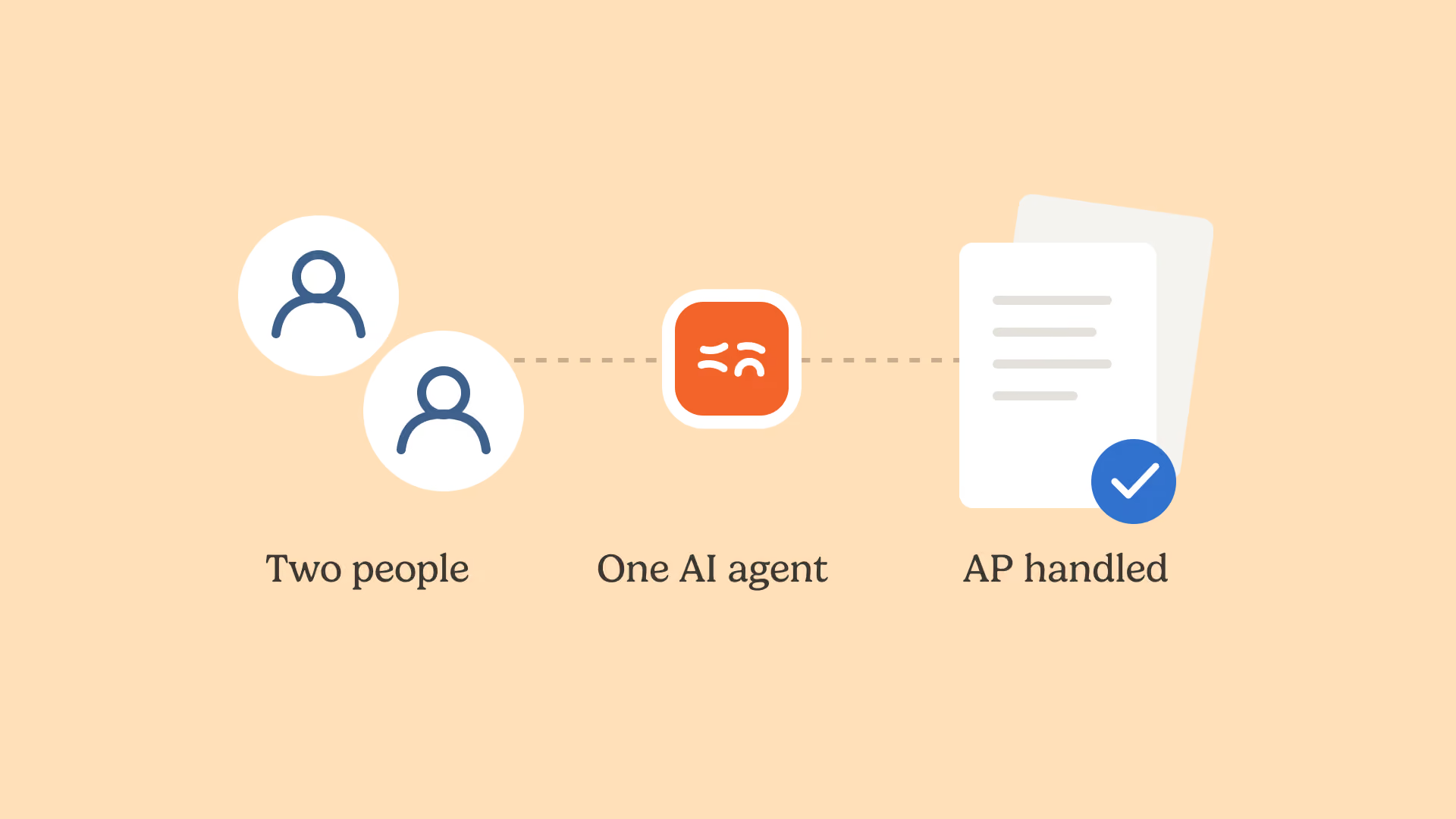
At Maslow Restaurants in Paris, supplier invoices used to land in a shared mailbox all day, in every format imaginable. The finance team spent one to two hours a day just sorting, keying, and chasing them. Then a Phacet agent took over the intake, and the inbox stopped being the job. But here is what most teams miss: a tidy inbox was never the real win. The real risk in vendor invoice management is not paying late. It is paying the wrong amount, and never noticing.
This guide explains what vendor invoice management actually is, how the process works from end to end, and why the teams that get real value treat it as a control problem, not an inbox problem.
What is vendor invoice management?
Vendor invoice management is the end-to-end process of receiving, validating, approving, and paying the invoices your suppliers send you. It runs from the moment an invoice arrives to the moment it is paid and recorded in your accounting system or ERP.
Done well, it does three things at once. It captures every invoice in one place. It verifies that each one is correct before money leaves the company. And it keeps a clean record that an auditor or accountant can follow line by line.
Most definitions stop at the first two and frame the whole thing as a speed exercise: receive faster, approve faster, pay faster. The teams that win add the layer the others skip, which is checking that what the supplier billed matches what you actually agreed to pay. That shift, from accounts payable automation as throughput to vendor invoice management as control, is the whole point of this article.
The vendor invoice management process, step by step
A vendor invoice typically moves through six stages, from intake to archive. Each stage is a place where time leaks, errors slip through, or both.
Most software handles intake, extraction, routing, and payment well. The gap sits in the matching stage. For nearly every tool on the market, matching means checking the invoice against the purchase order and the goods receipt. It rarely means checking the invoice against the price you negotiated. That single blind spot is where the money goes.
Why fixing the inbox is not enough
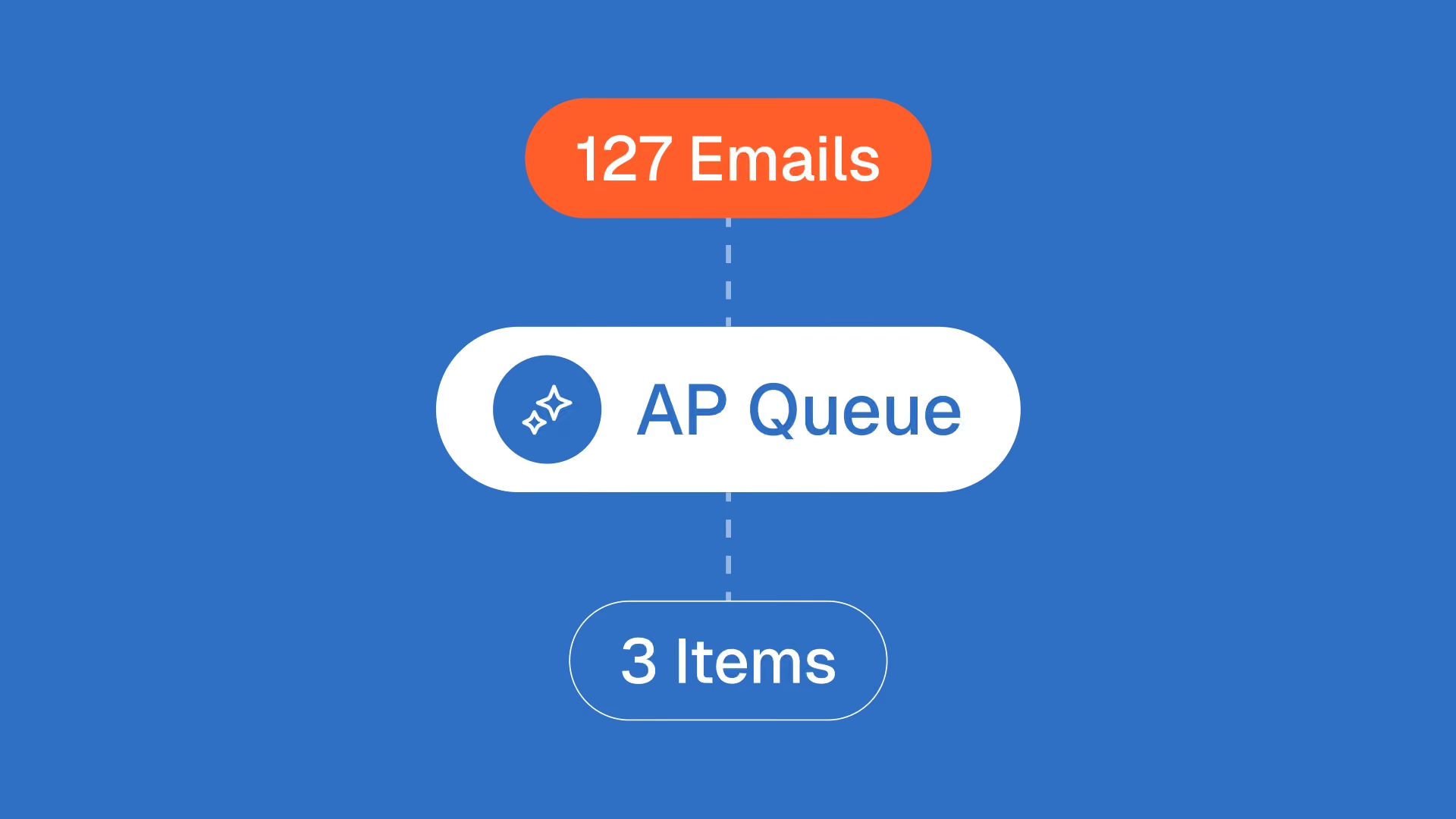
The inbox is the problem everyone sees first. PDFs, photos of paper, EDI files, portal downloads, all piling into one mailbox, often urgent, sometimes overdue. Centralizing that intake is real work and worth doing: an accounting inbox agent can sort, read, and route incoming invoices automatically, so nothing gets lost and no one keys data by hand.
At La Nouvelle Garde, a group of ten brasseries, this kind of intake automation removed about 70% of the time the team spent shuffling invoices between Gmail and their accounting tool, freeing up roughly two days a week.
But a calm inbox is the start, not the finish. Once the invoices are centralized, they still have to be right. Automating triage without adding control just means you pay unverified invoices faster. Speed without verification is not management. It is exposure.
The real risk: paying the wrong amount, not paying late
Here is the part the standard playbook misses. Two-way and three-way matching confirm whether goods were ordered and received. They do not confirm whether the unit price on the invoice matches the price in your agreement.
That gap is where money leaks quietly: a renegotiated rate that never made it into the system, a small price increase no one flagged, a line billed at list price instead of your contracted rate. None of it trips a duplicate check. None of it fails a purchase order match. It just gets paid.
At Astotel, a group of 18 hotels, price checks used to be done by sampling a few invoices a month. A Phacet agent that verifies every line against the negotiated price list found around 400€ of billing errors a month on a single supplier, close to 5,000€ a year. "I catch errors I would never have spotted on my own," says Valerie, Head of Purchasing.
This is invoice price compliance: checking each invoice line against your agreed price book, before payment, not after. Combined with pre-payment controls, it turns vendor invoice management from a payment workflow into a financial control. For finance leaders, that is the difference between hoping the numbers are right and knowing they are.
What good vendor invoice management looks like
Strong vendor invoice management is not one feature. It is a sequence that structures the data, controls it, and only then uses it. In practice, that means six habits.
- Centralize intake. One inbox, every format, no manual keying.
- Validate before payment, not after. Catching an error before the wire goes out costs nothing. Clawing back an overpayment costs time and goodwill. See why control before payment beats reconciliation after the fact.
- Check every line, not a sample. Sampling catches the obvious and misses the systematic.
- Match on documents and on price. Run a 3-way match against the purchase order and receipt, and a price check against the contract.
- Keep a native audit trail. An audit trail is a time-stamped record of every decision the system made, so any number can be traced back to its source and shown to an auditor.
- Keep a human in the loop. The system flags the exceptions, a person decides. The agent proposes, the human disposes.
The table below shows how three common approaches stack up against these habits.
Vendor invoice management software: what to look for
If you are comparing vendor invoice management systems, the feature lists will look identical: capture, OCR, matching, approvals, payments, dashboards. Look past them and weigh five things that actually separate the tools.
- Cross-system reach. The best controls compare data across your ERP, your bank, and your email, not inside a single silo. An invoice problem is rarely visible from one system alone.
- Line-level price control. Confirm the tool checks unit prices against your agreed rates, not just totals against purchase orders. Ask to see a supplier price variance report.
- A native audit trail. Every decision should be traceable, time-stamped, and explainable, with the reasoning exposed rather than hidden in a black box.
- Built for finance, not a generic assistant. General tools like ChatGPT and Claude are remarkable, but they do not know your suppliers, your price books, or your accounting rules. They do not produce an audit trail, and they do not connect to your inbox or your ERP. Finance control needs a specialist that has seen the work in production.
- Vertical fit. A system built for goods and flow businesses such as hospitality, food and beverage, or retail already understands price-book logic, delivery notes, and multi-site control. That context is hard to retrofit.
How AI agents change vendor invoice management
The newest shift in vendor invoice management is the move from monolithic software to specialized AI agents. An AI agent is a focused worker that handles one finance job end to end: it structures the data, controls it, and surfaces what matters, while a person stays in control of the decisions.
In practice, three agents cover most of the work. An inbox agent handles intake and triage. A supplier billing control agent checks every line against agreed prices and flags overpayments. A 3-way matching agent reconciles the invoice, the purchase order, and the receipt automatically. Each one reconciles using a semantic matching engine that exposes its reasoning, so nothing is a black box.
The results are concrete. At Smartbox, a European gift-experience leader with 800 employees, payment and invoice reconciliation became four times more productive, with each use case live in about six weeks. At Maslow, the same intake and control approach gave the team back one to two hours a day. Phacet runs more than 40 ready-to-use agents, built on over 100 client deployments, with the first agent usually in production in under two weeks.
None of this removes the finance team. It removes the parts of the job no one wanted: the keying, the sampling, the chasing. What is left is the work that needs judgment. Your accounts payable controller stops processing invoices and starts reviewing the exceptions that actually matter. Explore the full accounts payable agent library or see how it maps to the procurement and accounting roles.
FAQ
What is vendor invoice management?
Vendor invoice management is the process of receiving, validating, approving, paying, and recording the invoices your suppliers send you. Done well, it centralizes every invoice, verifies that each one is correct before payment, and keeps an audit trail you can trace back to the source.
What is the difference between vendor invoice management and accounts payable automation?
Accounts payable automation usually focuses on speed: capturing and paying invoices faster with less manual work. Vendor invoice management is broader and includes control, especially checking that each invoice matches what you agreed to pay before money leaves the company.
What are the steps in the vendor invoice management process?
The typical process has six stages: intake and capture, data extraction, matching against the purchase order and the agreed price, approval routing, payment, and recording with an audit trail. The matching stage is where most teams lose money, because it often checks the purchase order but not the negotiated price.
What is the difference between two-way and three-way matching?
Two-way matching compares the invoice against the purchase order. Three-way matching adds the goods receipt, confirming that what was ordered was also received. Neither one checks that the unit price matches your contract, which is why a separate price-compliance check matters.
How do AI agents improve vendor invoice management?
AI agents automate intake, extraction, and matching, then check every invoice line against agreed prices and flag the exceptions for a human to review. Because they expose their reasoning and keep a native audit trail, the output is controllable and auditable, not a black box.
Stop processing invoices. Start controlling them.
Vendor invoice management is not about clearing an inbox faster. It is about knowing that every invoice you pay is one you actually owe, at the price you agreed, with a record you can show anyone. Start with the inbox, then add the control layer that catches what sampling misses.
See how Phacet's internal control agents verify supplier invoices before payment, or book a demo to watch them run on your own invoices.
Latest Resources
Unlock your AI potential
Go further with your financial workflows — with AI built around your needs.