

Phacet plus Hyperline: how I run our monthly revenue review
Published on :
October 1, 2026

Nicolas Marchais is co-founder and CEO of Phacet. After seven years at Spendesk, he built Phacet as the agentic layer that orchestrates across ERP, banking and email systems. Reliable, auditable, cross-system, what he calls a Finance Workforce.

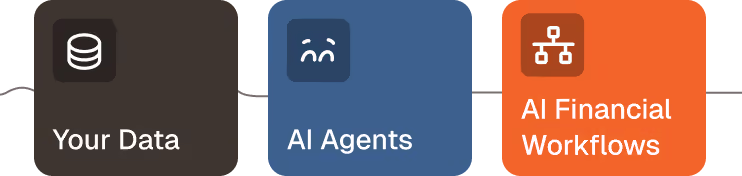
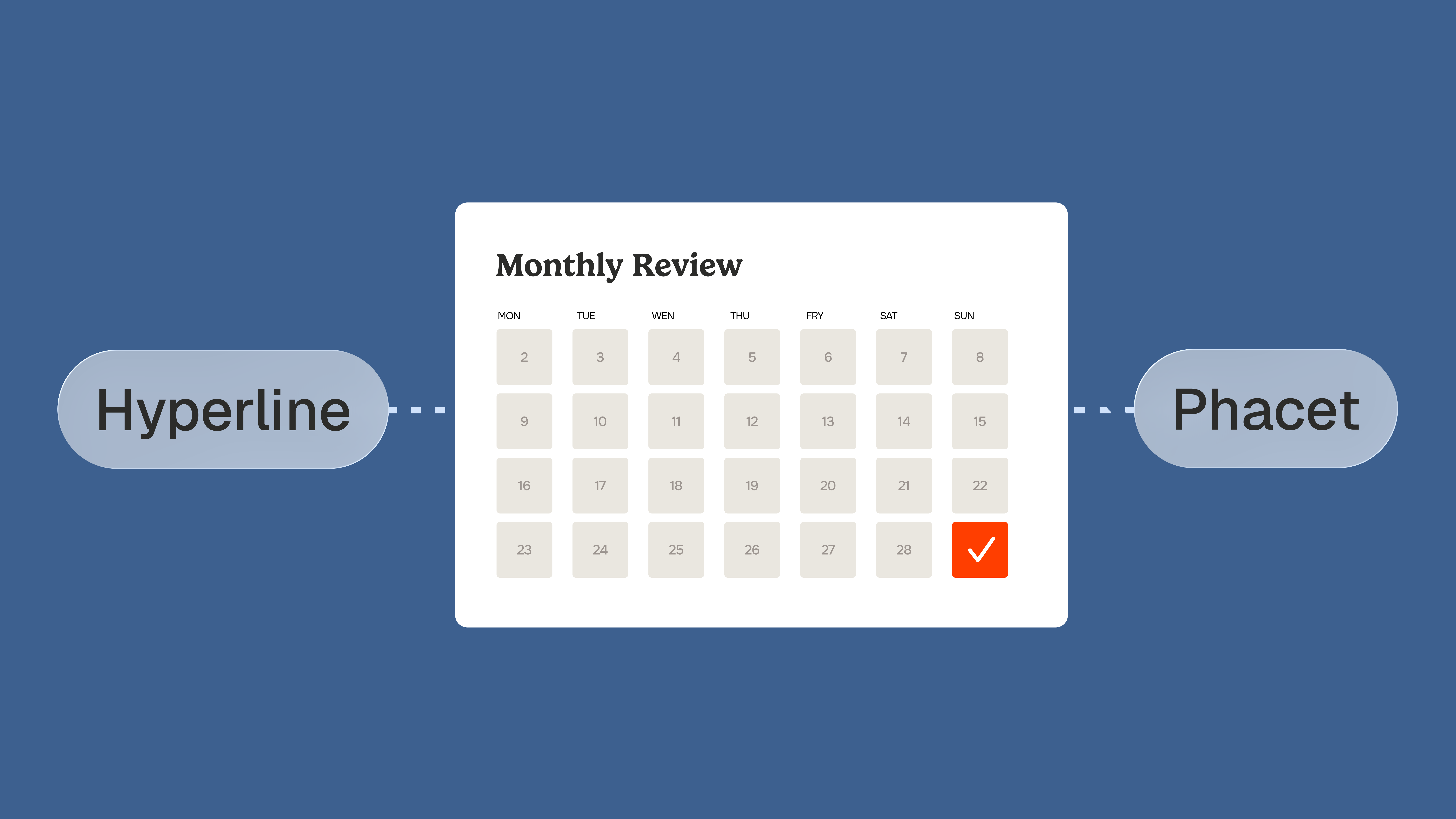
The Phacet Hyperline integration connects a Hyperline billing account to Phacet, an AI agent platform for finance work, so agents can rebuild revenue from invoices, cross-check it with the CRM and contracts, and flag customers who have not paid yet. Hyperline stays the system of record for billing. Phacet sits on top and checks what the billing data says against the rest of the finance stack.
I know this setup from the inside, because it is how I run Phacet's own finances. We have billed on Hyperline since day one. As CEO, I connected Phacet to our Hyperline account through Hyperline's MCP server and API, and I use it for the revenue and collections work I am personally responsible for. Our customers who bill on Hyperline connect their own account through a native connector in Phacet.
Key takeaways
- The Phacet Hyperline integration connects a Hyperline account to Phacet, so AI agents work on billing data alongside the CRM, bank and accounting system.
- Hyperline remains the billing and revenue system of record, and Phacet does not replace it: Phacet controls and cross-checks what Hyperline records.
- Phacet bills its plans, credits and top-ups on Hyperline, and its CEO uses the integration to rebuild revenue, analyse customer movements and chase late payers.
- Late-payment follow-up used to take Phacet's CEO an hour a week; now a Phacet agent flags late payers and drafts reminder emails in Gmail.
- Phacet customers who bill on Hyperline connect their account in one click through a native connector, mainly to control and reconcile their billing flows.
Why I run the revenue review myself
At Phacet, revenue is my responsibility: what we billed, whether it matches what sales closed and what customers signed, who has not paid yet, and how the mix is moving. I use those answers to take strategic decisions, so I want them built from what we actually invoiced, not from a number I cannot trace back to a source document.
That is the principle Phacet applies for its customers too. Our guide to revenue reconciliation explains why the billing system, the CRM, the payment processor and the ledger never show the same number, and why that gap has to be explained rather than corrected.
How Phacet and Hyperline divide the work
The split is simple. Hyperline bills. Phacet controls.
Hyperline is a billing and revenue platform for B2B and AI companies, covering billing, CPQ, usage-based pricing, revenue recognition and collections. At Phacet, all of our billing runs on it: subscription plans, credits and top-ups.
Phacet sits on top. Hyperline exposes an MCP server and an API that give AI tools secure access to customers, subscriptions and invoices. I connected Phacet through both, so Phacet agents read our Hyperline data and work on it alongside our CRM, our contracts, our mailbox and our other finance systems.
Hyperline runs billing and shows what happens inside it. Phacet answers whether it matches everything else, and what it means for the business.
What I run through the integration
1. Rebuild revenue from invoices and check it against the CRM and contracts
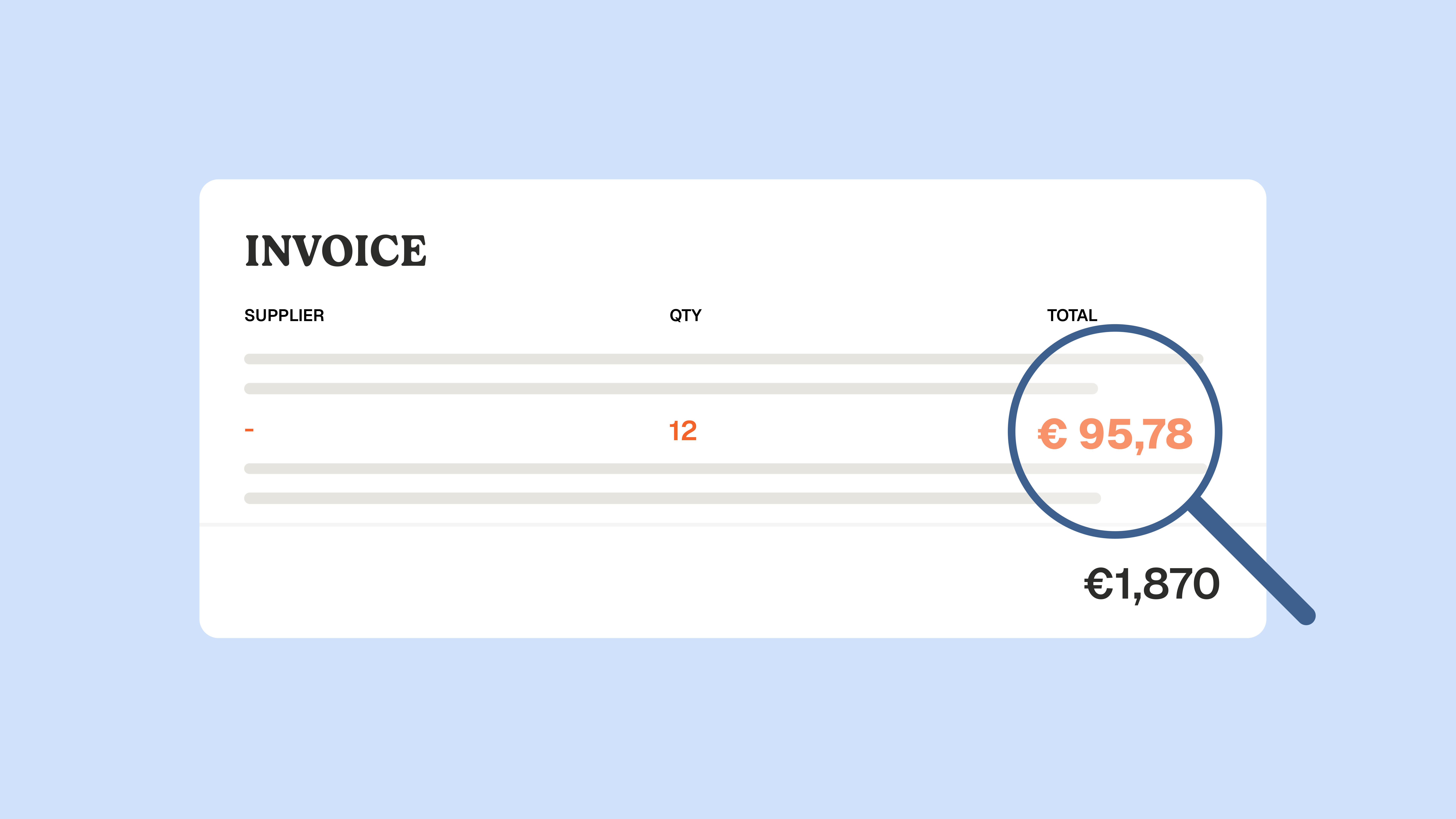
Every month, Phacet rebuilds our revenue directly from Hyperline invoices and compares it with the deals in our CRM, customer by customer. It also cross-checks invoice data against contract data, to catch any gap between what a customer signed and what we bill.
These sources never line up on their own, and none of them is wrong. The CRM records what sales closed, on the day it closed. The contract records what the customer agreed to. Hyperline records what was invoiced, when it was invoiced. A contract signed at month end, a discount negotiated in the deal, a start date pushed back by the customer: each one opens a gap that someone has to explain.
Phacet runs that matching with the agent that rebuilds ARR from invoices and the one that checks ERP, CRM and billing consistency. Every match shows its source invoice and its reasoning, so I can open any figure and see where it comes from. The logic behind it is covered in our glossary entry on CRM, billing and ERP coherence.
What I get: an always up-to-date view of revenue, built from what we actually billed and checked against what customers signed.
2. Analyse customer movements, revenue types and trends
Once revenue matches, I look at what is moving: new customers, expansions, contractions and churn, and how revenue splits across our revenue types, from subscription plans to credits and top-ups.
Hyperline already tracks MRR and ARR movements and churn natively. Phacet adds the cross-system view, with the CRM and our other tools in the same analysis. Because the analysis starts from reconciled data, I can trust a trend before I act on it.
What I get: reliable inputs for the strategic decisions I make every month.
3. Track DSO and follow up on late payments
Some of our customers pay on invoice, and those are the payments that slip. I follow our days sales outstanding, the average time customers take to pay, and I make sure every invoice past its due date gets followed up.
Hyperline can run routine dunning on its own, with automated reminder sequences before and after each due date. At Phacet, I run our follow-up through Phacet. It used to take me about an hour a week: checking which invoices were overdue, deciding who had to be chased, and writing each email myself. Now a Phacet agent watches our Hyperline invoices, flags the customers who need a follow-up, and drafts those emails in Gmail, ready to send.
The agent does the watching and the drafting. I still decide who gets a reminder and when it goes out.
What I get: about an hour a week back, and a DSO I can follow without rebuilding it by hand.
How Phacet customers connect their own Hyperline account
Phacet customers who bill on Hyperline connect their own account to Phacet and run the same kind of workflows on their data. Most of them use it to control and reconcile their billing flows: checking that what Hyperline invoiced matches what was sold, what was signed, what was collected and what reached the books.
Hyperline collects payments through providers such as Stripe and GoCardless. For companies that work this way, the control extends to reconciling payment gateway, bank and ERP flows, so every Hyperline invoice can be traced to the cash it produced.
Connecting takes a few clicks:
- In Phacet, open the list of apps with a native connector.
- Click Connect Hyperline and authorize access to your Hyperline account through the API.
- Pick the first workflow to run on your data, for example the revenue rebuild or the late-payment follow-up.
Who this is for
- Founders and CEOs who own revenue themselves and want it traceable to source invoices. See our page for founders and CEOs.
- CFOs and finance leaders at subscription, usage-based or credit-based companies billing on Hyperline. See finance leadership.
- Technology companies where CRM, billing and accounting have to agree before revenue can be reported. See our technology industry page.
Why it holds up week after week
A review only works if I can trust it without redoing it. Every action a Phacet agent takes on Hyperline data is recorded in an audit trail, with the source document and the reasoning attached. Agents flag the gaps and prepare the follow-up. I decide what to do with them.
The data side meets finance standards: Phacet hosts data in Europe, holds ISO 27001 certification, complies with GDPR, and never uses customer data to train AI models. Details are on our security page.
Getting started
The realistic entry point is one workflow, not a platform rollout. For a company billing on Hyperline, the revenue rebuild or the late-payment follow-up are natural first ones: they run on data you already have, and they give you a baseline for everything else.
Phacet plans start at €299 per month, and the first agent typically reaches production in under two weeks. See pricing, or book a demo and we will show you how to connect your Hyperline account and set up your first revenue workflow.
Frequently asked questions
What is the Phacet Hyperline integration?
The Phacet Hyperline integration connects a Hyperline billing account to Phacet so AI agents can read invoices, customers and subscriptions, then run control, reconciliation and analysis workflows on them alongside the CRM, bank and accounting systems. Hyperline remains the billing system of record, and Phacet adds the cross-system checks on top.
How does Phacet connect to Hyperline?
Phacet customers connect in a few clicks: in Phacet's list of apps with a native connector, they click Connect Hyperline, which links the account through Hyperline's API. Phacet's own account also uses Hyperline's MCP server. Once connected, agents work on invoices, customers and subscriptions inside Phacet, alongside the other finance systems.
Does Phacet replace Hyperline?
No. Hyperline remains the platform that bills customers, collects payments, sends payment reminders and holds the revenue record. Phacet works on top of it: agents read Hyperline data, compare it with the CRM, contracts, the bank and the ledger, and surface the gaps with their reasoning, so a person decides what to do next.
Who is the Phacet Hyperline integration for?
It is built for finance teams and founders at subscription, usage-based or credit-based companies that bill on Hyperline and need their revenue to match their CRM, their cash and their books. It fits best when revenue is reviewed every month and every figure has to trace back to a source invoice.
Is my Hyperline data used to train AI models?
No. Customer data processed by Phacet is never used to train AI models. Phacet hosts data in Europe, holds ISO 27001 certification and complies with GDPR, and every action an agent takes on your billing data is recorded in an audit trail your team can review at any time.
Related reading
- Revenue reconciliation: why reported revenue never matches the ledger
- Phacet plus Xero: what the integration automates
- How AI is transforming billing and revenue management, our podcast episode with Lucas Bédout, CEO and founder of Hyperline


Latest Resources

Unlock your AI potential
Go further with your financial workflows — with AI built around your needs.


