

n8n finance automation: when to stop building it yourself
Published on :
August 26, 2026

Nicolas Marchais is co-founder and CEO of Phacet. After seven years at Spendesk, he built Phacet as the agentic layer that orchestrates across ERP, banking and email systems. Reliable, auditable, cross-system, what he calls a Finance Workforce.

n8n finance automation is the practice of using n8n, an open source workflow automation platform, to move and transform finance data between accounting systems, banks, inboxes and spreadsheets. It works, and a workflow that reliably pulls invoice data out of a mailbox and into a ledger is rarely worth tearing out.
What n8n does not do is prove that a control ran. A finance team asked to show an auditor who approved a given supplier invoice, on what evidence, and why the price billed differed from the contracted rate, will not find that record in an execution log. It has to build and maintain that record itself.
So the real question is not n8n or a dedicated tool. It is where the line sits between plumbing, which n8n handles well, and control, which finance has to be able to prove. This article puts that line somewhere concrete, with seven signals that tell you the line has moved.
Key takeaways
- n8n moves finance data between systems reliably, and a working n8n workflow is rarely worth ripping out to replace it.
- Log streaming, the n8n feature that forwards audit events to external tools, is available only on Enterprise plans according to n8n's own documentation.
- The audit events n8n streams cover instance administration, such as a workflow archived or MFA enabled, not who approved which invoice.
- No-code removes the code, not the engineer: someone still maps the process, maintains it when an API changes, and debugs silent failures.
- At Astotel, line-level price control surfaced up to 400 euros of billing errors per month on a single supplier, close to 5,000 euros a year.
What n8n actually does well in a finance stack
Most finance teams sit on a stack nobody designed: an accounting system, a billing platform, banks, payroll, an expense tool, a shared inbox, and a lot of spreadsheets holding the seams together. None of those tools are going away, and most of the pain is not inside any one of them. It is in the space between them.
That space is exactly what n8n was built for. It connects systems that were never meant to talk, on a schedule or on a trigger, without anyone opening a terminal. For a two person finance team, that is a genuine capability shift, and the argument that follows in this article is not an argument against it.
The three finance jobs where n8n is the right tool
Moving data on a schedule. Pulling a trial balance every Friday, syncing subscription billing into the ledger, fetching bank transactions overnight. The logic is stable, the formats are structured, and failure is visible because a number is missing.
Notifying and chasing. Flagging overdue invoices, pinging an approver in Slack, sending a dunning sequence to a customer. The cost of an error is a duplicate email, not a wrong payment.
Prototyping a process before you commit to it. This is the underrated one. Building a rough version in n8n is the cheapest way to learn what a process actually requires before anyone writes a specification. Several of the finance teams that end up buying a dedicated tool only knew what to ask for because they built the rough version first.
All three share a property: if the workflow breaks, someone notices quickly, and nothing irreversible has happened in the meantime. Hold on to that property, because the rest of this article is about what happens when it stops being true.
Two common finance jobs sit right on the boundary, and they are worth separating carefully because teams tend to treat them as one.
Cash flow reporting is usually safe territory. Pulling balances from several bank accounts into a single daily view is transport plus arithmetic. If the workflow fails, the dashboard is stale, someone notices, and no decision has been made on bad data in the meantime. Assembling a cash flow view in n8n is a reasonable thing to do and many teams do it well.
Month-end close is not the same job, even though it involves the same connectors. Close produces a number that leaves the building. Once a figure has been reported to a board, a lender or an auditor, correcting it is not a bug fix, it is a restatement. Any step in the close that a workflow performs without producing evidence of what it checked is a step you will have to reconstruct by hand later.
The useful test is not how complex the process is. It is what happens downstream of the output. Automating the collection of close inputs is transport. Automating the judgement about whether those inputs are correct is control, and control is where the calculus changes.
Where does a generic workflow stop being enough for finance?
A generic workflow stops being enough at the point where finance has to prove something rather than do something. Moving an invoice into the ledger is doing. Demonstrating that the invoice was checked against the purchase order and the contracted price before it was paid, and being able to show that six months later, is proving. The two look similar in a diagram and behave very differently in an audit.
This distinction is not theoretical. It is the question finance practitioners keep asking each other in public. On the n8n subreddit, one recurring thread asks plainly whether n8n can satisfy enterprise requirements around compliance, security and accuracy, and the answers split rather than converge.
Moving data is not controlling it
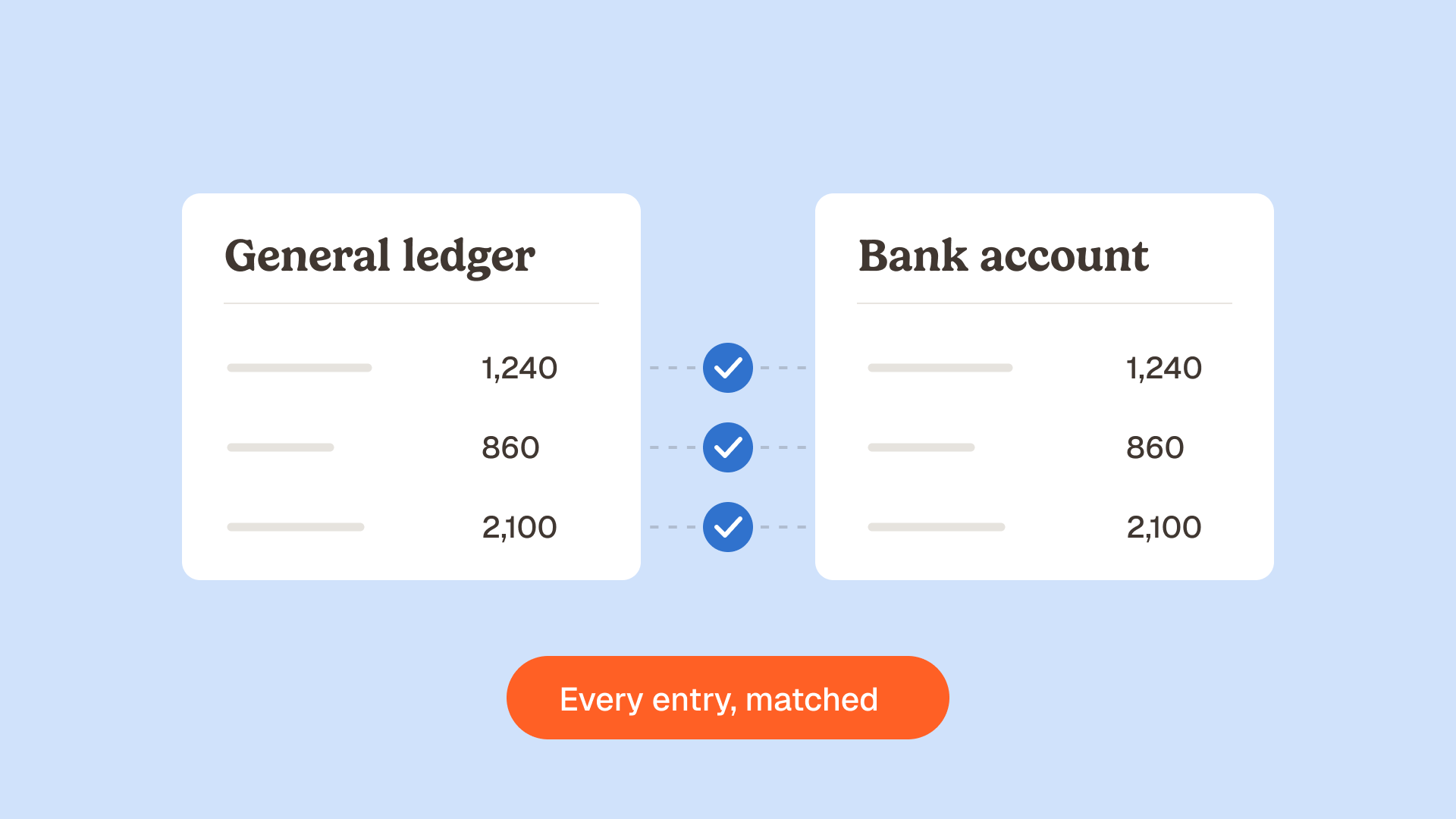
A workflow that extracts a supplier invoice and posts it is doing transport. A control is different: it compares the invoice to something that should match it, decides whether the difference is acceptable, and stops the process when it is not.
You can build comparison logic in n8n. What is hard to build, and harder to keep, is the part that comes after the comparison: a tolerance policy that finance owns rather than an engineer, a queue where a human resolves the exceptions, and a record of the resolution that survives the next refactor.
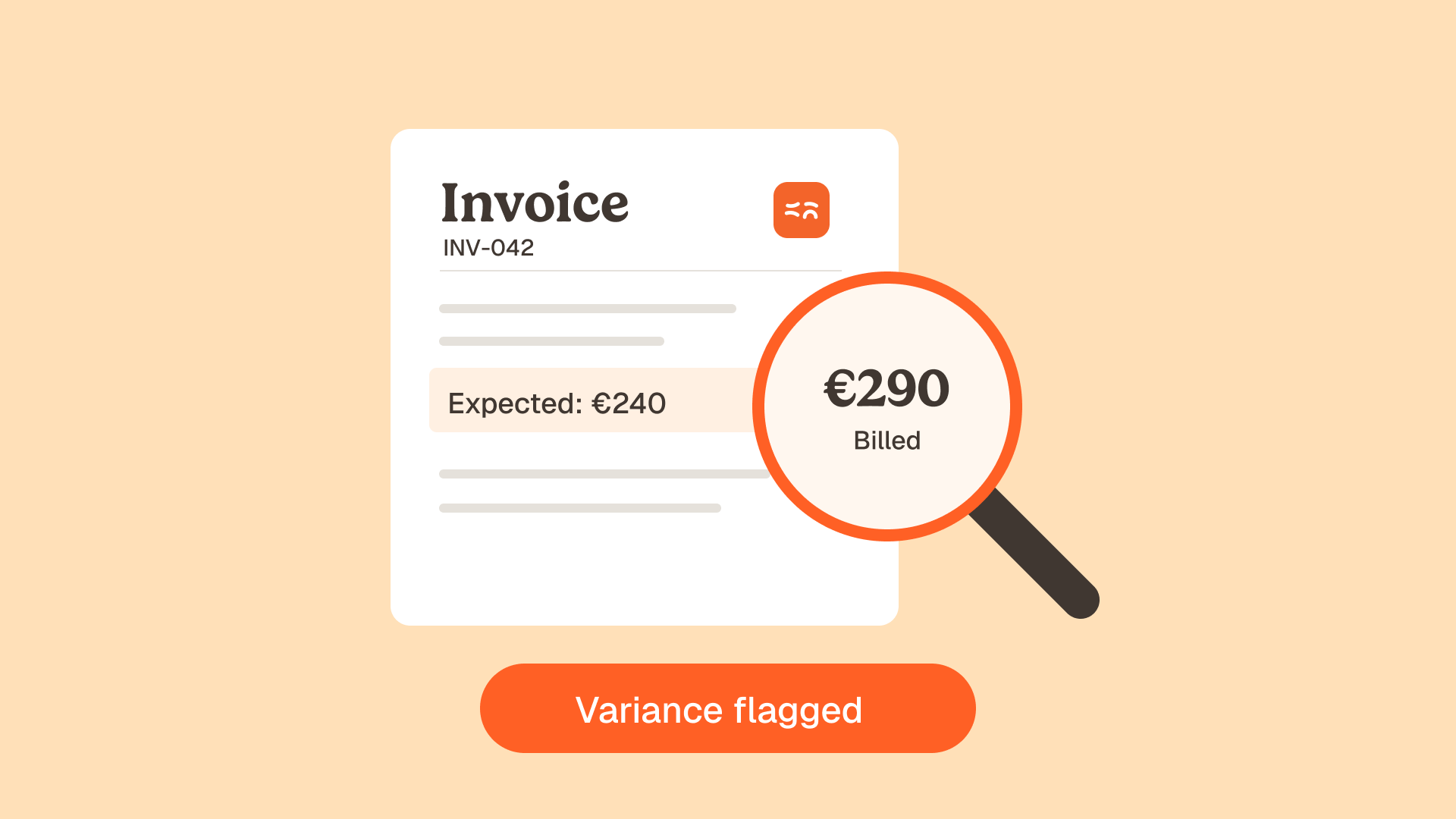
The gap shows up in a very specific way. Most homegrown matching compares totals, because totals are one field and lines are many. Totals are also where errors hide, since a wrong unit price on one line and a rounding difference on another can net out to a plausible header amount.
There is a second reason line-level work is avoided in a generic engine, and it is not laziness. Lines rarely match cleanly. The supplier's reference is not your reference, the unit is cases where your order was in kilos, the description is abbreviated differently on every document. Resolving that is a matching problem, not a data transformation, and matching problems get worse as the catalogue grows rather than better.
A workflow can be taught to handle the reference formats you know about today. The maintenance cost lands the first time a supplier changes theirs, and the failure is quiet: unmatched lines get skipped, the header still balances, and the control reports success.
A log of executions is not an audit trail
This is the claim most worth checking, because the competing content on this topic disagrees with itself. One agency article states that an n8n workflow gives you a clean audit trail of who approved what and when. Another walkthrough, written by practitioners building a reconciliation workflow, spends a whole step on archiving inputs and outputs with a manifest, which is work you would not do if the trail already existed.
n8n's own documentation settles it. Log streaming, the feature that forwards n8n events to your own logging tools, is available on Enterprise plans, and the Community edition comparison page lists it among the features the free edition does not include. On the free tier you have execution logs for debugging, which is a different object.
The second half matters more than the licensing. Read the catalogue of events n8n classifies as audit events and you find things like a workflow being archived, multi factor authentication being enabled or disabled, a user API key being deleted, a token exchange succeeding or failing. That is an excellent record of who touched the automation platform.
It is not a record of who approved a 12,400 euro invoice, on what evidence, against which contract, and why an exception was waived. No workflow engine gives you that for free, because that record is not a platform event. It is a business event, and someone has to define it, capture it, store it, and keep it consistent for as long as your retention policy runs.
No-code does not mean no engineer
The most honest description of this in the current search results comes from a practitioner write-up: n8n may be no-code, but a non-technical user still has to translate a process into nodes, triggers, actions and properties, and with hundreds of connectors and dozens of options per node, that translation step is where most people get stuck.
A widely upvoted post in an automation community puts the operating cost in one line: tools like n8n require someone to map the process, build the workflow, maintain it when an API changes, and debug it when a step silently fails.
Each of those four verbs is a recurring commitment, not a one-off. The fourth is the expensive one. A workflow that fails loudly gets fixed on Monday. A workflow that succeeds while producing a wrong result can run for a full quarter, and in finance the artefact it produces is a payment.
Seven signals that it is time to stop building
None of these signals is about n8n being a bad tool. Each of them marks the moment a specific job outgrew a generic engine. They are written as things you can observe this week, not as maturity stages.
1. You cannot answer an approval question without opening the workflow. If reconstructing who approved what requires an engineer to read a canvas, the record is not usable by finance, and it will not be usable by an auditor either.
2. A supplier changed an invoice layout and nothing failed loudly. Silent degradation is the characteristic failure mode of document automation. If a format change produces empty fields rather than an alert, you have discovered that your workflow has no concept of a wrong result, only of a crash.
3. One person is the only one who can fix it. Ask who repairs the invoice workflow if that person is on leave for three weeks during close. If the honest answer is nobody, the automation is a dependency, not an asset.
4. You are matching totals, not lines. Header-level matching is a proxy. It passes invoices whose totals happen to agree while individual unit prices, quantities or line items do not. If nobody can tell you the match rate at line level, the control is weaker than it looks.
5. Your auditor asked for evidence and someone exported a screenshot. Evidence that has to be assembled by hand after the fact is a sign that the trail was never captured as a first class object.
6. The checking happens after the payment, not before it. Many homegrown setups reconcile beautifully and control nothing, because everything they do happens after the money has left. Recovering an overpayment from a supplier is a commercial negotiation. Blocking it is a control.
7. The automation backlog is longer than the finance backlog it was built to clear. When the list of workflows waiting to be built or fixed grows faster than the manual work being removed, the build is no longer paying for itself.
Two or three of these at once is common and manageable. Five is a decision.
What does three-way matching actually require?
Three-way matching is a control that compares a supplier invoice against the purchase order and the goods receipt before the invoice is approved for payment. It is the standard test case for this whole discussion, because it is the point where transport, comparison, judgement and evidence all have to happen in the same pass.
It is also, notably, absent from the conversation. Across the editorial pages currently ranking for n8n finance automation in the United States, the terms three-way matching and purchase order appear zero times. The topic is being discussed entirely in terms of moving data, and not at all in terms of what the data is being checked against.
Doing it properly requires four things that a transport workflow does not naturally provide. A canonical version of what was ordered and at what agreed price. A comparison at line level, tolerant of unit and label differences. A decision rule finance owns, expressed in tolerances rather than code. And a durable record of the outcome, including exceptions and who cleared them.
Why line-level price control is the test case
Astotel operates 18 hotels in central Paris. Before automating, the group checked supplier price consistency across sites manually, in spreadsheets and PDFs. Once prices were compared line by line against the agreed price list, the differences were not rounding noise.
The group found up to a 6 euro difference per kilo on the same smoked salmon reference between two of its own hotels. On orange juice, a difference of 1 to 2 euros per litre, multiplied across 18 establishments, is a material annual number on its own. For a single supplier, the structural billing anomalies came to up to 400 euros per month, close to 5,000 euros a year.
Since working with Phacet, I have saved precious time on purchase analysis. I no longer get lost in Excel sheets or PDFs, I save up to two days per month and catch mistakes I would never have spotted on my own.
That is Valérie, Purchasing Director at Astotel, in the full customer story. The number worth holding on to is not the time saved. It is that a single supplier, checked at line level, produced roughly 5,000 euros a year that header matching would have passed straight through.
Control before payment, not reconciliation after
Most automation projects in finance start downstream, because downstream is easier. Reconciling is comparing two records that already exist. Controlling is intervening before one of them becomes final.
The difference is operational, not philosophical. A control that runs before payment needs somewhere to hold the invoice, a person to route the exception to, a deadline, and an escalation path when nobody acts. Those are workflow features, and they are also the features that make a workflow expensive to maintain when you build them yourself, because every one of them is a place where a process can stall silently.
This is the job a purpose-built agent is shaped around. Phacet's invoice validation agent exists to run that check in the window before payment rather than after it, and automated three-way matching is the control it applies.
n8n and a purpose-built agent are not mutually exclusive
The framing of this whole debate as a replacement decision is wrong, and it is wrong in a way that costs teams money. The realistic architecture is layered: a generic engine handles transport and orchestration, and a specialised layer handles extraction, matching, judgement and evidence.
Phacet is explicitly built to sit in that second layer, including alongside the tools finance teams already use. The AI extension for no-code workflows plugs into Zapier, Make and Power Automate rather than replacing them, on the reasoning that those tools handle simple structured fields well and do not handle variable formats, contextual understanding or built-in human supervision.
The division of labour that works
In practice the split is easy to describe. n8n keeps the triggers, the connectors, the scheduling and the notifications. It is good at those, they are cheap to maintain, and the failure modes are visible.
The specialised layer takes the document, reads it whatever shape it arrives in, compares it at line level against the order and the price list, decides whether the difference is inside tolerance, routes what is not to a named human, and writes down what happened.
The practical benefit of this split is that the fragile part of the system stops being yours to maintain. When a supplier changes an invoice layout, that is an extraction problem, and extraction is the thing you outsourced. Your n8n workflow does not need to change at all.
What does it really cost to build it yourself?
Total cost of ownership is the term nobody in this search result set uses. Across the editorial pages currently ranking, total cost of ownership and TCO appear zero times, which is unusual for a topic where the entire premise is saving money.
A build has five cost lines, and only the first is easy to see.
- Licence. Visible, predictable, and usually the smallest of the five. Note that the audit and governance features arrive at the Enterprise tier, so the free number is rarely the real number for a finance use case.
- Build time. Not just the workflow. Mapping the process, agreeing tolerances, writing test cases, and generating data that is messy enough to break the logic on purpose.
- Maintenance. The recurring one. API changes, format changes, credential rotation, and the periodic discovery that a step has been failing quietly.
- Key person risk. Hard to price until it triggers, at which point it prices itself. If close depends on a workflow only one person understands, that is a finance risk, not an IT risk.
- The cost of an uncaught error. The one that is always left out. Astotel's number gives a usable order of magnitude: close to 5,000 euros a year, on one supplier, from differences a header-level check would not have seen.
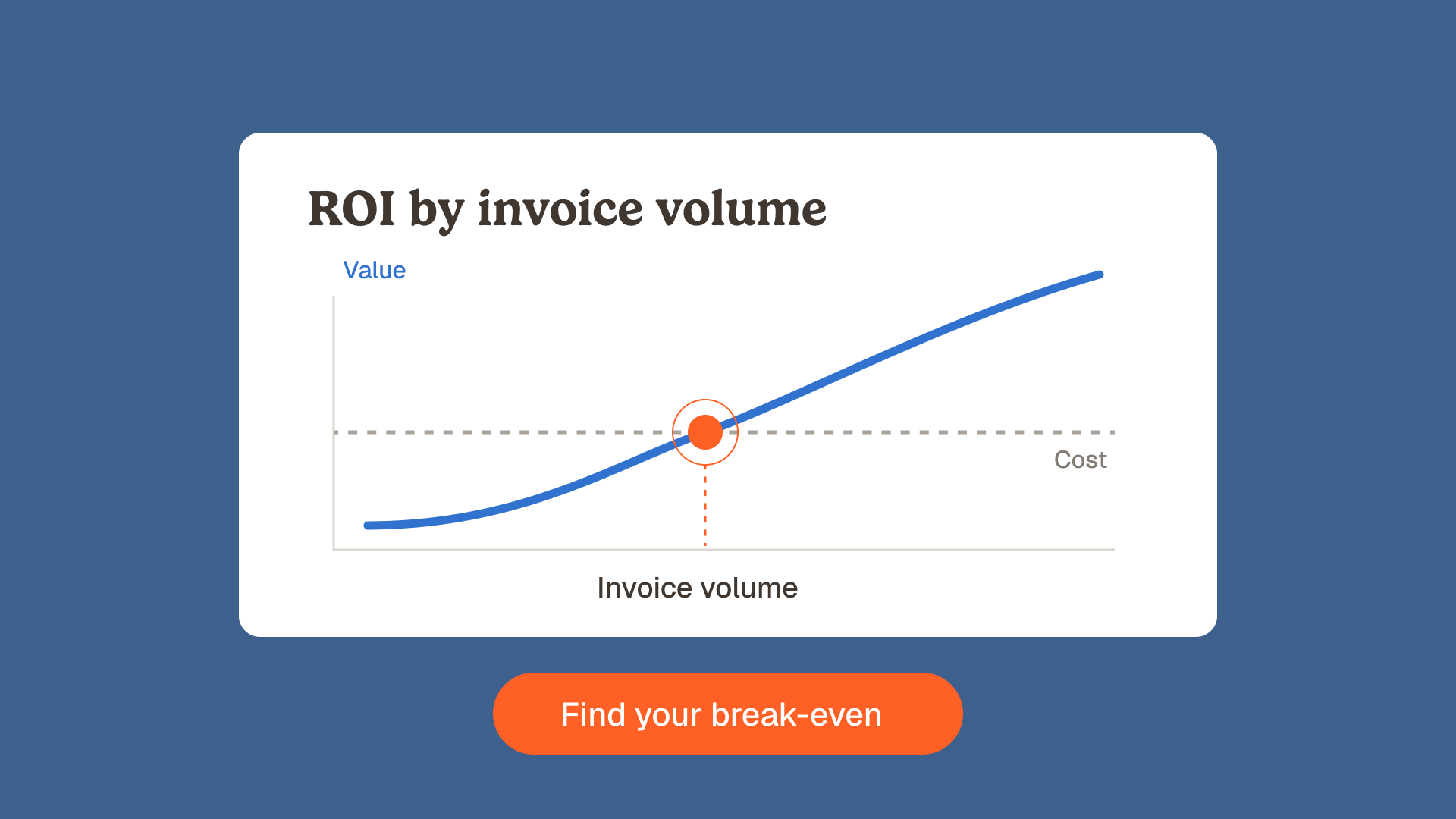
Run the fifth line against your own supplier count before you conclude that building is cheaper. The comparison that matters is not licence against licence. It is licence plus maintenance against the errors you are currently not catching.
Here is the arithmetic most build-versus-buy discussions skip. Astotel's figure was up to 400 euros a month of structural billing anomalies on one supplier, found once prices were checked line by line. A mid-sized group with 40 recurring suppliers does not need every one of them to behave like that supplier. If a tenth of them do, the exposure is in the tens of thousands of euros a year, and it is invisible by construction, because a control that is not running cannot report what it is missing.
Set that against the visible side. A workflow built and maintained internally consumes a few days of build, then a recurring share of someone's week for maintenance, plus the Enterprise tier if you need the governance features. Those costs are real and they are also, crucially, the ones that appear in a budget. The uncaught error does not appear anywhere until someone goes looking for it.
That asymmetry is why build-versus-buy conversations in finance tend to reach the wrong answer. One side of the ledger is measured and the other is assumed to be zero.
How to decide, in four questions
If you want a short version, answer these four honestly.
- Does this process produce a payment, a filing or a published number? If yes, it needs evidence, and evidence is the expensive part to build.
- Does the input arrive in a shape you control? Structured feeds and fixed formats are workflow territory. Documents from third parties, in layouts that change without notice, are not.
- Can finance change the rules without an engineer? If adjusting a tolerance requires a developer, the control belongs to IT, and finance owns the consequence without owning the lever.
- What happens if it silently fails for a quarter? If the honest answer is a wrong payment or a restated number, the tolerance for silent failure is zero, and a generic engine is not designed around that constraint.
Two or more answers pointing the wrong way is the signal to stop building that particular piece. Not to stop using n8n, which will happily keep doing the parts it is good at, and which most teams should keep.
The teams that get this right are rarely the ones that picked the correct tool first. They are the ones that built the rough version, learned what the process actually needed, and then moved the control layer somewhere it could be maintained by someone other than themselves. Phacet's catalogue of purpose-built finance agents is designed for that second move, with a first agent typically in production in under two weeks.
Frequently asked questions
Is n8n secure enough for finance data?
Self-hosting keeps credentials and financial data on your own infrastructure, which addresses data residency. Security of the platform and security of the process are different questions though. Access controls, approval segregation and audit logging sit on paid tiers, and business-level approval records still have to be designed and built by you.
Does n8n keep an audit trail of who approved what?
Not natively. n8n's log streaming is an Enterprise plan feature, and the events it classifies as audit events cover instance administration, such as a workflow being archived or a user enabling MFA. A record of business approvals, with the evidence behind each decision, has to be built and maintained separately.
Can n8n integrate with QuickBooks, Xero or NetSuite?
Yes. n8n publishes connectors for major accounting platforms including QuickBooks Online and Xero, and anything with a REST API can be reached through a generic HTTP request node. Integration is genuinely not the constraint here. What happens to the data once it moves is the constraint.
How long does it take to implement finance workflows in n8n?
A single well-scoped workflow takes days. A production-grade one takes longer, because the work is not the canvas: it is agreeing tolerances, writing test cases, generating data messy enough to break the logic, and adding error handling. Budget the hardening, not the build.
Can n8n do three-way matching?
You can build a comparison between an invoice, a purchase order and a goods receipt in n8n. The difficulty is line-level matching across inconsistent references, tolerance rules finance can change without a developer, an exception queue with a named owner, and a durable record of each decision.
When does a dedicated tool become worth it over a homegrown workflow?
When the process produces a payment or a published number, when inputs arrive in formats you do not control, when finance cannot change a rule without an engineer, or when silent failure would go unnoticed for a quarter. Two of those four together is usually the tipping point.

Latest Resources
Unlock your AI potential
Go further with your financial workflows — with AI built around your needs.


