Account reconciliation software: GL accounts with no match
Published on :
October 5, 2026

Nicolas Marchais is co-founder and CEO of Phacet. After seven years at Spendesk, he built Phacet as the agentic layer that orchestrates across ERP, banking and email systems. Reliable, auditable, cross-system, what he calls a Finance Workforce.

This is for the controller or accounting manager who has already automated the bank reconciliation, watched the match rate climb past 90 percent, and still spends the last three days of every close on a handful of general ledger accounts that refuse to close out.
Account reconciliation software automates one thing well: comparing a general ledger balance to a second balance that exists somewhere else. That covers cash, card settlements, payment gateways and most subledgers. It does not cover the accounts where no second balance exists, which is where suspense entries, accruals, prepaid expenses and intercompany differences accumulate. For those accounts the work is not matching, it is explaining the balance line by line and attaching the evidence. Oracle names this distinction in its own product documentation and calls the second method Account Analysis.
Key takeaways
- General ledger accounts split into two families: those with an external balance to compare, and those where a preparer must explain the balance.
- Oracle's reconciliation documentation defines Balance Comparison for accounts with a subledger balance, and Account Analysis for accounts with none.
- A 90 percent auto-match rate measures the matchable population, not the workload, because the unmatched remainder is what consumes the close.
- Suspense, clearing, accrual and prepaid accounts carry the audit risk precisely because nothing external contradicts a wrong balance.
- A reconciliation holds up when it names the preparer, the reviewer, the supporting document and the age of every open item.
What account reconciliation software actually matches
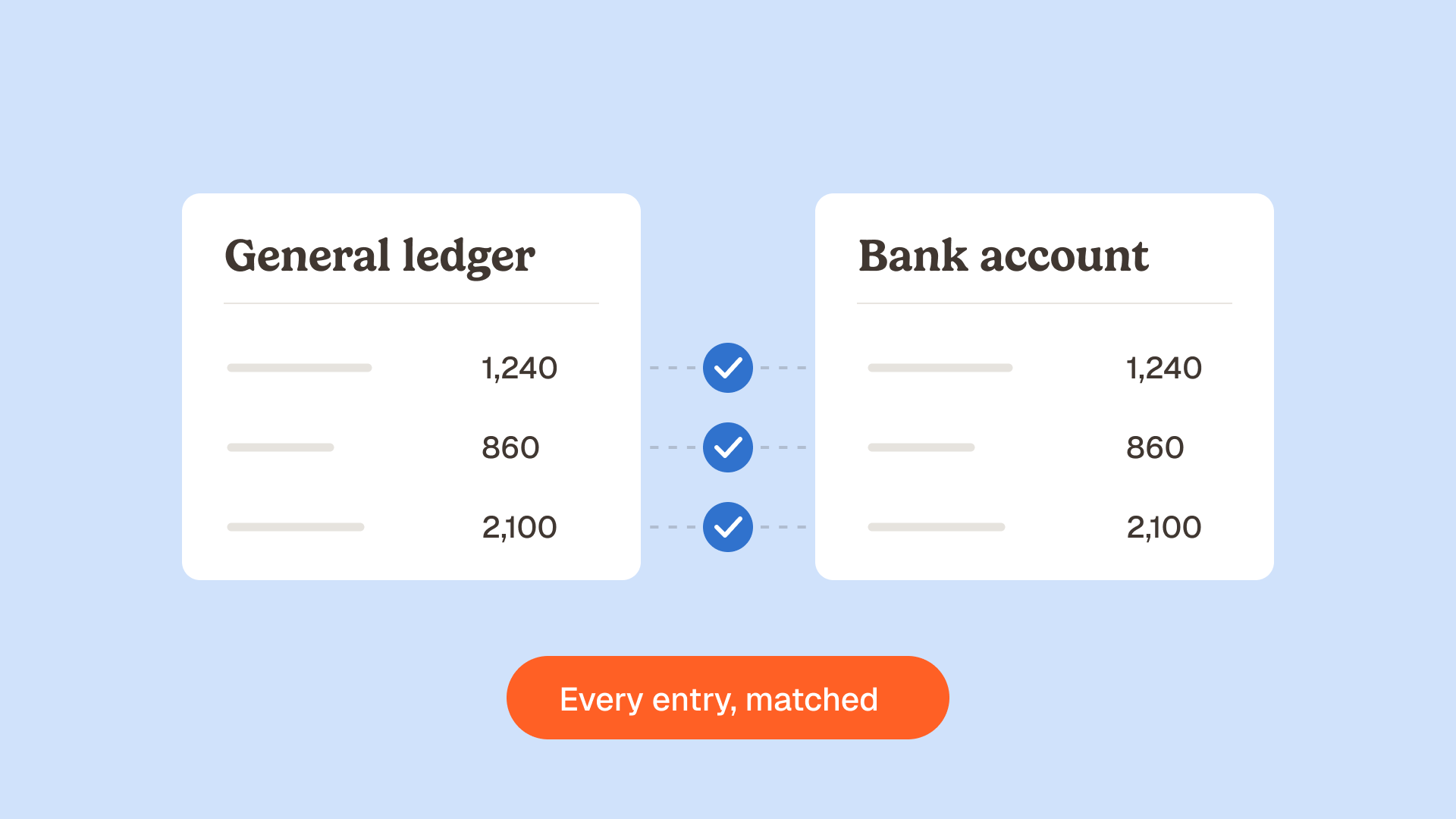
Account reconciliation software is a control layer that compares general ledger balances against independent records and routes the differences to a person. The comparison only runs when an independent record exists. A bank statement exists. A payment processor settlement file exists. An accounts payable subledger exists. For those accounts, automation is genuinely strong and the vendor claims are broadly fair.
The picture changes on the rest of the balance sheet. A suspense account holds items precisely because nobody could assign them yet. An accrual represents an invoice that has not arrived. A prepaid expense is a schedule you built yourself. None of these has an outside party sending you a statement to check against. There is nothing to match, and no match rate can describe the work.
Four editorial pages rank in the US top 10 for the query account reconciliation software. Measured on 20 September 2026, across 15,261 words of combined body copy, the terms suspense account, reconciling item, accrued liability, preparer and reviewer appear zero times. Over the same corpus, AI appears 109 times, software 103 times and matching 98 times. The category is described entirely through the half of the problem that automates cleanly.
The three reconciliation methods, and why only one automates cleanly
Oracle's Account Reconciliation documentation is unusually direct about this, and it is a vendor describing the limits of its own automation. It defines three methods, and the choice between them depends on whether a second balance exists at all.
| Method | Oracle's condition for using it | What the preparer produces | Automatable? |
|---|---|---|---|
| Balance Comparison | The reconciliation has a subledger balance to compare against the general ledger balance | A match, plus a list of differences | Yes, this is what match engines do |
| Account Analysis | There is no subledger balance | An explanation of the GL balance, item by item, with evidence | Partly, the evidence can be assembled but the judgement stays human |
| Variance Analysis | Comparison of a current month end balance to a prior period end | An explanation of the movement | Partly, the variance is computed, the cause is not |
Read the Account Analysis condition again, because it is the whole argument: "If there's no Subledger balance, then you can use an Account Analysis method which allows a preparer to explain the GL balance." Oracle's verb is explain, not match. A second family of accounts exists, it has its own method, and that method was never a matching problem in the first place.
Why a 95 percent automation rate does not mean 95 percent of the work
Vendors publish auto-match rates that sound conclusive. HighRadius states that automatic matching reaches up to 90 percent. insightsoftware goes further and writes that AI "can now handle as much as 95% of this work autonomously".
The same insightsoftware page, published 5 February 2026, also contains this sentence: "The 20-40% of transactions requiring manual matching often consume 80% of your reconciliation time." Both statements cannot carry the meaning the page implies. If a fifth of the volume absorbs four fifths of the hours, then moving automation from 80 percent to 95 percent removes a slice of the cheap work, not 80 percent of the effort. The arithmetic the page supplies contradicts the time saving the page promises a few paragraphs later.
The distinction matters whichever engine sits underneath. A rules based platform needs you to define matching rules such as equal amounts within a three day window. A model based one infers the pairing from past behaviour. Both are pairing operations, and neither has anything to pair on an account where the counterpart does not exist. Moving from rules to AI improves the quality of the match, it does not extend its reach to a second family of accounts.
This is not a reason to distrust the tools. It is a reason to read the metric for what it measures. An auto-match rate is a ratio over the matchable population. It says nothing about the accounts that were never in the denominator, and those are the accounts still open at day three of the close.
Seeing the same pattern in your own close? Phacet agents handle both families: the match where a counterpart exists, and the documented explanation where it does not. Book a demo and bring one account that never closes on time.
The accounts that carry the risk
Accounts with no external counterpart concentrate risk for a specific reason: nothing outside the company contradicts a wrong balance. A bank error surfaces within days because the bank sends a statement. A misposted accrual can sit for four quarters because nobody outside the finance team has an opinion about it.
- Suspense and clearing accounts. They exist to park items that could not be assigned. Their correct closing balance is usually zero, and any balance is itself the exception.
- Accrued liabilities and goods received not invoiced. The balance represents invoices that have not arrived, so it must be rebuilt from receipts and purchase orders rather than matched.
- Prepaid expenses and deferred charges. Justified by an amortisation schedule the team maintains itself, which means an error in the schedule reproduces silently every month.
- Intercompany accounts. A counterpart exists but it is internal, so both sides can be wrong in agreement.
- VAT and payroll control accounts. A declaration or a payroll journal supports them, produced on a different calendar than the ledger.
Deeper ERP integration does not close this gap, and it is worth being precise about why. An integration improves the flow of data into the ledger: it carries postings, master data and subledger balances across systems reliably. It cannot manufacture an independent record that does not exist anywhere. A tighter NetSuite or SAP connection will not produce a third party statement for your accrual account, because no third party issues one. The integration work and the justification work are two different problems, and buying more of the first does not reduce the second.
This also explains a common reporting distortion. Close dashboards typically show the count of reconciliations completed, which flatters teams whose ledger is dominated by matchable accounts. A company with forty bank and subledger accounts and six unexplained balance sheet accounts shows 87 percent complete, while the entire compliance risk sits in the remaining six. The percentage rises as the risk stays exactly where it was.
Practitioners describe this gap in their own words. A thread in r/Accounting is titled "How do y'all feel about 'reconciling' GL accounts to basically themselves?", with the quotation marks around reconciling supplied by the poster. The answer in the thread reframes the task accurately: you look at the month end balance, you work out what the balance should be, and you explain any gap. That is the Account Analysis method, described from the desk rather than from the documentation.
What a reconciliation has to contain to hold up
An explanation is only worth the evidence attached to it. Four elements decide whether a reconciliation survives a review or an audit, and none of them is a match rate.
- The composition of the balance. Not the total, the list of items that add up to it, each with its origin and date.
- The supporting document for each item. A statement, an invoice, a contract, a schedule, referenced so a reviewer can retrieve it without asking.
- The age of every open item. An item sitting in a clearing account for eleven months is a different fact from one that arrived last week, and the aggregate balance hides that difference completely.
- A named preparer and a named reviewer. Two roles, two people, recorded with dates. This is the control that makes the rest credible, and it is absent from all four ranking editorial pages.
The metric that replaces the match rate
If an auto-match rate cannot describe the work, something else has to. The most useful substitute is the aged profile of open items across accounts with no external counterpart: how much of each balance is under 30 days old, how much is over 90, and how much has survived a full year. It is a single number per account, it moves when the process improves, and unlike a match rate it gets worse when the team falls behind rather than staying flat.
It also changes what a review meeting looks like. A balance of 41,000 in a clearing account is not information. The same balance broken into 38,000 arrived this month and 3,000 that has been there since last October is a decision: the first is normal workflow, the second is a write-off conversation that has been deferred eleven times. Aggregated balances hide exactly the part that needs a decision.
The practical obstacle is that most teams rebuild this profile by hand. A second r/Accounting thread, "How does everyone reconcile and monitor balance sheet balances?", collects the answers, and the recurring one is to build a spreadsheet that ingests an export and flags what cleared. That is a reasonable process for one account. It does not survive a growing ledger, and it leaves no record of who checked what.
Automating the explanation, not only the match
The useful question is not whether software can reconcile your accounts. It is whether it can assemble the evidence for an account that has nothing to match against, and leave a trail a reviewer can follow.
That is the split Phacet is built around. AI Match handles the comparison where a counterpart exists, with the reasoning exposed at each step rather than a confidence score alone. For the rest, agents assemble the balance composition into an auditable table: source documents pulled from email and file transfers, items aged, exceptions surfaced, every transformation timestamped in a native audit trail. Agents such as reconciling balance sheet accruals against HR and payroll data and reconciling intercompany flows target exactly the accounts a match engine cannot reach. The human still decides. The evidence is already gathered when they do.
At Smartbox, the European gift box leader operating across 14 countries with 800 employees, reconciling payments against invoices moved to four times the previous productivity, with each use case operational in six weeks. "Phacet operates as an extension of our teams." Mourad Meraou, Operations Director.
If your close still ends with a short list of accounts nobody can explain quickly, the constraint is not your match rate. It is that the explanation has no system, and it is still being rebuilt by hand every month. Start with the closing and audit agent library, or walk through one account with us.
Frequently asked questions
What are the three types of reconciliation?
By method, they are balance comparison, account analysis and variance analysis. Balance comparison checks a general ledger balance against an external or subledger balance. Account analysis explains a balance when no second source exists. Variance analysis explains the movement between two period ends. The method depends on whether an independent record exists.
Can AI do bank reconciliations?
Yes, and this is the strongest case for automation. Bank reconciliation compares two independent records of the same flows, which suits pattern matching well. Published auto-match rates of 90 percent apply to this kind of account. They do not transfer to accrual, prepaid or suspense accounts, where no external statement exists to compare against.
How do you reconcile an account in Excel?
List every item making up the closing balance, with its date, source document reference and age. Compare the total to the ledger balance. Investigate each item older than your threshold. Excel handles this correctly for a small account. It breaks down on volume and leaves no audit trail of who prepared and reviewed the work.
What is the best software for account reconciliation?
It depends on which family of accounts drives your close. Teams whose difficulty is transaction volume need a strong match engine. Teams whose difficulty is a handful of accounts nobody can explain need evidence assembly and a documented audit trail instead. Establish which problem you have before comparing vendors on match rate.
Latest Resources
Unlock your AI potential
Go further with your financial workflows — with AI built around your needs.