

For finance directors and AP leads at 50 to 500 person companies running Cegid XRP Flex, XRP Ultimate or Y2 who want supplier invoices checked before payment, without a new ERP project.
Cegid records, posts and pays supplier invoices, but it does not check each one against your negotiated prices, your goods receipts and a verified bank account. Cegid's own documentation places that check upstream, in another tool. Phacet fills that slot with AI agents that check every invoice line before it reaches Cegid and send your team only the exceptions.
Key takeaways
- Cegid presents XRP Flex as its cloud ERP for SMEs and XRP Ultimate as its ERP for mid-sized and large companies: both record supplier invoices rather than contest them.
- Cegid's July 2026 purchasing guide says three-way matching catches price and quantity gaps, but the check compares the invoice with the purchase order, not with the negotiated price list.
- In Cegid Orli's supplier invoice documentation, an invoice matched in another tool is imported as is, even with discrepancies, because Cegid assumes that tool already validated them.
- At Astotel, a group of 18 Paris hotels, invoiced prices drifting from the negotiated price list cost up to €400 a month on a single supplier, nearly €5,000 a year.
- A French approved e-invoicing platform transmits, converts and reports invoices to the tax authority: none of its legal roles includes checking a price against a contract.
Is Cegid an ERP, and what does it handle in accounts payable?
Yes. Cegid is a business software publisher founded in Lyon in 1983, and its range includes two ERPs. Cegid XRP Flex is described by Cegid as a 100% cloud ERP for SMEs, "from purchasing to production management". Cegid XRP Ultimate is sold as the ERP for mid-sized and large companies. Retail chains often run Cegid Y2, and accounting firms work on Loop or Quadra.
In accounts payable, Cegid's role is the system of record. The XRP Flex supplier module is presented as a way to track invoices, automate payment processing, pay in foreign currencies with the right VAT and anticipate cash needs. Invoices get posted, supplier balances move, payment runs go out. That is exactly what an ERP should do.
The scale matters, because it explains how much finance work sits on Cegid. Third-party reviews that still rank for Cegid queries quote figures that Cegid's own page no longer supports:
| Figure | Tool-Advisor review (updated July 16, 2026) | Macomptabilite.com | Cegid's company page (checked September 27, 2026) |
|---|---|---|---|
| Customers | 750,000 in 130 countries | More than 130,000 | More than 1 million in 130 countries |
| Revenue | More than €400 million | Not stated | €1.2 billion, 89% recurring |
| Employees | 5,000 in 20 countries | Not stated | 5,000 in 20 countries, one third in R&D |
| Partners (resellers, integrators) | Not stated | Not stated | 16,000 worldwide |
Both reviews undercount the customer base: the 1 million figure comes from Cegid's own company page. The practical point for a finance team is different. A publisher of this size builds for the general case, and the general case in accounts payable is to record what arrives.
What Cegid's own documentation says about supplier invoice control
The clearest sources on where control happens in a Cegid setup are Cegid's own pages and those of its partners. Read together, four of them describe the same division of labour.
- Three-way matching is sold as the core control. Cegid's guide to ERP purchasing modules (Fatna Irsani, July 13, 2026, updated July 15) lists receipt and three-way matching as an indispensable feature and states that matching the purchase order, the receipt and the invoice "instantly detects price or quantity gaps".
- OCR is not a control. Cegid's guide to invoice OCR (Céline Guepin, July 1, 2026) says human control "remains necessary" and that OCR tools should be seen as aids, "not as a complete removal of accounting control". Its own advice for reliable OCR includes matching invoices with orders and checking sensitive amounts.
- Supplier invoice automation comes from a partner. Esker's partner page explains that Cegid, "already offering a functionally rich ERP", wanted to give XRP Flex and XRP Ultimate customers the ability to fully automate and dematerialise supplier invoice processing with Esker's extraction engines.
- When another tool matches, Cegid trusts it. The Cegid Orli functional documentation (2024 version) covers the case where invoice to receipt matching is done in another tool that sends the invoice to accounting. The invoice is then imported "as is, even if there are discrepancies, because we assume these discrepancies were validated during integration by the other tool" (our translation).
The line is clear. Cegid records and pays. Whether an invoice deserves to be paid is decided either by a three-way match against the purchase order, or upstream, by a tool that Cegid assumes has done its job. Phacet's own entry on Cegid puts it the same way: Cegid "is designed to record, not to control upstream".
Where invoices slip through between receipt and the Cegid entry
A three-way match compares an invoice with a purchase order and a goods receipt. It does not compare it with the price you negotiated, with the contract behind a service invoice, or with the bank details you verified last year. Those gaps are where overpayments go through.
| Check before payment | Covered by a three-way match? | What a Phacet agent adds |
|---|---|---|
| Invoice price vs purchase order | ✓ Yes, when a PO exists | Flags POs that were raised at an outdated price |
| Invoice price vs negotiated price list or contract | ✗ No, the PO is the reference | Checks every line against the price list or contract terms |
| Invoices without a PO (services, utilities, subscriptions, rent) | ✗ No PO, nothing to match | Checks rates, indexation and billing periods against the contract |
| Supplier bank details | ✗ Not part of the match | Compares the IBAN on the invoice with the verified record |
This is not theoretical. At Astotel, a group of 18 hotels in Paris, Valérie, the group's Purchasing Director, found differences between invoiced prices and the negotiated price list: up to €400 a month on a single supplier, nearly €5,000 a year. A gap of €1 to €2 per liter of orange juice, multiplied across 18 establishments, only shows up when each invoice line is compared with the price list itself.
"I save up to two days per month and catch mistakes I would never have spotted on my own." Valérie, Purchasing Director, Astotel
Astotel's case is not specific to Cegid: the gap exists whatever ERP records the invoice, because no ERP knows your price list unless someone checks invoices against it. If your team spot-checks a sample of invoices today, this is the gap to close first.
See the check run on your own Cegid invoices
Does e-invoicing through an approved platform close the gap?
No. French businesses must now receive their supplier e-invoices through an approved platform, in force since September 1, 2026, and Cegid states that e-invoicing compliance is built into XRP Flex at no extra cost. The platform secures the path and the format of an invoice, not its commercial accuracy.
The French tax authority lists what an approved platform does:
- issue, transmit and receive the e-invoice, converting it to a format the buyer can use;
- preserve the integrity, authenticity, legibility and completeness of the data;
- extract invoice data for the tax authority (supplier, customer, net amount, VAT rate and amount);
- transmit transaction data and payment data.
None of these roles checks a unit price against a contract, a quantity against a delivery note, or an IBAN against a verified record. A perfectly formatted e-invoice can still carry the wrong price. What the reform changes is that invoice data now arrives structured, which makes line-level control cheaper to run. It does not make it unnecessary.
How a Phacet control layer runs alongside Cegid
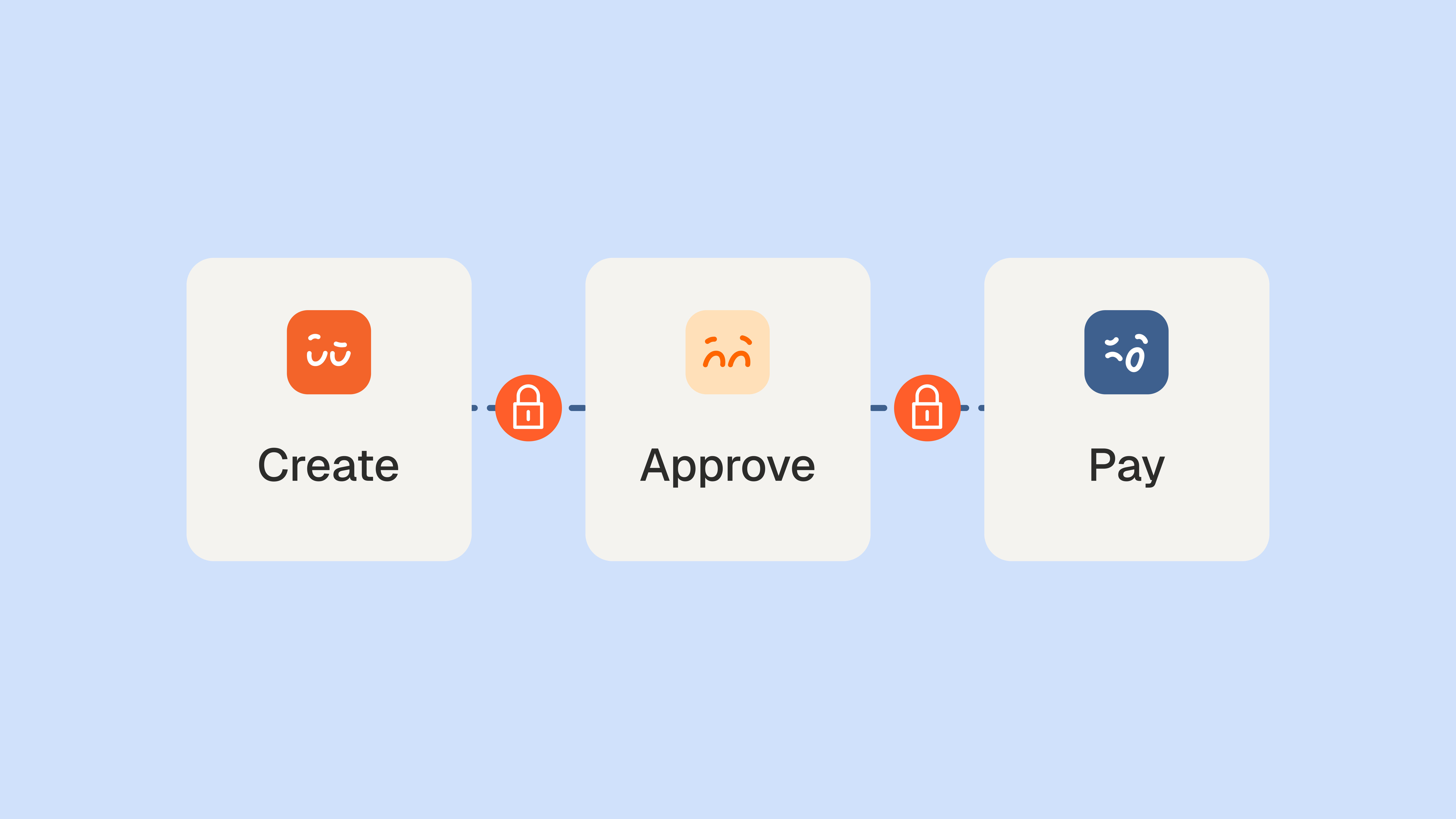
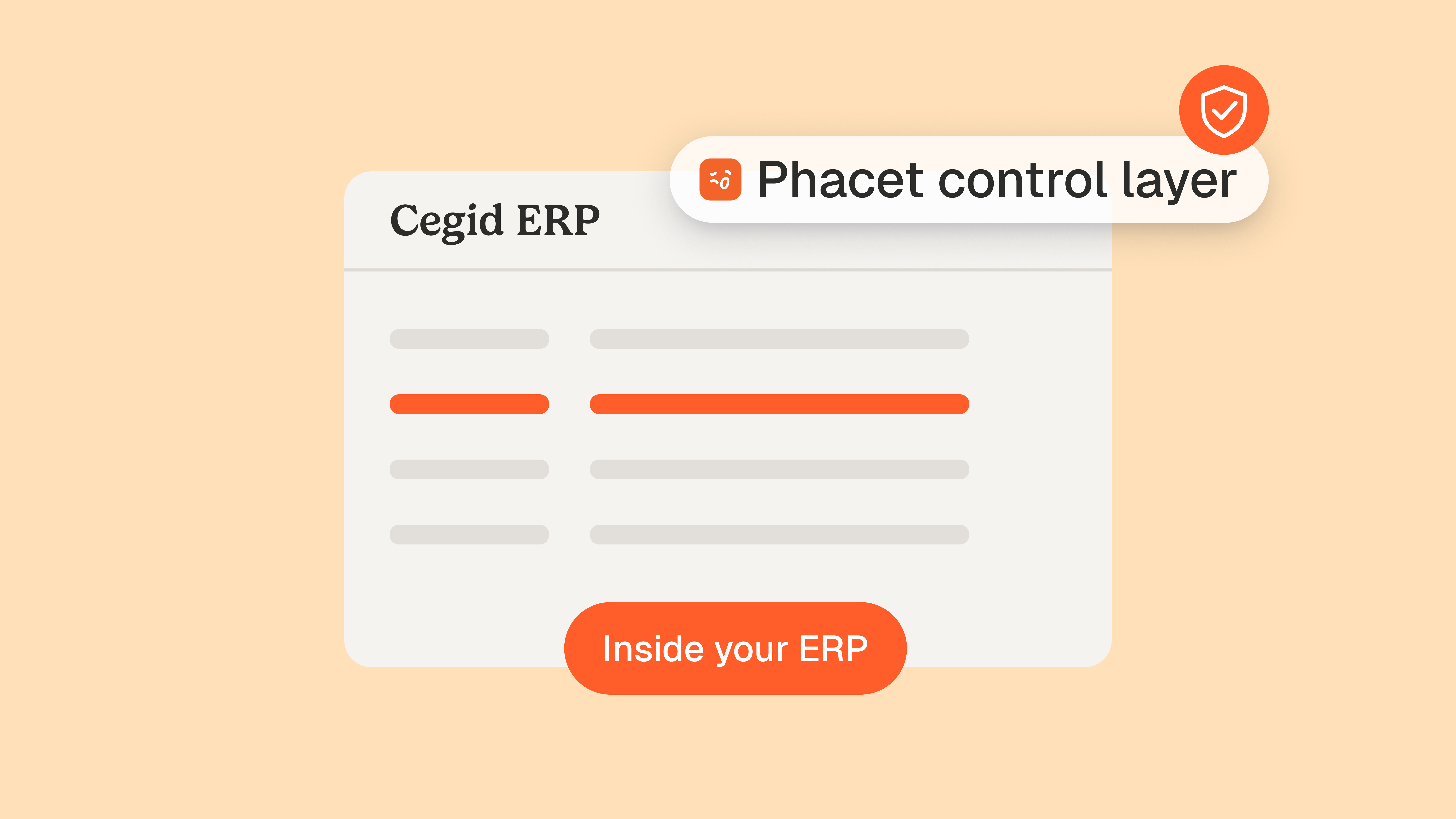
Phacet does not replace Cegid and does not change how invoices are posted. It adds a control step between the invoice and the entry, run by AI agents that follow the same sequence on every deployment: structure, match, analyze.
- Structure. The agent collects invoices where they already arrive (the AP mailbox, PDF files, platform exports) and turns each one into lines in an auditable table: supplier, item, quantity, unit price, VAT, bank details.
- Match. Each line is checked against your references: the negotiated price list or contract, the purchase order and goods receipt exported from Cegid, the supplier's verified IBAN. The supplier billing control agent covers price and contract terms, the three-way matching use case covers orders and receipts, and the fake IBAN detection agent covers bank details. Every flag comes with the agent's reasoning.
- Analyze. Your team works a queue of exceptions instead of the whole invoice flow. Clean invoices continue into Cegid through your usual import, flagged ones wait for a decision, and every decision is logged in the audit trail.
The agent proposes, your team decides. Nothing is paid differently because an AI said so: what changes is that nobody has to read every line to find the three that matter.
How Phacet connects to Cegid
Phacet connects to Cegid the way your team already exchanges data with it. On the Studio plans, agents work from files: Cegid exports in CSV or Excel, and the invoices themselves in PDF or by email. A direct SFTP or API connection to your Cegid edition, including sending validated results back, is scoped in the Custom plan, which covers ERP, SFTP and custom API connectors. Most teams start with exports, and the first agent is typically in production in under two weeks.
For accounting firms on Cegid Loop or Quadra
For a firm, the same control multiplies with every client file: the price and bank checks above run on dozens of ledgers, each with its own suppliers. Phacet agents run per client, so the control can be delivered as a recurring advisory service rather than absorbed as extra production time. The page for accounting firms details how firms package it.
Why not add a Cegid module or wait for the Cegid and Silae platform?
Because both options put the fix on an ERP roadmap, while the gap costs money at every payment run in the meantime.
Adding a module means another implementation project. Cegid's route to supplier invoice automation runs through its Esker partnership, and user reviews of Cegid XRP Flex list implementation complexity as the first drawback (LeBonLogiciel). A finance lead at a steel container manufacturer asked the right question on Reddit: "€10M revenue, 'small' manufacturer: are we too small for a procurement module in our ERP (Cegid Primavera)?" A full procurement module is sized for a procurement department. A control on supplier invoices is sized for a finance team of two to five people.
Waiting means betting on a merger timeline. On September 9, 2026, Silver Lake announced plans to merge Cegid with Silae into a group valued at more than €10 billion, with 1,400 developers, bringing accounting, e-invoicing, payroll and payments onto one platform. Closing is expected in the first half of 2027, subject to employee consultation and regulatory approval (The Next Web). A single platform will connect more data. It will still not know your negotiated prices unless something checks invoices against them.
A Phacet agent starts from €299 per month on the Studio plan, runs next to the Cegid version you have today, and does not need your ERP roadmap to move.
The takeaway
Cegid is a strong system of record, and its own documentation is candid about what that means: the ERP posts what it receives and assumes discrepancies were settled upstream. Your control over supplier invoices is only as good as that upstream step. Put an agent there, keep Cegid exactly as it is, and let your team spend its time on the few invoices that deserve a decision.
Book a demo with your own invoices
FAQ
Who owns Cegid?
Silver Lake, the US investment firm, is Cegid's majority shareholder and has been invested since 2016. On September 9, 2026, it announced plans to merge Cegid with Silae, the payroll software company it also controls. The combined group would be valued at more than €10 billion, with closing expected in the first half of 2027.
Is Cegid a French company?
Yes. Cegid was founded in Lyon in 1983 and is still based there. The publisher reports more than 1 million customers in 130 countries, 5,000 employees in 20 countries and €1.2 billion in revenue, 89% of it recurring, according to its own company page checked on September 27, 2026.
What is the difference between Cegid XRP Flex and Cegid's other ERPs?
Cegid XRP Flex is the 100% cloud ERP that Cegid positions for SMEs, covering purchasing through production. Cegid XRP Ultimate targets mid-sized and large companies, and Cegid Y2 serves retail chains. All of them record and pay supplier invoices, and none of them replaces a line-level check against negotiated prices.
How do you connect other tools to Cegid ERP data?
Most teams start with scheduled exports from Cegid, as CSV or Excel files dropped in a shared folder or on an SFTP server, then move to an API connection when their Cegid edition and integrator support it. Ask your Cegid partner which export formats and endpoints your version exposes before choosing a tool.