
How do AI agents help finance teams validate decisions before action?
Published on :
March 23, 2026


Nicolas Marchais is co-founder and CEO of Phacet. After seven years at Spendesk, he built Phacet as the agentic layer that orchestrates across ERP, banking and email systems. Reliable, auditable, cross-system, what he calls a Finance Workforce.

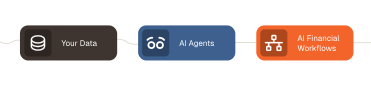
Finance teams have never lacked systems. They have ERP platforms that record every transaction. OCR tools that extract invoice data from PDFs. RPA bots that move data between applications on a schedule. Dashboards that aggregate spend into category totals. And despite all of this infrastructure, finance professionals in organisations of every size report the same experience: they still make significant decisions, approving a payment batch, closing the month, presenting an ARR figure to the board, on data they cannot fully verify.
The gap is not technical. It is architectural. The systems finance teams use are built to record, move, and display financial data, not to validate it. No ERP was designed to tell you whether the price on an incoming invoice matches your negotiated contract. No OCR tool was built to cross-check an IBAN change against a known fraud pattern before a payment clears. No dashboard was conceived to tell you whether the ARR figure it displays is consistent with what your billing platform and your CRM are actually reporting.
This is the space that AI agents for finance control occupy, not as replacements for existing systems, but as a dedicated validation layer that sits between data capture and decision. A layer that reads across all your tools, applies your business rules to every transaction, and returns a clear verdict before any financial action is taken. This article explains what finance control AI agents actually are, how they differ from the automation tools finance teams already use, and why the "validate before action" architecture is becoming the defining characteristic of effective financial oversight at scale.
What AI agents for finance control actually do, and what they are not
The term "AI agent" has become sufficiently overloaded to be nearly meaningless in a technology marketing context. In the context of finance control, it has a precise definition worth establishing.
An AI agent in finance is an autonomous software component that receives a defined set of financial data, applies a configurable logic, business rules, reference data, pattern recognition, to that data, and produces a structured output: a validation verdict, an anomaly flag, a reconciliation result, a classified transaction. The agent acts without requiring a human to initiate each instance of the process. It runs continuously, on 100% of transactions in its scope, and delivers its output to a human reviewer at the exception level, the fraction of transactions where the automated logic identifies a condition that requires a decision.
This is fundamentally different from three categories of tool that finance teams already operate:
AI agents vs. ERP automation
ERP systems validate data against their own internal rules, account codes, approval hierarchies, duplicate invoice detection within the same entity. They do not validate data against external reference sources: your supplier contracts, your mercuriale pricing lists, your negotiated volume tiers, your cross-entity transaction population. They record transactions accurately. They do not verify that each transaction is correct relative to the commercial and operational reality that exists outside the ERP.
The ERP automation gap is structural: ERP was designed as a system of record, not a system of control. AI agents fill this gap by operating at the boundary between the outside world, supplier invoices, bank statements, delivery records, and the ERP entry point, validating each transaction before it becomes a committed record.
AI agents vs. RPA
Robotic Process Automation bots execute predefined sequences of actions on structured data. They transfer data from one system to another, fill in forms, trigger workflows based on field values. RPA is effective for process execution, doing a known task reliably at volume. It is not effective for process validation, determining whether the data being processed is correct.
As Phacet's blog post on going beyond RPA explains, RPA moves data without understanding it. An AI control agent reads the invoice, compares it to the negotiated rate, identifies the deviation, and routes the exception to the right reviewer with the context needed for a decision. That chain, read, compare, judge, route, is outside the scope of any RPA implementation.
AI agents vs. generative AI assistants
Generative AI tools (co-pilots, chatbots, assistant interfaces) produce outputs based on language prompts. They are useful for drafting communications, summarising documents, and answering knowledge questions. They are not designed for systematic, rule-governed validation of financial transactions against reference data. An AI control agent that checks whether a price on a supplier invoice matches a contractual rate does not generate text, it executes a matching operation, scores a confidence level, and routes an exception if the threshold is exceeded. The operating logic is deterministic and auditable, not generative.
The 4 agent types in finance control, and what each one validates
Finance control AI agents organise into four functional types, each operating at a distinct point in the financial workflow and answering a distinct validation question. Understanding these types clarifies where each agent intervenes and what decision it supports.
Type 1 - Input Preparation Agents: is this data usable?
Input Preparation Agents operate at the point of data ingestion, when documents, transaction records, and external data enter the finance workflow from outside systems. Their function is to extract, classify, and structure incoming data so that it is in a format suitable for validation by control agents downstream.
The accounting inbox automation agent is the canonical example. When a supplier invoice arrives by email, the agent extracts the structured data from the PDF (supplier identity, invoice number, line items, unit prices, VAT amounts, total), classifies the document by supplier category and transaction type, checks for format anomalies that suggest document manipulation, and routes the structured record into the validation queue, all before any human has touched the document. Phacet's accounting inbox agent processes this full sequence automatically across every incoming document.
The key validation question Input Preparation Agents answer is not "is this transaction correct?" but "is this data complete and structured enough to be validated?" A document with missing fields, illegible OCR extraction, or format inconsistencies that suggest tampering is flagged at this stage, before it enters any downstream workflow.
Other examples of this agent type include: contract data extraction (extracting key commercial terms from PDF contracts into a structured database), accounting data reclassification (standardising GL account assignments across entity imports), and bank statement parsing (ingesting multi-bank, multi-format transaction exports into a unified reconciliation-ready dataset).
Type 2 - Control Agents: does this transaction comply with our rules?
Control Agents are the validation core of the finance control architecture. They receive structured transaction data, output from Input Preparation Agents or directly from ERP systems, and apply configurable business rules to determine compliance. Their output is a compliance verdict: validated, flagged, or blocked, with a documented rationale.
The pre-decision control that Control Agents exercise is what Project Truth identifies as the critical gap in financial operations: the validation that should happen between data capture and financial commitment, but does not happen systematically in any manual process. Control Agents make it systematic.
The canonical Control Agent use cases map directly to the highest-cost failure modes in accounts payable and spend management:
- Supplier price compliance: comparing each line of an incoming invoice against the applicable contracted rate, mercuriale version, or price list, and flagging any deviation above the configured tolerance threshold before the invoice is queued for payment. Phacet's supplier billing control agent operates at this pre-payment boundary.
- 3-way matching: cross-referencing the purchase order, delivery confirmation, and invoice against each other, quantity, unit price, referenced supplier, and blocking invoices where any of the three legs of the match are inconsistent. See the 3-way matching agent for the implementation detail.
- Expense and NDF compliance: checking every expense claim against the applicable internal policy, category limits, justification requirements, VAT recoverability, and scoring each claim for compliance before it enters the approval workflow.
- IBAN fraud detection: flagging changes to supplier bank account details that precede scheduled payment runs, cross-referencing the new bank details against known fraud patterns and the supplier's historical payment destination.
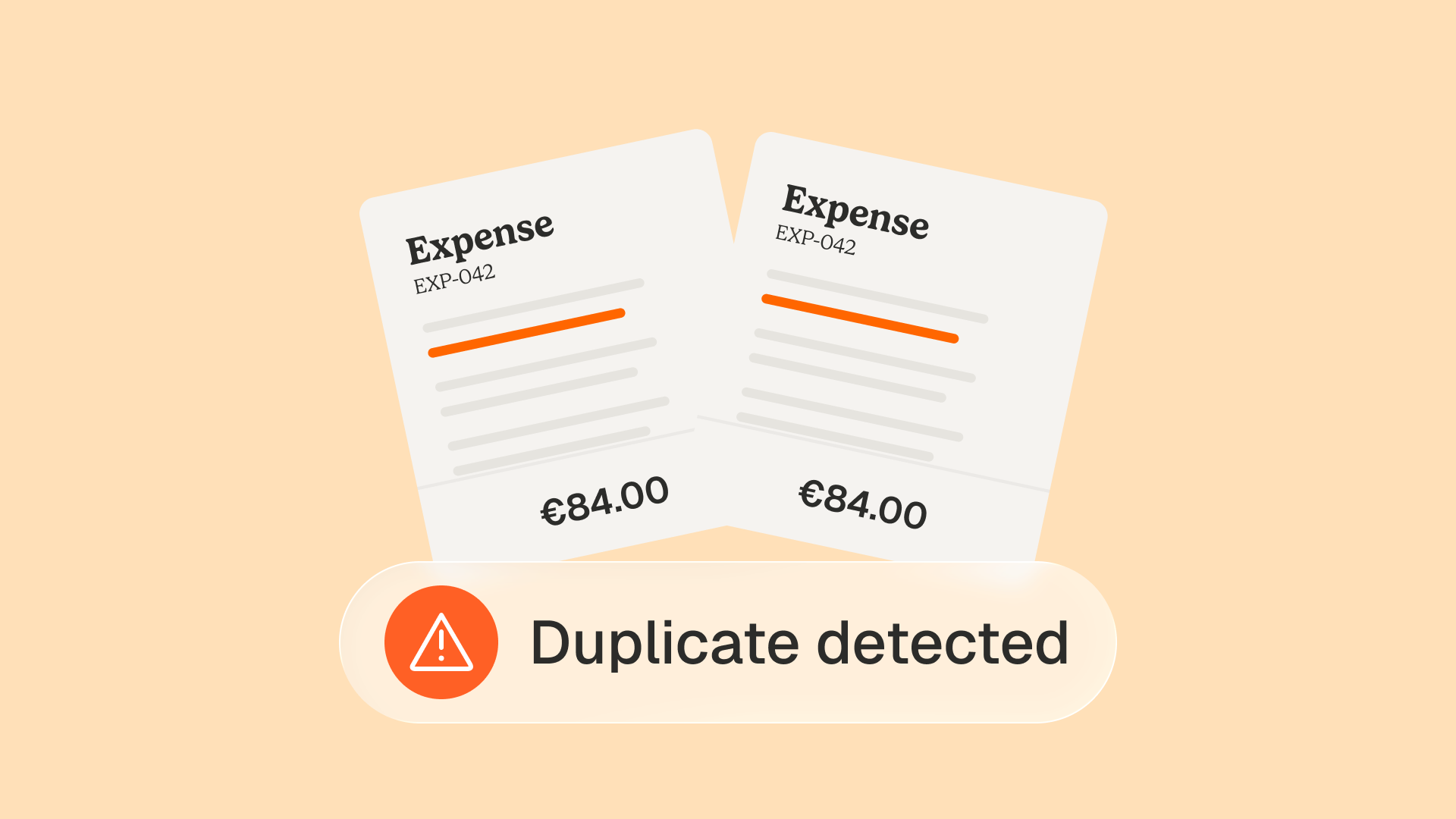
- Cross-entity duplicate detection: checking every incoming invoice against the group-wide invoice population to identify submissions that appear in more than one entity's accounts payable queue.
The pre-payment controls that Control Agents enforce are the architectural equivalent of a checkpoint: every transaction passes through before financial commitment. The checkpoint is configurable, different rules for different supplier categories, entity types, and transaction sizes, and it runs on 100% of in-scope transactions, not a sample.
Type 3 - Reconciliation Agents: do our records match reality?
Reconciliation Agents compare two or more data sources that should be consistent and identify the transactions where they are not. Where Control Agents validate a transaction against a rule, Reconciliation Agents validate a set of records against another set, finding the gaps, mismatches, and unaccounted-for items that represent control failures or data quality issues.
The bank reconciliation agent performs the most widely applicable reconciliation in finance: matching bank statement transactions against GL entries, identifying payments that appear in the bank but have no corresponding accounting record, and surfacing GL entries that have no corresponding bank movement. What previously required one to two days of manual work per month per entity runs in under two hours with full coverage.
Other Reconciliation Agent use cases include:
- Cash reconciliation for multi-site retail and F&B: matching POS system cash totals, physical cash counts, and bank deposit records for each location, identifying discrepancies that indicate cash handling errors or theft before they compound across the next reporting period. The cash reconciliation use case covers this in detail.
- Intercompany reconciliation: matching the mirror entries that should appear on both sides of each intra-group transaction across all entities, identifying the breaks that would otherwise appear as unexplained differences in consolidated accounts at period end.
- Payment matching: appraising incoming customer payments against outstanding invoice balances, handling the common complexity where a single customer wire settles multiple invoices, applies a partial credit, or nets against an open credit note.
- Revenue source reconciliation (ERP ↔ CRM ↔ billing): verifying that the revenue figure in the ERP, the contract value in the CRM, and the amounts processed through the billing platform are mutually consistent, the validation that prevents the "our ARR in Salesforce doesn't match Stripe, which doesn't match Pennylane" problem that affects most fast-growing SaaS businesses.
The financial reconciliation that Reconciliation Agents automate produces decision-grade data, records that have been verified against at least one independent source and can be relied upon as the basis for management decisions, rather than estimates that carry an implicit asterisk about their reliability.
Type 4 - Insight Agents: what do these validated records tell us?
Insight Agents operate on the output of Control and Reconciliation Agents, validated, structured, anomaly-tagged transaction data, and produce the analytical intelligence that is only possible once the underlying data is trustworthy. They answer the management question: given that we have verified the accuracy of these records, what do they reveal about patterns, trends, and forward-looking exposures?
The ARR reconstruction agent is the Insight Agent that delivers the highest impact for SaaS and subscription businesses. Using validated billing data as the input, it reconstructs the revenue timeline from actual invoices, calculating MRR, ARR, expansion, contraction, and churn movements for each period, and reconciles the result against the accounting records. The output is not a dashboard built on self-reported CRM data or manually maintained spreadsheets. It is a revenue analysis built on validated transaction records, suitable for board reporting and investor due diligence without a preparatory reconciliation exercise.
The automatically-label supplier transactions for margin tracking agent provides Insight Agent functionality on the cost side: classifying validated supplier transactions by cost category, supplier tier, and entity, producing the structured cost allocation data that feeds accurate margin reporting without manual reclassification.
Cash flow labelling, the automatic categorisation of bank transactions by business category for treasury reporting, is a third Insight Agent function, producing the treasury dashboards that give CFOs real-time visibility into cash position by category without requiring a manual coding session before each reporting cycle.
The operating model: supervised delegation, not autonomous action
The design principle that governs how Phacet's finance control agents interact with human reviewers is supervised delegation: the agent executes the analysis autonomously, but the decision about how to act on the result remains with a human. This is not a limitation imposed by caution about AI reliability. It is the correct architectural choice for financial operations.
Why human validation at the exception level is the right model
Finance decisions carry financial and legal consequences. A payment approval, an anomaly dismissal, a reconciliation adjustment, each of these actions has downstream effects that persist in the accounting records, the supplier relationship, and the audit trail. An AI agent that executes these actions autonomously removes the accountability that financial governance requires.
Human-in-the-loop control in AI finance systems is the design pattern where the agent handles the analytical work, reading documents, comparing data, applying rules, classifying outputs, and the human handles the consequential decision: approve, dispute, escalate, or investigate further. The human reviewer receives a structured exception record with the agent's analysis, the specific deviation identified, the applicable rule violated, and the recommended action. Decision time drops from hours to minutes. Coverage expands from sampled to complete. The human's role shifts from data processing to decision-making.
This shift is what the Value Selling Framework identifies as the transition from Finance Ops (verifying data manually) to Finance Control (validating decisions systematically). The RAF who previously spent four hours per week checking invoices line by line now spends thirty minutes reviewing the twelve exceptions the Control Agent flagged, and has three and a half hours to spend on analysis that the agent cannot perform.
Explainability as a non-negotiable design requirement
For supervised delegation to work, the agent's output must be legible to the human reviewer. An anomaly flag that says "this transaction is unusual" without explaining what is unusual, against what baseline, by what magnitude, is not actionable. The reviewer cannot make a rapid, well-informed decision without that context. More critically, the reviewer cannot document the basis for their decision in the audit trail without it.
Explainable decision control, the capacity of the agent to provide a transparent, structured rationale alongside every output, is what transforms exception review from an intuitive judgment into a documentable governance event. Each exception in Phacet's review interface includes: the transaction data, the reference data it was checked against, the specific rule that triggered the flag, the deviation magnitude, and the historical frequency of similar patterns from the same source. The reviewer's decision, and the rationale they record, is logged in the audit trail alongside the agent's analysis.
This is the documentation chain that makes audit-ready finance processes possible at the transaction level: not a post-hoc assembly of approvals and sign-offs, but a continuous, timestamped record of every validation performed, every exception reviewed, and every decision made.
Exception-based operations: what the workload actually looks like
The practical implication of exception-based finance review is a fundamental restructuring of the finance team's daily workload. Instead of processing all transactions, the team processes exceptions, typically 3 to 5% of total transaction volume for a well-calibrated control agent deployment.
For a company processing 500 invoices per month, this means reviewing 15 to 25 invoices per month rather than processing all 500. The remaining 475 to 485 invoices have been validated by the Control Agent against the applicable reference data, passed the compliance check, and been routed to the payment queue without requiring human attention. The finance team's invoice-related workload drops by 90 to 95%, not because the work was eliminated, but because the agent performs it automatically and reserves human attention for the cases that actually require a decision.
Jinchan Group achieved a 5x increase in anomaly detection when moving to this exception-based model. The French Bastards scaled from 7 to 14 locations without adding finance headcount. Astotel reduced its invoice error rate from 7% to 2% while processing the same volume with the same team. These outcomes share the same underlying mechanism: agents running on 100% of transactions, humans reviewing the 3 to 5% that require a decision.
The Control Chain: How the Four Agent Types Work Together
The most complete implementations of AI finance control do not deploy a single agent type in isolation. They deploy a control chain where each agent type's output feeds the next, creating an end-to-end validated workflow from document receipt to financial commitment.
The full chain, from document to decision
Step 1 — Ingestion (Input Preparation Agent): A supplier invoice arrives in the accounting inbox. The Input Preparation Agent extracts the structured data, classifies the document, and checks for format integrity. If the document fails extraction quality thresholds, it is flagged for manual review immediately. If it passes, the structured record moves to the control stage.
Step 2 — Validation (Control Agent): The Control Agent receives the structured invoice data and applies the compliance check sequence: duplicate check against the group-wide invoice population, price compliance check against the applicable contracted rate, entity routing validation, and, where available, the first leg of the 3-way matching sequence. Invoices that pass all checks are queued for payment. Those that fail any check enter the exception workflow with a structured rationale.
Step 3 — Reconciliation (Reconciliation Agent): When the payment is processed and appears in the bank statement, the Reconciliation Agent matches the bank transaction against the validated invoice record. Payments that match are auto-lettered in the accounting system. Unmatched bank movements, payments that have no corresponding invoice record, are flagged for investigation.
Step 4 — Insight (Insight Agent): Across all validated transactions for the period, the Insight Agent produces the analytical output: supplier billing compliance rates by vendor category, cash position by business category, cost allocation by entity and margin layer, and, for SaaS businesses, the revenue movement analysis that reconstructs ARR from validated billing records.
The result of this chain is what Phacet calls continuous finance control: not a monthly reconciliation exercise or a quarterly audit review, but a real-time validation layer that runs on every transaction as it occurs, producing a permanently current view of financial position and compliance status.
The source of truth problem - and how the control chain resolves it
One of the most common pain points finance teams report is the absence of a reliable source of truth for financial data. The CRM shows one revenue figure; the billing platform shows another; the ERP shows a third. The bank statement shows a cash balance that does not reconcile to the GL. The supplier's invoice shows a price that does not match the purchase order.
Each of these discrepancies represents a point in the workflow where data crossed a system boundary without being validated. The control chain resolves this by inserting a validation step at every system boundary: before the invoice enters the ERP, before the payment leaves the bank account, before the revenue figure enters the board deck. The data alignment across systems that results is not enforced by integrating all systems into a single platform, it is maintained by validating data at every transfer point, regardless of which systems are involved.
Implementing finance control AI agents: where to start
Finance teams implementing AI control agents for the first time typically achieve the fastest time-to-value by starting with the highest-volume, highest-frequency validation use case, usually supplier invoice control or bank reconciliation, and extending coverage to additional use cases once the first deployment is operating at steady state.
The no-code automation interface that Phacet provides allows finance teams to configure control agents directly, without IT project involvement. Business rules, price tolerance thresholds, entity routing logic, duplicate detection parameters, are configured through a structured interface, not code. The configuration reflects the organisation's own commercial terms and operational rules, not generic defaults.
Connecting to existing systems happens via API or structured data export. The control layer does not replace or modify any existing ERP, bank platform, or AP system. It reads from these sources, validates against reference data, and routes exceptions back to the finance team's existing workflow tools, email, Slack, or a dedicated exception review interface. For a detailed treatment of the CFO-level implementation pathway, Phacet's strategic AI implementation guide covers the sequencing decisions, change management considerations, and ROI measurement approach.
Frequently Asked Questions
What are AI agents in finance control?
AI agents in finance control are autonomous software components that apply configurable business rules and pattern-recognition logic to financial transaction data, invoices, bank flows, accounting entries, supplier records, and produce structured validation outputs before any financial action is taken. They operate continuously on 100% of in-scope transactions, flag exceptions that require human review, and maintain a complete audit trail of every validation performed. Unlike ERP automation or RPA, which move and record data, finance control agents verify that the data is correct relative to external reference sources, contracts, price lists, counterparty records, cross-entity transaction populations.
How do AI agents differ from traditional finance automation?
Traditional finance automation, RPA bots, OCR tools, ERP workflow rules, automates the execution of known processes: moving data between systems, triggering approvals when field conditions are met, extracting text from documents. These tools do not validate whether the data they process is commercially and operationally correct. AI finance control agents add the validation layer that traditional automation lacks: comparing extracted data against reference sources, identifying deviations from expected patterns, and producing compliance verdicts with documented rationale. The difference is between process execution and process validation.
What is pre-decision validation in finance?
Pre-decision validation is the architectural principle of verifying that a transaction is correct before it is committed as a financial action, before an invoice is approved for payment, before a bank reconciliation is marked complete, before a revenue figure enters management reporting. Finance teams that rely on monthly variance analysis or periodic audit review detect problems after they have already been committed as costs or entries. Pre-decision validation catches the same problems at the moment of transaction processing, when resolution costs one supplier conversation rather than a multi-invoice dispute and recovery process.
What is the human-in-the-loop model for AI finance agents?
In the human-in-the-loop model, AI control agents perform the analytical work, reading documents, matching data, applying rules, classifying outputs, while human reviewers make the consequential decisions. The agent generates a structured exception record for each transaction that fails validation, including the specific rule violated, the deviation magnitude, and the recommended action. The human reviewer reads the exception, makes a decision (approve, dispute, escalate, investigate), and records their rationale. This decision and rationale are logged in the audit trail. The model ensures that AI agents handle the volume work and humans handle the judgment calls, maintaining accountability while dramatically reducing the workload volume that reaches human review.
How long does it take to implement AI finance control agents?
For most organisations, a working Control Agent deployment covering the highest-priority use case, typically supplier invoice price compliance or bank reconciliation, is operational within two to three weeks. This covers system connection, reference data loading, and initial rule configuration. Full coverage calibration, including tolerance threshold tuning to reach the target exception rate, takes a further two to four weeks of live operation. The total time from initial connection to stable exception-based operation is typically four to six weeks, without requiring ERP modification, IT project engagement, or changes to the downstream payment and accounting workflows.
Can AI finance control agents work across multiple ERP systems?
Yes. Finance control agents operate at the data layer, reading transaction records from source systems and applying validation logic independently of which ERP produced the data. An Input Preparation Agent that processes supplier invoices works regardless of whether the processed invoices will be entered into Pennylane, Sage, SAP, or any other ERP. A Reconciliation Agent that matches bank transactions against GL records operates across multiple ERP environments simultaneously, producing a consolidated reconciliation result that covers all entities. This cross-system operation is one of the principal advantages of the agent architecture for multi-entity groups where ERP uniformity is not achievable.
What ROI can finance teams expect from AI control agents?
The ROI of finance control agents has two components: direct cost recovery and ongoing cost avoidance. Direct cost recovery comes from identifying billing deviations that have already been paid, typically generating credit note recovery requests in the first months of deployment. Ongoing cost avoidance comes from catching deviations before payment, preventing recurrence of the billing errors identified during the initial deployment. Finance teams also report significant indirect ROI from time reallocation: hours previously spent on manual transaction review are freed for analysis, planning, and commercial decision support. The ROI of AI in finance glossary entry covers the full measurement framework.
The validation layer finance was missing
Finance technology has spent two decades improving how data is captured, moved, and displayed. ERP systems record more accurately. OCR tools extract more precisely. Dashboards visualise more clearly. But none of these improvements addressed the fundamental gap: no system was built to tell you, at the moment of each transaction, whether it is correct.
AI agents for finance control fill that gap. Not by replacing the systems finance teams already use, but by sitting between those systems and the decisions they inform, validating every transaction against the rules that should govern it, flagging the exceptions that require human judgment, and maintaining the documentation chain that makes every validation auditable.
The finance teams that have deployed this architecture, Jinchan Group, The French Bastards, Astotel, La Nouvelle Garde, report the same transformation: not less work, but different work. Agents process transactions. Humans validate decisions. The control coverage that was previously achievable only through significant manual effort now runs continuously, on every transaction, without requiring additional headcount.
Book a demo to see how Phacet's finance control agents connect to your existing tools, apply your business rules to your transaction data, and surface the exceptions that matter, before any financial action is taken.
Latest Resources

Unlock your AI potential
Go further with your financial workflows — with AI built around your needs.


