
How multi-site companies keep financial control without adding headcount
Published on :
March 16, 2026

Nicolas Marchais is co-founder and CEO of Phacet. After seven years at Spendesk, he built Phacet as the agentic layer that orchestrates across ERP, banking and email systems. Reliable, auditable, cross-system, what he calls a Finance Workforce.

Every CFO who has overseen a multi-site expansion has encountered the same inflection point. The company has grown from three locations to eight, from one entity to five, from one country to two. Revenue has scaled. The finance team has not, or not proportionally. And somewhere between site four and site seven, financial control starts to feel like it is held together by the effort of specific individuals rather than by a system that would work regardless of who was in the seat.
The traditional response to this tension is to hire. One more AP manager to handle the invoice volume. One more controller to review each entity's books. One more analyst to consolidate the management accounts. Each hire solves the immediate capacity problem and recreates it at the next growth stage. The result is a finance function that scales linearly with headcount, adding one person for every two or three new sites, at precisely the moment when the business needs finance overhead to scale sub-linearly with revenue.
The alternative is not fewer controls. It is a different architecture: one where the validation and control layer operates at group level, automatically, on 100% of transactions across all sites simultaneously, and where the finance team manages exceptions rather than processes. This article explains why manual multi-site finance control breaks under growth pressure, what a scalable control architecture looks like, and how companies at the five-to-fifty location range have maintained group-level financial control through expansion without proportional headcount growth.
Why financial control breaks at scale in distributed structures
The financial control model that works well at one or two locations fails in distributed structures for structural reasons that headcount alone cannot solve. Understanding these reasons clarifies why the solution requires a different architecture rather than more of the same process.
Each site generates local data that no one aggregates
At a single location, all financial data flows through one accounting inbox, one ERP instance, and one set of eyes. The controller sees everything. At ten locations, each site has its own supplier relationships, its own invoice flow, its own approval processes, and often its own ERP instance or cost centre configuration. The group CFO sees consolidated accounts, but the underlying transaction data that feeds those accounts is distributed across sites, processed independently, and never compared horizontally for patterns that are only visible in aggregate.
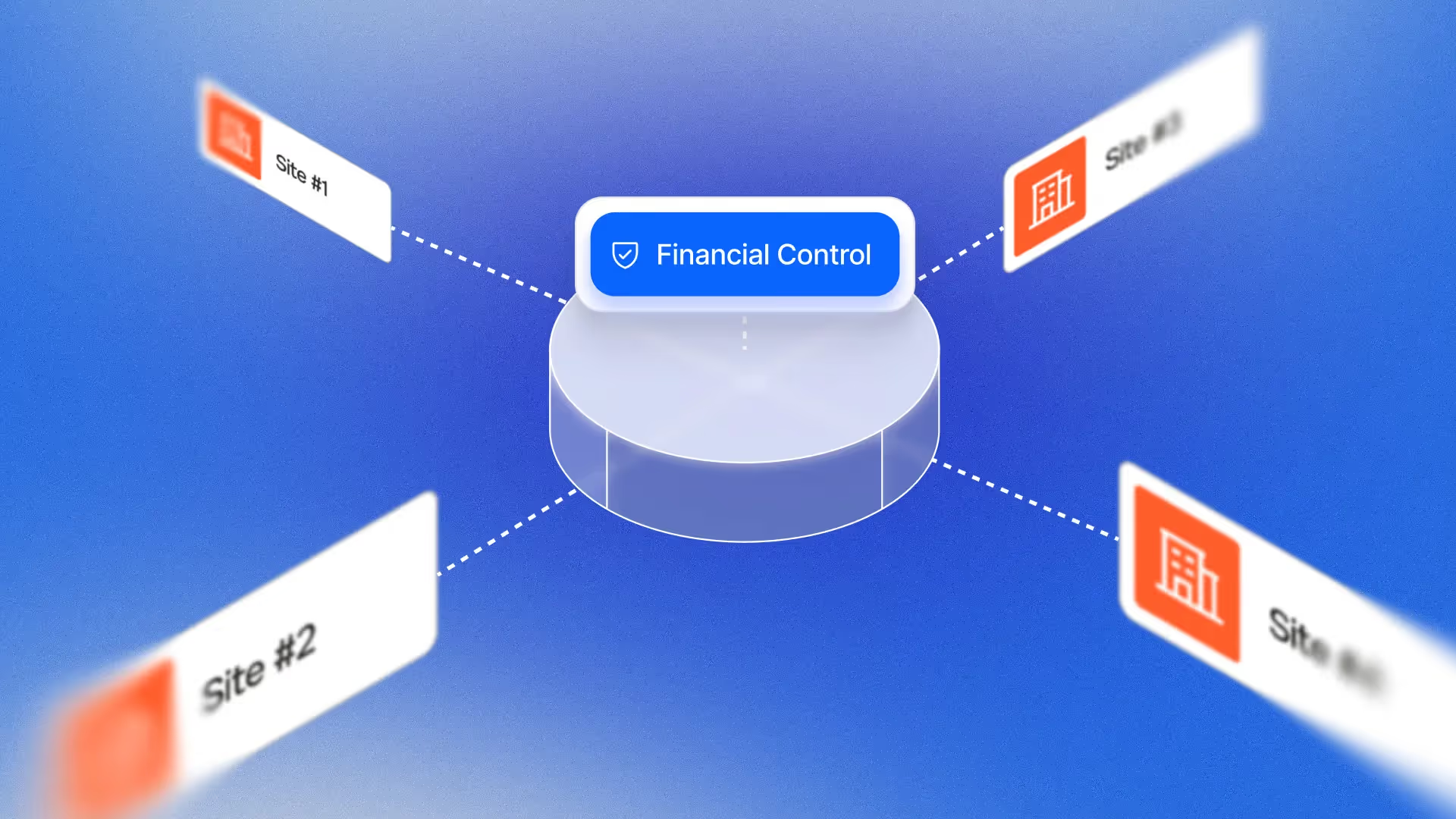
A supplier who overcharges Site 1 by 2% is billing at a rate deviation too small to trigger manual review at that site. The same supplier overcharging all ten sites by 2% simultaneously is extracting a material sum from the group, but no individual site reviewer sees the group-level picture. Detecting this requires a control layer that aggregates transaction data across all sites in real time, not a consolidated report that arrives weeks after the invoices have been paid.
The ERP records transactions, it does not validate them
ERP systems are built to record financial transactions accurately. They are not built to validate that each transaction was correct before it was recorded. When an invoice is entered into an ERP, the system captures the amount as stated on the document. It may compare the amount to a purchase order if 3-way matching is configured, but it does not compare the unit price against the contracted rate, check whether the quantity matches the delivery confirmation, or flag the invoice as a duplicate of one already processed at another location.
This is what Project Truth identifies as the ERP gap: the gap between what ERP systems do, record, and what multi-site finance teams need at the moment of decision: validation that each transaction is correct before it becomes a committed cost. The pre-decision control layer that closes this gap does not replace the ERP. It operates upstream of it, at the point where invoices arrive, before they enter the system that records them as facts.
Approval authority gets delegated, but control does not follow
Multi-site organisations inevitably delegate purchase approval authority to site managers, regional directors, or local finance contacts. This is operationally necessary: a central finance team cannot approve every delivery note and supplier invoice across fifteen locations in real time. But delegation of approval authority does not automatically transfer the knowledge, tools, or reference data needed to validate that each approved transaction is correct.
A site manager who approves a supplier invoice does so based on relationship trust and operational familiarity, not because they have checked the invoiced price against the group negotiated rate, verified the quantity against the delivery record, or confirmed that the same invoice has not been submitted to two other sites. The approval happens; the validation does not. The gap between them is where multi-site finance control erodes.
The five control functions that manual processes cannot scale
Effective multi-site financial control requires five functions to run consistently across every site, every transaction, every billing cycle. Manual processes can deliver some of these at low volume. At scale, they deliver inconsistent coverage of all five simultaneously.
1. Price compliance checking against group-negotiated rates
A group purchasing agreement negotiated at the holding level needs to be applied to every invoice at every site. Checking that the invoiced price matches the applicable rate, contract, price list, volume tier, for each transaction requires the reference data to be available at the time of invoice processing and the check to run on every line, not a sample. Manual AP teams check prices on the invoices they have time to review, which is never 100%.
Phacet's supplier billing control agent applies this check automatically at invoice receipt, comparing each line to the applicable reference rate and flagging deviations before routing the invoice to the payment workflow. Vivason implemented this check across its supplier base and identified €180,000 in annual overcharges, billing deviations that had been accumulating undetected because manual review covered too small a fraction of the invoice population.
2. Cross-site duplicate detection
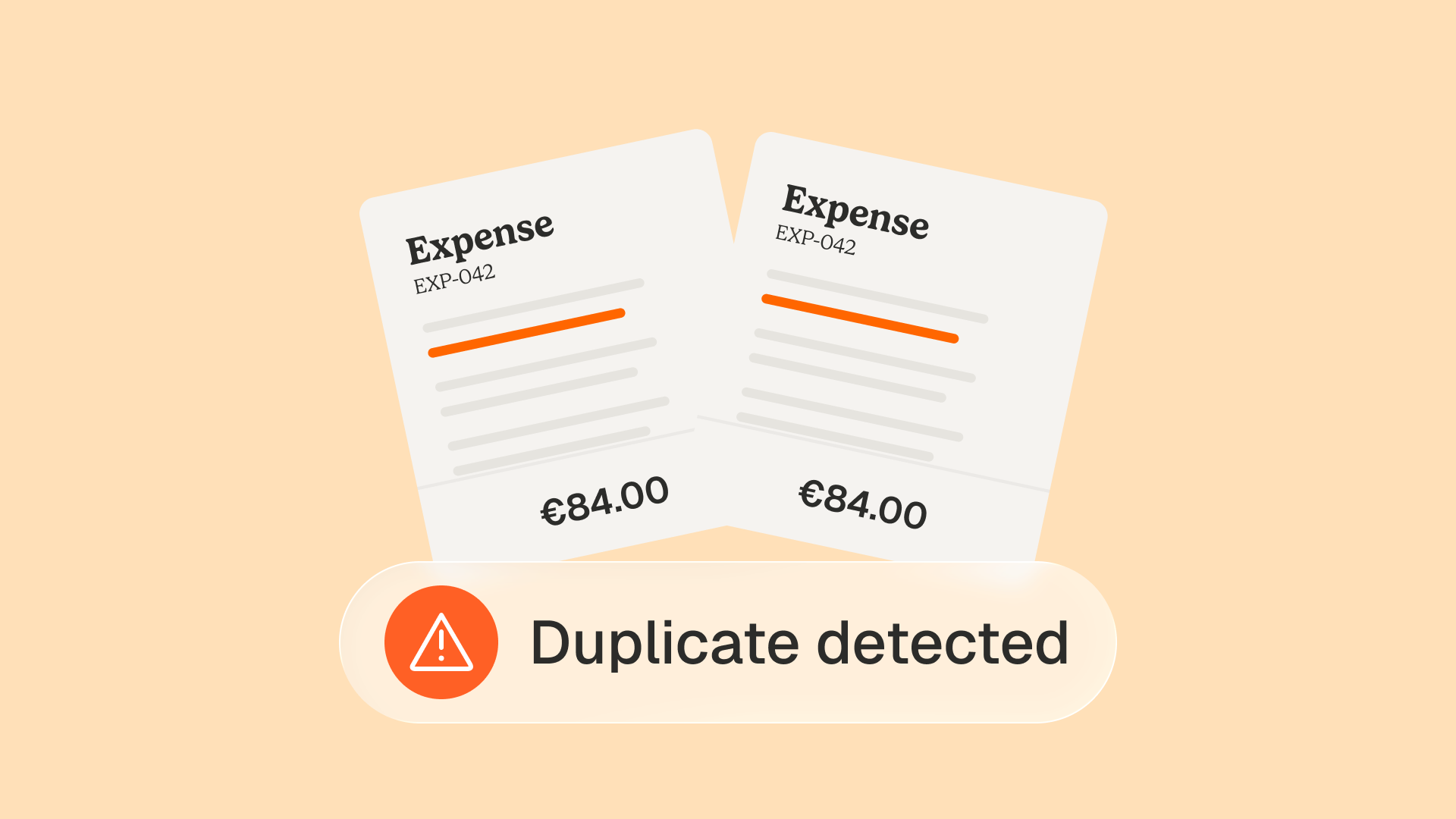
In multi-entity structures, the same invoice can be submitted to multiple subsidiaries, intentionally by a supplier testing whether the duplicate will be caught, or accidentally due to invoice delivery to multiple email addresses. Detecting duplicates within a single entity's AP system is standard. Detecting duplicates across entities, the same invoice number from the same supplier appearing at Site 3 and Site 7, requires a control layer that has visibility across the full group invoice population simultaneously.
This cross-entity duplicate check is one of the highest-value controls in a multi-site finance architecture, precisely because it is impossible to run manually when site invoices are processed independently.
3. Entity assignment validation
In holding-and-subsidiary structures, invoices may be addressed to the holding company or to a specific subsidiary, but the correct entity assignment depends on business rules, which entity is the contractual counterparty, which cost centre carries the expense, which ERP instance should receive the entry. Manual routing based on site manager judgement produces assignment errors at a rate of 5 to 10% in most multi-entity operations, creating consolidation problems that the group controller discovers at period close.
Automated entity assignment validation applies the routing rules consistently on every invoice, before ERP entry, reducing misallocation to a residual exception rate rather than a systematic error rate.
4. Systematic 3-way matching at group scale
3-way matching, comparing purchase order, delivery confirmation, and invoice, is the foundational AP control for product-purchasing businesses. In multi-site structures, the three documents may exist in different systems, at different locations, or in different formats. Running 3-way matching at group scale requires a control layer that can ingest purchase orders from the group procurement system, delivery confirmations from site-level records, and invoices from the AP inbox, and compare all three automatically, across all sites, for every transaction.
5. Audit trail that spans the group, not just each entity
Each site's ERP produces an audit trail for that site's transactions. Consolidating those trails into a single, searchable record of every invoice processed, every validation decision made, and every approval granted across the group is a requirement for group-level compliance and for any internal or external audit that touches multiple entities. Maintaining this consolidated trail manually, pulling records from multiple systems and reconciling them into a coherent group view, is the kind of administrative burden that consumes finance team capacity disproportionate to its business value.
An automated audit trail generated by the group-level control layer records every validation event centrally, covering all sites, all suppliers, and all transaction types within a single searchable system.
Building a group-level control architecture without adding headcount
The control architecture that handles multi-site financial operations at scale has three layers, each of which replaces manual process with automated coverage at a different point in the transaction lifecycle.
Layer 1 - Centralised invoice intake
All supplier invoices, regardless of which site they are addressed to, flow through a single intake point before entering any site-level system. This centralisation does not require all invoices to be physically forwarded, site-specific email addresses can be captured through forwarding rules or direct connection. What matters is that every invoice is visible to the group control layer before any processing occurs.
The accounting inbox automation that Phacet deploys for multi-site groups connects to the group accounting mailbox and all site-level addresses simultaneously, capturing invoices in real time as they arrive. Once captured, each invoice is classified by supplier, entity, document type, and product category, creating a structured record before the document enters any workflow.
La Nouvelle Garde implemented this centralised intake architecture across 14 restaurant locations. The impact was not just operational efficiency, it was the creation of group-level visibility over invoice traffic that had previously been fragmented across 14 independent inboxes. The team's experience of returning from holiday to 1,794 emails requiring processing was replaced by an exception queue that covered the entire group. See the La Nouvelle Garde case study for the workflow transformation detail.
Layer 2 - Automated validation at group scale
With all invoices captured centrally, the validation layer runs every control check on every invoice from every site simultaneously. Price compliance checks apply group-negotiated rates to each line. Duplicate detection runs across the full group invoice population. Entity assignment rules apply to every document before routing. 3-way matching executes where purchase orders and delivery records are available.
The key design principle is that automation handles 100% of invoices through the control sequence, and human-in-the-loop review applies to the exception population, typically 3 to 5% of total invoice volume, that the automated checks flag as requiring a decision. The finance team's role shifts from processing invoices to reviewing exceptions: a fundamentally different workload that scales with exception volume rather than total transaction volume.
This is the structural change that breaks the linear headcount equation. When the finance team processes every invoice manually, doubling transaction volume requires roughly doubling capacity. When the finance team reviews only flagged exceptions, doubling transaction volume increases exception volume by a much smaller proportion, because the exception rate is a percentage of the total, not a fixed absolute number. A team that manages 5% of 1,000 invoices per month can manage 5% of 2,000 invoices without adding headcount, as long as the validation infrastructure scales to handle the additional volume automatically.
Astotel demonstrates this principle across its multi-property hotel portfolio. Systematic invoice validation reduced the error rate from 7% to 2% across the group, but the more significant outcome was that the control coverage became consistent across all properties rather than dependent on the capacity and attention of each property's local finance contact. The Astotel case study covers the implementation detail and the change in finance team workload structure.
Layer 3 - Group-level reporting and intelligence
Validated invoice data, classified consistently across all sites, produces the group-level financial intelligence that distributed processing cannot. Which suppliers are billing above group-negotiated rates across multiple entities simultaneously? Which sites are consistently generating exception flags from the same supplier, suggesting a systemic billing issue rather than an isolated error? Which product categories show the highest invoice-to-contract deviation rates, and where should the next procurement renegotiation focus?
This intelligence does not require a dedicated analytics function. It is the natural output of a control layer that processes all transactions centrally, flags anomalies consistently, and records every outcome in a searchable group audit trail. The finance team accesses it as a management tool rather than constructing it manually from distributed data sources.
For groups that need granular cost allocation, by entity, cost centre, product category, or project, Phacet's supplier transaction labelling agent applies consistent classification rules across all validated invoices, feeding clean, structured cost data into ERP environments and management reporting tools without manual reclassification.
What multi-site control without headcount growth actually unlocks
The operational and financial benefits of a scalable control architecture extend well beyond the immediate efficiency gain of reducing manual processing time.
Consistent control quality regardless of site size or maturity
In a manually-controlled multi-site organisation, control quality correlates with site size and finance resource allocation. Large sites with dedicated finance contacts receive thorough invoice review. Small or recently opened sites with shared resources receive whatever coverage is left after the high-priority tasks are done. The group CFO knows that control quality varies by site, but cannot quantify the variation or close the gap without adding headcount at the underserved locations.
A centralised validation layer eliminates this variation. Every site's invoices receive the same automated check sequence, regardless of site size, local resource availability, or the workload of any individual finance contact. Control quality becomes a property of the group architecture rather than a function of who happens to be reviewing invoices at each location on any given week.
Growth that does not require finance restructuring
The companies that scale most efficiently through multi-site expansion are those that separate the growth question ("how many sites can we open?") from the finance capacity question ("how many finance staff do we need?"). When control is manual and site-dependent, these questions are linked: each new site adds a minimum viable finance overhead. When control is centralised and automated, new sites add transaction volume to the existing control infrastructure, not a structural addition to the finance team.
The French Bastards expanded from 7 to 14 locations without proportionally scaling finance headcount. The centralised invoice validation architecture absorbed the doubled site count within the same control framework, processing more invoices, classifying more transactions, and flagging more exceptions, but delivering these outputs through the same automated system rather than requiring additional manual reviewers at each new location. Read the full French Bastards case study for the operational finance decisions that supported this expansion.
Supplier accountability at group level
When every supplier's billing is validated systematically across all sites, the group accumulates a performance record that changes the nature of supplier negotiations. Instead of relying on relationship trust and anecdotal invoice disputes, procurement teams enter renegotiations with documented compliance rates, aggregate overcharge amounts, and deviation pattern analysis.
This is the commercial governance benefit of multi-site control: the validated transaction data that the control layer generates as a byproduct of its primary function becomes the evidential foundation for supplier management decisions. For more on how this connects to specific enforcement mechanisms, see our articles on supplier pricing compliance and invoice sampling vs. 100% validation.
Implementation path for multi-site groups
Multi-site groups implementing centralised financial control typically follow a sequence that delivers visible results within the first billing cycle while building toward full coverage over a four-to-eight-week deployment window.
Step 1 — Connect the intake layer (week 1).
Phacet connects to the group accounting mailbox and all site-level email addresses via OAuth, capturing incoming invoices in real time. No ERP configuration is required at this stage, the intake layer operates independently of existing systems. All captured invoices are classified by supplier, entity, and document type automatically.
Step 2 — Build the reference data layer (weeks 1–2).
Group-negotiated supplier rates, framework agreements, and applicable price lists are loaded into the structured reference layer that the compliance check engine uses. Phacet's no-code automation interface allows finance teams to configure this reference data directly, without IT involvement. Priority suppliers, highest spend, most complex pricing structures, are configured first.
Step 3 — Configure validation rules by supplier category and entity (weeks 2–3).
Compliance rules are configured for each supplier category: price tolerance thresholds, duplicate detection parameters, entity assignment logic, and escalation routing for different exception types. Rules are configured at the group level and apply to all sites simultaneously, there is no per-site configuration required.
Step 4 — Calibrate on live invoice traffic (weeks 3–4).
Validation rules run on live incoming invoices. False positive rates are monitored and thresholds adjusted to reach the target exception rate, typically below 5% of total invoice volume, while maintaining meaningful compliance coverage. Most groups reach a stable calibration within three to four weeks of live operation.
Step 5 — Operate exception-based control (from week 4).
The finance team transitions from processing all invoices to reviewing the exception queue. Each exception contains the validation context needed for a fast resolution decision, invoiced price, reference price, variance, supplier, site. The accounts payable automation framework that underpins this workflow routes validated invoices to the correct ERP instance for each entity, maintaining the existing downstream accounting workflow without disruption.
Jinchan Group implemented this sequence across its multi-concept F&B portfolio and achieved a 5x increase in anomaly detection compared to the prior manual review process. The anomalies were not new, they had always been present in the billing data. What changed was the coverage: systematic validation on 100% of invoices replaced spot-checking on a fraction, and the full pattern of supplier billing behaviour became visible for the first time. The Jinchan case study covers the implementation detail and the commercial decisions that followed.
FAQ
What is multi-site finance control?
Multi-site finance control refers to the set of financial validation, compliance, and reporting functions that a group organisation must perform consistently across all its locations, entities, or subsidiaries. The core challenge is that financial data and transaction authority are distributed across sites, while control standards and group-negotiated commercial terms need to apply uniformly regardless of site location, size, or local finance resources. Effective multi-site finance control requires a group-level architecture that covers all sites simultaneously, rather than site-level processes that produce variable coverage.
Why does financial control become harder as companies add sites?
Manual financial control processes scale linearly with transaction volume: more sites mean more invoices, more approval decisions, more reconciliation work. But the complexity of control also increases non-linearly with the number of sites, because each new site adds not just volume but also new supplier relationships, new ERP entries, new entity routing decisions, and new potential for cross-site discrepancies that are only visible in aggregate. The combination of linear volume growth and super-linear complexity growth means manual processes that work at five sites are systematically under-resourced at fifteen.
How do you maintain group-level financial control without a finance contact at every site?
Group-level control without per-site finance staffing requires centralising the control functions that benefit from group visibility, invoice validation, price compliance checking, duplicate detection, entity routing, in a group-level automated layer, while preserving site-level involvement for the operational confirmation functions that require local knowledge, such as delivery quantity verification. This separation allows the finance team to manage group control centrally while site managers contribute to the workflow without carrying AP responsibilities that exceed their financial expertise.
What is the right ratio of finance headcount to sites for a multi-site group?
There is no universal ratio, but the question itself reflects the manual control model. Scalable multi-site finance organisations stop thinking in terms of headcount-to-site ratios and start thinking in terms of exception volume: how many flagged transactions does the finance team need to review per period, and how many reviewers are needed to handle that volume at the required quality level? Exception volume is much more stable relative to site count than total transaction volume, which means exception-based control architectures require significantly fewer reviewers per site than transaction-based approaches.
How does multi-site invoice validation connect to group ERP consolidation?
Centralised invoice validation operates upstream of ERP entry, it validates each invoice before routing it to the correct entity's ERP instance. This means validated, correctly-classified invoice data enters the ERP, rather than a mix of compliant and non-compliant transactions that the consolidation process later has to reconcile. Finance teams that consolidate ERP data from multiple entities report that the quality of the underlying transaction data, whether invoice prices match contracts, whether entity assignments are correct, whether duplicates have been excluded, determines whether the consolidation is a clean accounting exercise or a substantial correction process.
Can multi-site control work when different sites use different ERP systems?
Yes. The group-level validation layer operates independently of which ERP each entity uses downstream. Validated invoices are routed to the correct ERP instance for each entity, whether that is Pennylane for one subsidiary, Sage for another, or Odoo for a third, with the validation record and classification data attached. The control layer's consistency comes from the validation rules applied at intake, not from ERP uniformity. Multi-ERP groups are often those with the most to gain from centralised validation, because the absence of a common ERP creates the strongest need for a group-level control function that works across system boundaries.
How quickly can a multi-site group implement centralised finance control?
Most multi-site groups complete the initial deployment, centralised intake, reference data configuration, and validation rule setup for priority suppliers, within three to four weeks. Full coverage calibration, including fine-tuning tolerance thresholds to the target exception rate, typically takes an additional two to four weeks of live operation. The finance team transitions to exception-based operations at the end of the calibration period. The implementation does not require ERP changes, IT projects, or site-level system modifications, it layers onto the existing infrastructure at the invoice intake point.
What happens to site managers' involvement in the finance process after centralisation?
Site managers' role shifts from invoice approval to operational confirmation, a more appropriate task for their position. Rather than reviewing invoices for financial correctness (a task requiring reference data and financial expertise they typically lack), site managers confirm operational facts: delivery quantities received, quality of goods matching the order, any delivery exceptions. This confirmation step feeds the 3-way matching layer at the group level. The financial control decision, whether the invoice is compliant and can proceed to payment, remains with the finance team reviewing the group exception queue.
Control that scales with the business, not with the team
The multi-site finance control problem is not a headcount problem. It is an architecture problem. Manual processes that require a human reviewer to touch every transaction before it is approved will always produce a control function that scales linearly with sites and volume, adding overhead at every growth stage and producing variable control quality depending on local resource allocation.
The alternative architecture centralises the control functions that benefit from group visibility, automates the validation sequence that runs on every transaction, and reserves human judgment for the exception fraction that genuinely requires a decision. This architecture scales with transaction volume rather than headcount: as the group grows, the automated layer handles more invoices, generates more exceptions, and produces more group-level intelligence, while the finance team's workload grows only as fast as the exception rate, not as fast as the site count.
The companies that have deployed this architecture, La Nouvelle Garde, The French Bastards, Jinchan Group, Astotel, have not built larger finance teams as they scaled. They have built better control infrastructure. The result is financial control that covers every site, every supplier, and every transaction at the level of quality that was previously only achievable at single-location scale. Book a demo to see how Phacet deploys this architecture for groups at your stage of multi-site expansion.
Latest Resources

Unlock your AI potential
Go further with your financial workflows — with AI built around your needs.


