
How finance teams control food costs by validating supplier invoices
Published on :
March 16, 2026

Nicolas Marchais is co-founder and CEO of Phacet. After seven years at Spendesk, he built Phacet as the agentic layer that orchestrates across ERP, banking and email systems. Reliable, auditable, cross-system, what he calls a Finance Workforce.

Food cost percentage is the metric every restaurant operator tracks. It sits on the weekly management report, it gets reviewed in every board deck, and it determines whether a concept is profitable at the unit level. Most restaurant groups calculate it the same way: total supplier invoice spend divided by total revenue, expressed as a percentage of sales.
The problem is not the formula. The problem is the input. Food cost percentage calculated from unvalidated supplier invoices is not a management metric. It is an estimate contaminated by whatever billing errors, mercuriale deviations, and overpayments the supplier base introduced into the invoice population that week. A group reporting 28% food cost when the real figure, based on what was contractually owed rather than what was actually invoiced, is 26.5% is making operational decisions on a number that does not exist in reality.
Finance teams in restaurant and food service groups have two separate problems that are often conflated. The first is food cost tracking, knowing how much was spent on which product categories, at which locations, against which revenue periods. The second is food cost control, ensuring that what was spent reflects what was contractually agreed, so that the tracking number is worth tracking. This article focuses on the second problem: how to control food costs at the invoice level, before payment, and why that control is the prerequisite for any food cost reporting that deserves to influence decisions.
Why most food cost software solves the wrong problem
The food cost software market is large and well-established. Tools like MarketMan, Apicbase, Lightspeed, and their competitors offer recipe costing, inventory tracking, menu engineering, and supplier catalogue management. They calculate theoretical food cost based on recipes and portion sizes, compare it to actual food cost based on inventory movements, and flag variance as waste, theft, or portioning error.
This is genuinely useful work. But it addresses food cost variance that originates in the kitchen, over-portioning, spoilage, staff consumption, preparation losses. It does not address food cost variance that originates in the supplier invoice, the billing price that should not have been applied, the quantity that was not delivered, the mercuriale rate from the wrong week, the contracted discount that did not materialise at invoice level.
The upstream data quality gap
Every food cost tool downstream of the purchasing function, whether it is an inventory management platform, a management accounting dashboard, or an ERP cost centre report, depends on supplier invoice data as its primary input for actual purchase costs. If that invoice data is not validated against contracted pricing before it enters the system, the "actual food cost" figures produced by every downstream tool reflect what was billed, not what was owed.
The distinction matters more than it appears. A 1.5% billing overcharge from a major produce supplier, well within the range of mercuriale deviation rates observed across restaurant group clients, translates directly into a 1.5% inflation of the food cost percentage for every reporting period in which those invoices are included. The operations director who sees a food cost creep from 27.5% to 29% and responds by tightening portion controls is addressing the wrong problem. The issue was never in the kitchen.
What food cost control software should actually do
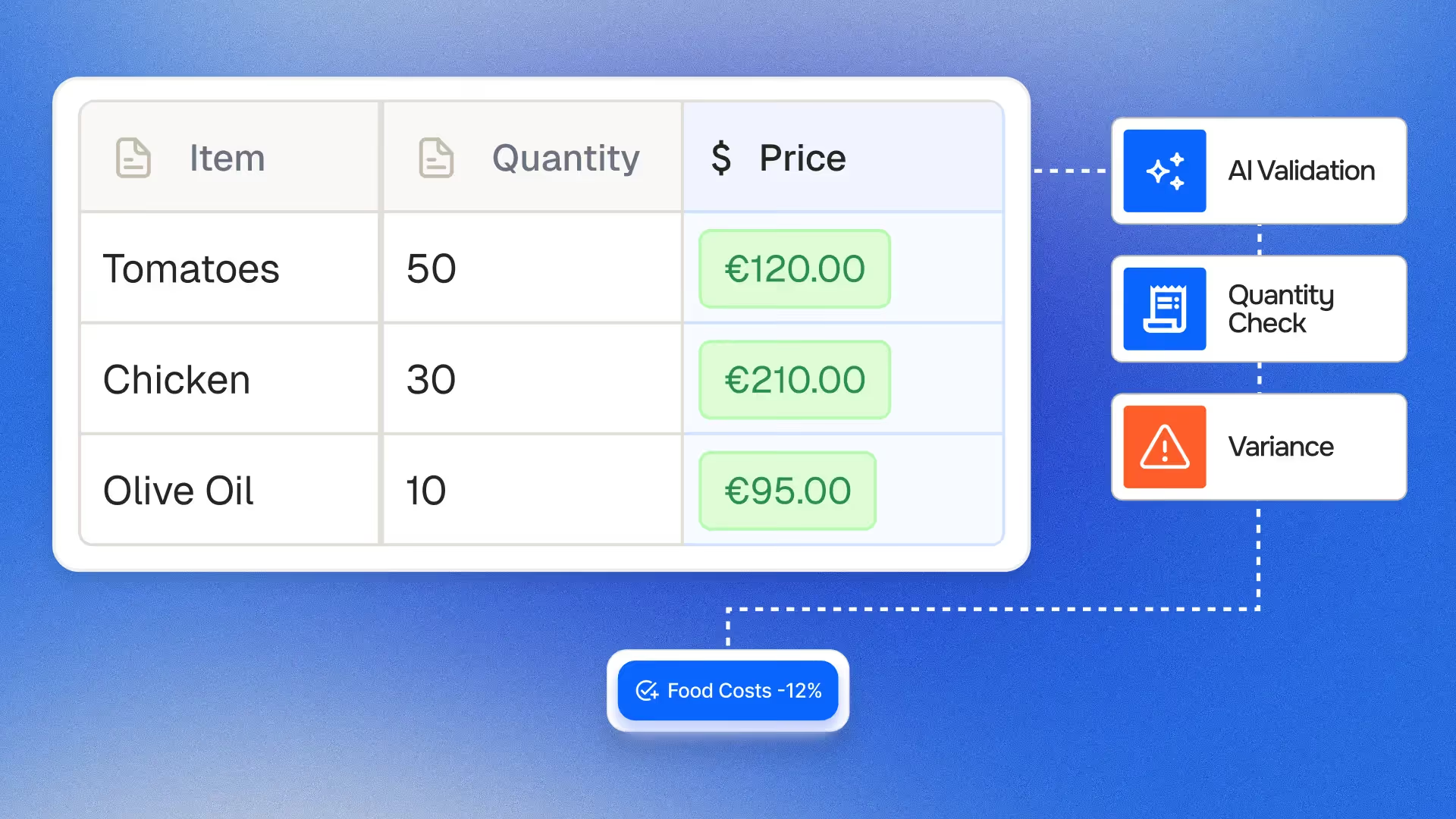
Genuine food cost control requires a validation layer that operates at the invoice level, before purchase data enters any reporting or inventory system. That layer needs to perform three functions that recipe costing and inventory management tools do not provide:
- Price compliance checking: comparing each invoiced unit price against the contracted rate, mercuriale reference, or price list applicable to that supplier on that delivery date
- Quantity reconciliation: cross-referencing invoiced quantities against delivery records to catch billing for goods not received
- Cross-location aggregation: identifying billing patterns that are invisible at individual site level but visible when invoice data from multiple locations is consolidated under a single control layer
These are not food cost tracking functions. They are food cost protection functions, and they operate upstream of every tracking tool, at the moment the invoice arrives, before any payment is approved. This is what pre-decision control means in the context of food purchasing: the validation happens before the cost is committed to the ledger, not after.
The three data quality failures that corrupt food cost reporting
Understanding precisely how unvalidated invoice data corrupts food cost figures helps prioritise where invoice-level control delivers the most reliable improvement.
1. Billing price deviations that inflate the cost base
A supplier invoicing at €3.20/kg for a product contracted at €3.00/kg adds €0.20/kg to the cost of every unit purchased. At 500 kg per week across a group of ten locations, that is €100 per week, €5,200 per year, from a single product, a single supplier. The food cost percentage for every week in which that supplier's invoices are included is overstated by the amount of the deviation, proportional to that product's share of total food spend.
Billing price deviations are the most common source of systematic food cost inflation in restaurant groups that do not validate at invoice level. Vivason's experience provides a concrete scale reference: €180,000 in annual overcharges identified through systematic invoice-level validation, overcharges that had been flowing directly into the food cost base and inflating the reported metric without triggering any operational response, because the inflation was indistinguishable from genuine cost pressure.
2. Quantity discrepancies that charge for goods not received
A delivery of 40 cases invoiced as 42 cases adds two phantom cases to the food cost figure. The inventory movement records 40 cases received. The invoice records 42 cases paid. The gap appears as unexplained variance, a "waste" or "shrinkage" figure that the kitchen is blamed for but that originated in the billing transaction.
Finance teams that investigate persistent unexplained variance in specific product categories sometimes discover that the root cause is systematic quantity discrepancy from specific suppliers or delivery routes, not portioning error, not theft, but invoicing for quantities not delivered. Identifying this requires cross-referencing invoice quantities against delivery confirmation records, which manual AP processes rarely do at sufficient coverage to catch the pattern.
3. Missing contracted discounts that understate purchasing power
A group-level volume discount that was negotiated but not consistently applied across all locations reduces the effective purchasing advantage and inflates the food cost figure relative to the benchmark that procurement believed they had secured. If the discount was supposed to produce a food cost of 26% and the unreceived discount pushes the actual figure to 27.5%, the 1.5-point gap looks like operational underperformance when it is actually a supplier compliance failure.
Tracking this gap requires knowing, for every invoice from every discount-eligible supplier, whether the applicable discount rate was applied, which requires a systematic compliance check at invoice level, not a periodic reconciliation exercise that runs weeks after the invoices have been paid and the period has closed.
From invoice validation to reliable food cost data: the architecture
The connection between invoice-level validation and trustworthy food cost reporting is direct: validated invoices produce clean cost data; clean cost data produces food cost figures that reflect purchasing reality; food cost figures that reflect purchasing reality are worth acting on.
Building this data quality foundation requires three connected components.
Validated invoice intake as the data entry point
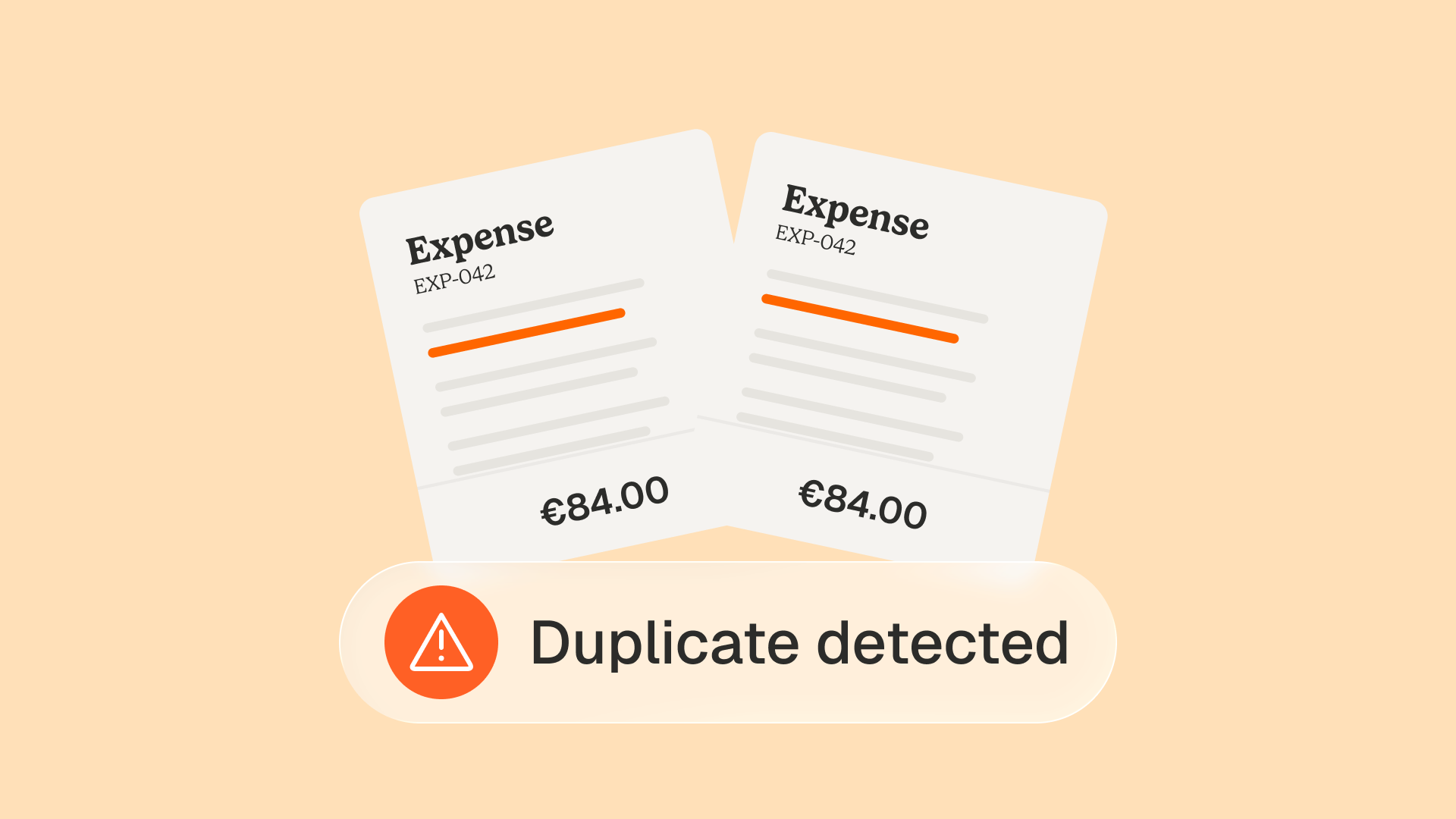
Every supplier invoice enters the system through a validated intake layer before it is routed to the ERP, the inventory management tool, or the accounting workflow. At intake, each invoice is checked for price compliance against the applicable rate reference, quantity consistency against delivery records where available, and duplicate or fraud indicators.
Phacet's accounting inbox automation provides this intake layer for restaurant groups: invoices are captured at receipt, validated against structured reference data, and classified by location, supplier category, and product type before routing. Only invoices that clear validation advance to the payment workflow. Invoices with compliance flags route to a structured exception queue for human review before any cost is committed.
The effect on downstream reporting is immediate. Once invoice data entering the ERP has been validated for price compliance, the food cost figures that accounting and operations extract from ERP data reflect actual contractually-compliant purchasing costs, not a blend of correct invoices and undetected overcharges.
Structured cost reference by supplier and category
Reliable price compliance checking requires structured reference data, contracted rates, mercuriale pricing, volume discount tiers, organised by supplier, product category, and validity period, in a format that can be queried at the moment an invoice arrives.
For fresh produce suppliers operating on weekly mercuriales, this means the reference data updates automatically as new price lists are issued. For contracted suppliers with annual agreements, it means the reference rate is loaded at contract signature and updated when terms change. For suppliers with volume-dependent pricing, it means the applicable tier is calculated against cumulative purchase volume rather than a flat rate lookup.
Phacet maintains this structured reference layer for each supplier relationship, extracting rate terms from contracts and price lists, versioning them with validity dates, and applying the correct reference to each invoice line at the time of validation. The supplier billing control agent handles this comparison across the full invoice population, not just a sampled subset.
Category-level cost allocation for reporting granularity
Validated invoice data is most useful for food cost management when it is allocated at the category and sub-category level, not just "food spend" but "produce spend", "protein spend", "dairy spend", "dry goods spend", and when that allocation is consistent across locations and reporting periods.
Manual allocation of invoices to cost categories is time-consuming and inconsistent, particularly across multi-site operations where different site accountants apply different categorisation judgements to the same product type. Automated allocation using Phacet's supplier transaction labelling agent applies consistent category rules across every invoice from every supplier at every location, producing cost allocation data that is comparable across the group and over time.
This granular, consistently-allocated cost data is what makes food cost percentage a genuine management metric: finance teams can see not just that food cost is 28%, but that produce cost is 11.2%, protein is 8.6%, and dairy is 3.1%, and that the 0.4% increase in produce cost this week is concentrated in one supplier relationship, not distributed across the category. That precision is impossible without both invoice-level validation and consistent category allocation from the same validated data source.
Food cost control across multiple locations: the group aggregation advantage
For single-location restaurants, food cost control is manageable at the individual invoice level. The chef or manager has direct knowledge of what was ordered and what was delivered, the supplier relationships are personal, and an anomaly is visible when it occurs.
For restaurant groups at ten, twenty, or fifty locations, the same challenge exists at a scale where personal knowledge fails. Jinchan Group demonstrates what systematic validation reveals at group level: a 5x increase in anomaly detection when moving from manual spot-checking to automated invoice-level validation across all locations simultaneously. The anomalies existed before the system was implemented, they simply were not visible to any individual reviewer. Read the full Jinchan case study for the operational and financial detail.
Cross-location benchmarking becomes possible with validated data
When every location's food purchases are validated against the same price references and allocated to the same cost categories, the data supports a comparison that is genuinely informative: which locations are purchasing at group-negotiated rates, which are using local supplier relationships that diverge from the group contract, and where the actual food cost performance differs from the reported figure because of billing discrepancies rather than operational performance.
This cross-location benchmarking is one of the highest-value outputs of a food cost control system, and it is only possible when the underlying invoice data has been validated for price compliance. Benchmarking on unvalidated data confounds billing discrepancies with operational performance, making it impossible to distinguish a location that is overspending on food from one that is simply being systematically overbilled by a specific supplier.
Scaling without proportional finance headcount
The French Bastards expanded from 7 to 14 locations without doubling their finance team's workload in invoice processing and food cost tracking. The validation architecture that centralised invoice intake and automated compliance checking absorbed the doubling of invoice volume within the same operational framework. The French Bastards case study covers how the finance function supported rapid physical expansion without proportional administrative scaling.
La Nouvelle Garde, operating fourteen restaurant locations, achieved a comparable outcome: systematic invoice validation eliminated the backlog management problem that had previously consumed finance team time, 1,794 emails on return from vacation, and replaced it with an exception-based workflow where the team reviews a small fraction of invoices rather than processing the full volume manually. See the La Nouvelle Garde case study for the workflow transformation detail.
For more context on how invoice validation and food cost control integrate specifically within multi-location restaurant operations, see our articles on restaurant invoice validation and mercuriale pricing control.
Selecting a food cost control approach: what to evaluate
Finance teams evaluating food cost control capabilities need to distinguish between tools that address the upstream invoice validation problem and tools that address the downstream reporting and analysis problem. Both matter; neither substitutes for the other.
What upstream invoice validation tools must provide
The validation layer that protects food cost data quality at the source must offer:
- 100% invoice coverage: every incoming supplier invoice is validated, not a sampled subset. Food cost accuracy requires that billing errors on low-value, high-frequency invoices are caught as reliably as errors on high-value invoices, because cumulative impact from small recurring deviations is the primary mechanism through which food cost is inflated.
- Dynamic price reference management: for produce suppliers operating on weekly mercuriales, the reference data must update automatically as new price lists are issued and apply the correct version to each delivery date. Static annual contract rates are insufficient for this supplier category.
- Multi-location consolidation: the validation layer must aggregate invoice data across all locations under a consistent control framework, enabling cross-location pattern detection that is invisible at site level.
- Structured exception management: flagged invoices must route to a reviewable queue with the specific information needed for resolution, invoiced price, reference price, variance amount, not to a generic "rejected" status that requires manual investigation to understand.
What downstream food cost reporting tools must provide
Once the invoice data foundation is validated, the reporting layer needs to organise and surface it usefully:
- Consistent category allocation: spend classification that applies the same category rules across all locations and all periods, enabling reliable time-series comparison and cross-site benchmarking.
- ERP integration: clean cost data flows into the GL without reclassification burden on the finance team, supporting period-close reporting without the reconciliation overhead that unstructured invoice data creates.
- Margin visibility at menu or product level: for groups that want to connect purchasing cost to menu profitability, the validated spend data needs to be linkable to sales mix and menu item cost structures.
Phacet operates at the upstream layer, invoice validation, price compliance, category labelling, feeding clean, validated cost data into whichever ERP and reporting tools the finance team uses downstream. The accounts payable automation workflow that Phacet deploys for restaurant groups connects to Pennylane, Sage, Odoo, and other ERP environments without requiring system replacement.
FAQ
What is food cost control software?
Food cost control software refers to tools that help restaurant groups manage and reduce the percentage of revenue consumed by food purchasing costs. The category includes two distinct types of tools: upstream invoice validation tools that check supplier billing accuracy before payment, and downstream reporting tools that track food cost percentages against revenue, by category, location, and period. The upstream layer produces the data quality that the downstream layer depends on, without validated invoice inputs, food cost reports reflect billing noise as much as operational performance.
How does invoice validation reduce food costs?
Invoice validation reduces food costs by preventing overcharges from entering the payment flow, catching billing price deviations, quantity discrepancies, and missing contracted discounts before payment approval. The financial impact is direct: every overcharge caught before payment is money that stays with the restaurant group rather than flowing to the supplier. Beyond individual overcharge prevention, systematic validation produces clean cost data that enables accurate food cost tracking, cross-location benchmarking, and procurement renegotiations informed by documented billing performance rather than impressions.
What is a realistic food cost percentage for restaurant groups?
Food cost percentages vary significantly by concept type and price point. Casual dining and bistro concepts typically target 28–32%. Fast casual and quick service concepts often operate in the 25–30% range. Fine dining concepts may run higher on raw ingredient cost but offset it with higher average spend. The relevant benchmark is not the industry average but the group's own target, calculated from recipe costs and negotiated purchasing rates, and the reliability of that benchmark depends entirely on whether the supplier invoices feeding the actual food cost figure have been validated for price compliance.
Can food cost reporting tools substitute for invoice-level validation?
No. Food cost reporting tools calculate percentages from the cost data available to them, whether or not that data is accurate. A reporting tool that receives unvalidated invoice data from the ERP will produce food cost figures that include billing overcharges as part of the cost base, those figures look like operational results but partly reflect supplier billing behaviour. Invoice-level validation must happen upstream of any reporting tool to ensure that the data the tool receives reflects actual contractually-compliant costs.
How long does it take to see food cost improvement after implementing invoice validation?
Most restaurant groups see measurable improvement in food cost data accuracy within the first billing cycle after systematic invoice validation is deployed, because overcharges that had been entering the cost base are now caught before payment. The financial impact of preventing those overcharges is visible in the reporting period immediately following implementation. Trend-level improvement in reported food cost percentages typically becomes visible within two to three months, as the cumulative effect of validated invoices replacing a mix of compliant and non-compliant billing data produces a cleaner cost baseline.
How does food cost control connect to procurement negotiations?
Systematic invoice validation generates a supplier billing performance record, compliance rates, frequency of deviations, average overcharge value by supplier and product category, that is directly useful in procurement negotiations. Instead of renegotiating based on general cost pressure, finance and procurement teams enter discussions with documented evidence of how reliably each supplier has billed at contracted rates, which categories show the highest deviation rates, and what the aggregate financial impact of billing non-compliance has been. This shifts the negotiation from subjective relationship discussion to data-grounded commercial conversation.
What is the difference between food cost tracking and food cost control?
Food cost tracking measures the percentage of revenue consumed by food purchasing costs over a given period. Food cost control ensures that the purchasing costs feeding that tracking metric are genuinely compliant, that invoiced prices match contracted rates, that billed quantities match deliveries, and that group-level commercial terms are applied consistently across all locations. Tracking without control produces metrics that are affected by supplier billing behaviour as much as by operational performance. Control without tracking provides compliance assurance but no management visibility. Both are required for food cost management that drives genuine operational decisions.
How does Phacet fit into an existing food cost management stack?
Phacet operates at the invoice intake and validation layer, upstream of ERP entry, upstream of inventory management tools, upstream of food cost reporting dashboards. It validates supplier invoices for price compliance, classifies them by location and product category, and routes validated data to the ERP environment the group uses. This means Phacet integrates with existing downstream tools rather than replacing them: the food cost reporting platform or inventory management system continues to operate as before, but receives validated input data rather than a mix of compliant and non-compliant invoices. The food cost figures that the existing tools produce become more reliable as a direct result.
The foundation that makes food cost data worth tracking
Food cost percentage is useful only if it is accurate. And it is accurate only if the invoices that feed it have been validated for price compliance before the costs were committed to the ledger.
The finance teams that manage food costs effectively are not those with the most sophisticated reporting dashboards or the most detailed recipe costing models. They are the ones that built the upstream control layer, the validation step between supplier invoice receipt and ERP entry, that ensures every unit of cost recorded in the system reflects a price that was actually owed, not whatever the supplier's billing system applied on a given week.
Astotel built that control layer across its hotel and food service portfolio and reduced supplier invoice error rates from 7% to 2%. That 5-percentage-point improvement in invoice accuracy flows directly into every food cost metric the group tracks, not as an accounting adjustment, but as a structural improvement in the data that the metrics are calculated from. See the full Astotel case study for the implementation detail, and explore Phacet's food and beverage automation capabilities to see how the same architecture applies to your group.
Book a demo to see how invoice-level validation connects to food cost control across your supplier base, location structure, and reporting environment.
Latest Resources
Unlock your AI potential
Go further with your financial workflows — with AI built around your needs.


