
Which financial controls should be automated to prevent costly errors?
Published on :
March 23, 2026


Nicolas Marchais is co-founder and CEO of Phacet. After seven years at Spendesk, he built Phacet as the agentic layer that orchestrates across ERP, banking and email systems. Reliable, auditable, cross-system, what he calls a Finance Workforce.

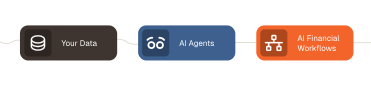
Finance teams that still rely on sampling, manual checklists, and ERP-entry-point reviews are playing defense too late. When errors surface after payment approval, the cost isn't just financial, it's a credibility problem. Companies relying on manual validation miss 5–10% of invoice errors, according to industry benchmarks, and the average fraud incident costs between €15,000 and €50,000 per occurrence.
The question isn't whether to automate financial controls. It's knowing which controls to automate first, and at which moment in the workflow, to prevent errors before they become irreversible.
Why manual financial controls keep failing
Most finance teams validate transactions reactively. Sampling replaces systematic review. ERP systems record what happened; they don't question whether what happened was correct.
The core problem: ERP systems are built to record, not to validate. They assume clean, accurate data at entry. When invoices carry errors, wrong pricing, duplicate references, misrouted entities, fraudulent IBANs, those errors enter the ERP unchallenged and contaminate reporting downstream.
Astotel, a hotel group using Phacet, experienced this firsthand. Before implementing automated pre-payment controls, their invoice error rate sat at 7%. After deploying systematic validation at the point of approval, it dropped to 2%. The gain wasn't from smarter accountants, it was from moving the control checkpoint earlier in the process.
This is what accounts payable automation is fundamentally about: not speed, but confidence at the decision moment.
The controls that matter most, and when to automate them
Not every financial control carries the same risk weight. The controls worth automating first are those that sit just before an irreversible commitment: payment approval, payroll close, contract execution, ERP entry.
Here's where automated controls create non-negotiable value.
1. Invoice validation before ERP entry
This is the highest-leverage control moment in accounts payable. Once an invoice enters your ERP, cleaning up errors costs 5–10x more than catching them at intake.
Automated validation at inbox level checks:
- Document completeness (required fields, readable format, valid supplier)
- IBAN / RIB changes against known supplier banking data
- New suppliers never previously seen, flagged for human review
- Approval threshold enforcement (amounts above €10k escalated automatically)
La Nouvelle Garde, managing 14 restaurant locations, previously faced 1,794 emails waiting after vacation. With automated inbox validation, every invoice is pre-checked before it ever reaches the accounting team. The result isn't faster processing, it's reliable data before the team even opens their inbox.
Learn more about how automated accounting inbox triage eliminates this blind spot at scale.
2. Three-way matching
Three-way matching, verifying that an invoice aligns with its corresponding purchase order and delivery confirmation, is one of the most financially impactful controls in any AP workflow. It's also one of the most time-consuming when done manually.
Jinchan Group saw a 5x increase in anomaly detection rate after automating this process with Phacet. The reason: manual matching on high volumes defaults to sampling. Automated 3-way matching runs on 100% of documents, every time.
When pricing discrepancies, quantity variances, or delivery mismatches exist, the system surfaces them before payment approval, not after. Vivason, a distribution group, prevented €180,000 in annual overpayments using exactly this control.
For a deeper look at how this works in practice, see our article on AI-powered 3-way matching automation.
3. Supplier price compliance
Negotiated prices exist in contracts. What suppliers invoice doesn't always match what was agreed. Without systematic comparison at scale, price drift goes undetected for months.
Automated price compliance controls cross-reference each invoice line against negotiated catalogs, mercuriales, or framework agreements. Any deviation above a defined threshold triggers a review request, before payment is released.
This is not a replacement for the procurement team's judgment. It's a systematic check that ensures their negotiated terms are actually honored, every invoice, every month. See how controlling supplier billing and reducing overpayments works in practice.
4. Duplicate invoice detection
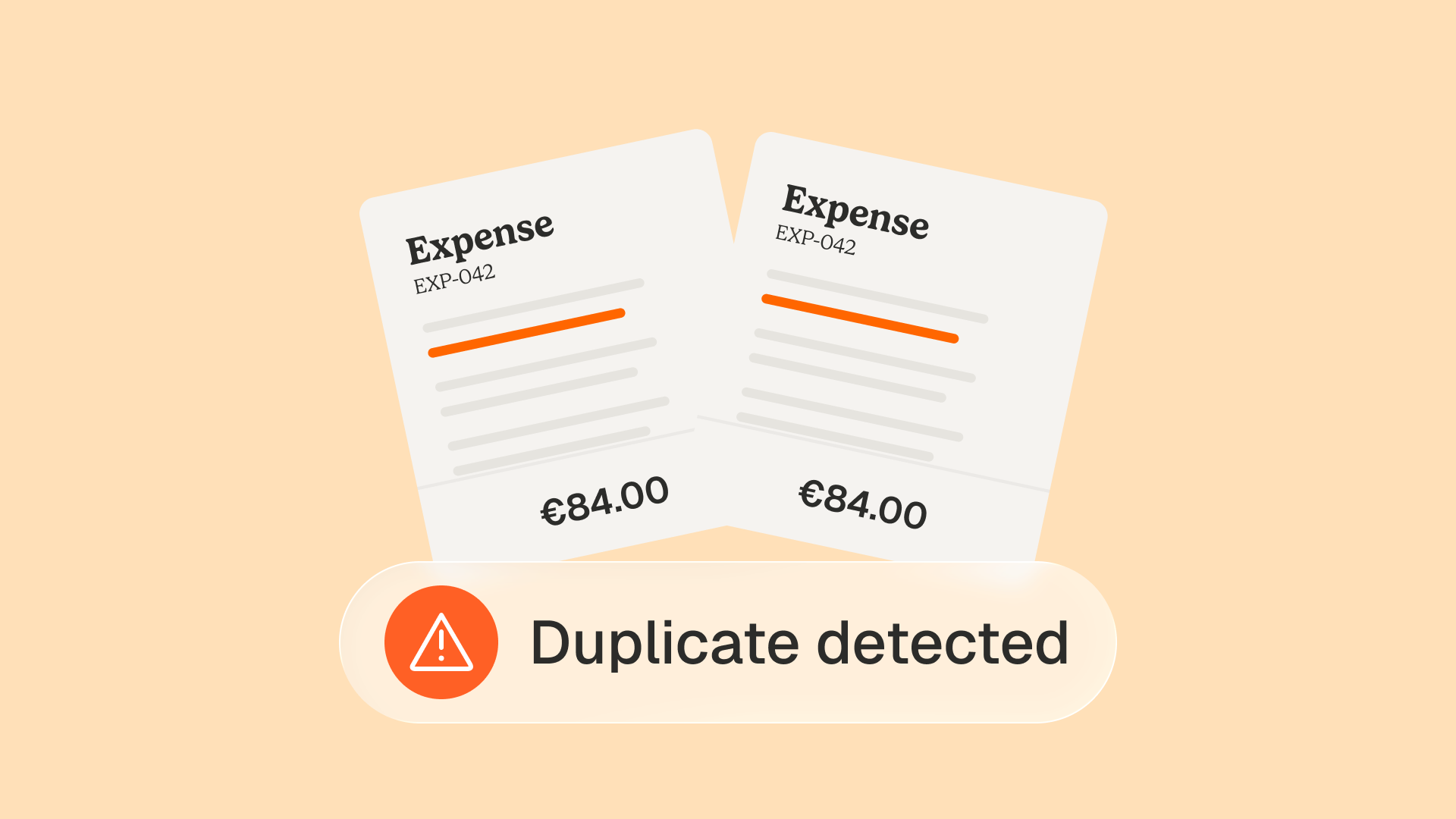
Duplicate invoices are one of the most common and most preventable forms of payment error. They occur from re-sent PDFs, slightly modified invoice references, or multi-entity submissions of the same document.
Automated duplicate detection runs checks across:
- Same supplier + same amount + overlapping date window
- Modified invoice number with identical underlying data
- Cross-entity submissions (invoice sent to holding and subsidiary)
At scale, manual review cannot catch these consistently. Automated controls running on 100% of documents can. This is particularly critical in multi-entity environments where invoice routing happens across ERPs and legal entities.
5. Multi-entity routing validation
For groups operating multiple locations, brands, or legal entities, routing errors are endemic. An invoice destined for subsidiary A lands in subsidiary B's ERP. Cost center allocation goes wrong. Consolidation becomes unreliable.
Automated routing validation assigns each document to the correct entity based on configurable rules (supplier, product category, delivery address, entity identifiers). Combined with a complete audit trail, every routing decision is traceable and reversible.
The French Bastards, a fast-growing bakery chain, went from 7 to 14 locations while maintaining decision-grade data quality, without scaling their finance headcount proportionally.
The control-first principle: validate before you commit
Automated financial controls only create value when they operate before the decision point, not after.
Post-payment audits find errors that have already cost money. Month-end reconciliation surfaces issues that have already distorted reporting. Sampling reviews leave 80–95% of transactions unchecked.
The alternative: a validation layer that sits between document intake and ERP entry, between invoice receipt and payment approval, between data arrival and human decision. This is what Phacet calls the pre-decision validation layer, the moment where automated controls either clear a transaction or escalate it for review.
The financial workflow then shifts from reactive to preventive:
- Before: errors found during audit, after cash has moved
- After: errors flagged before payment, at the moment they can still be stopped
This shift is what distinguishes financial workflow automation that generates real ROI from automation that simply digitizes existing broken processes.
What automation cannot replace
Automated financial controls are not a substitute for human judgment on complex cases. They are a systematic filter that ensures human review is focused where it actually matters.
The right model is exception-based: 95% of transactions validated automatically, 5% escalated for human decision. This frees finance teams to spend their time on the exceptions that require expertise, pricing disputes, new supplier assessments, anomalies with contextual dependencies, rather than on the repetitive validation of clean, standard transactions.
This is the logic behind AI agents in accounting automation: augment human control capacity, don't replace the human.
How Phacet automates financial controls
Phacet's platform acts as the control layer between raw document intake and ERP entry. For each incoming invoice or financial document, it runs a structured validation sequence:
- Input preparation: OCR extraction, document quality check, supplier identification
- Alignment: cross-referencing invoice data against price lists, contracts, POs, and delivery records
- Control: applying business rules, duplicate detection, IBAN verification, threshold escalation, price compliance
- Routing: sending validated documents to the correct ERP, entity, or accounting queue
- Audit trail: full traceability of every validation decision, flag, and routing action
The result is decision-grade data: inputs the finance team can trust when they approve payments, close periods, or report to the board. Explore the full Phacet product to see how each control layer is configured.
Vivason prevented €180,000 in annual overpayments. Astotel reduced error rates from 7% to 2%. Jinchan multiplied anomaly detection by 5x. These outcomes share a common structure: validation moved earlier, before money moved.
Read the Astotel case study or the Jinchan case study to see the implementation in detail.
FAQ
What are automated financial controls?
Automated financial controls are systematic checks applied to financial transactions, invoices, payments, expense reports, payroll data, to verify accuracy, compliance, and fraud risk without relying on manual review. They run on 100% of documents rather than sampled subsets, and they operate before irreversible actions like payment approval or ERP entry.
Which financial controls should be automated first?
The highest-priority controls to automate are those closest to payment commitment: invoice validation at intake, 3-way matching against POs and delivery records, duplicate detection, supplier price compliance, and multi-entity routing. These controls prevent errors before they enter your ERP and distort your books.
How do automated controls differ from ERP controls?
ERP systems record and process transactions, they assume the data they receive is correct. Automated financial controls act upstream: they validate data before it enters the ERP. This distinction matters because errors in the ERP require costly remediation, while errors caught at intake are simply blocked or escalated.
Can automated financial controls detect fraud?
Yes, particularly for the most common fraud vectors: IBAN / banking detail changes on supplier invoices, duplicate invoice submissions, and new supplier accounts requesting unusual payment terms. Automated controls run these checks on 100% of documents in real time, flagging anomalies before payment approval, not after the wire has been sent.
Do automated controls replace the finance team?
No. The goal is exception-based operations: automated controls validate the 95% of transactions that are clean and standard, freeing the finance team to focus on the 5% that require judgment. This increases coverage without increasing headcount, and it elevates the role of finance professionals from manual validation to strategic oversight.
What is the ROI of automating financial controls?
ROI depends on transaction volume and error rates, but the payback period is typically under 6 months. For a 10-entity group processing 200 invoices per month, the shift from sampling to 100% automated validation prevents an estimated €18,000–24,000 annually in opportunity costs alone, before accounting for fraud prevention. A single prevented fraud incident typically covers 2–8x the annual cost of the control system.
How long does it take to implement automated financial controls?Implementation timelines vary by complexity, but most Phacet deployments reach operational readiness within 2–4 weeks. The initial training period calibrates validation accuracy to your specific supplier base and business rules. After two weeks, validation accuracy typically exceeds 95%.
Is sampling-based review ever sufficient?
Sampling provides statistical coverage but creates systematic blind spots. At a 20% sampling rate, 80% of invoices are never validated. In a typical scenario of 200 invoices per month with a 5% error rate, sampling misses 8–16 errors per month, or up to 192 annually. For high-risk processes (multi-entity AP, high supplier volumes, growth contexts), sampling is not a defensible control strategy.
The decision that cannot be undone
Every payment approval is a decision that cannot easily be reversed. Once a wire transfers, recovering funds from an error or fraud event is slow, expensive, and uncertain. The right moment to control is before the decision, not during the audit six months later.
Automated financial controls do not slow down finance operations. They make the approval moment trustworthy. When a CFO signs off on a payment run, the question should not be "I hope this is right", it should be "I know this has been validated."
That shift, from anxiety to confidence at the decision moment, is what Phacet is built for. Book a demo to see how pre-decision validation works in your specific workflow.
Latest Resources
Unlock your AI potential
Go further with your financial workflows — with AI built around your needs.


