
How AI agents are redefining accounting automation?
Published on :
December 5, 2025

Nicolas Marchais is co-founder and CEO of Phacet. After seven years at Spendesk, he built Phacet as the agentic layer that orchestrates across ERP, banking and email systems. Reliable, auditable, cross-system, what he calls a Finance Workforce.

The key takeaway: AI-driven accounting automation is a strategic necessity, not just efficiency. By centralizing workflows and reducing errors by up to 95%, it frees teams to focus on strategic analysis. Modern solutions handle complex data, from invoices to bank reconciliations, while human-AI collaboration ensures audit-ready accuracy. This transformation isn't optional, it's redefining finance roles and operational excellence in the digital age.
Still wrestling with error-prone workflows that drain hours from your finance team? Accounting automation isn’t just a trend, it’s the shift transforming how modern teams tackle repetitive tasks, from invoice processing to reconciliation. By centralizing and automating these processes, companies are slashing manual workloads and unlocking strategic value. Imagine reducing month-end closing from days to hours, while turning data chaos into audit-ready clarity. With AI-driven solutions, teams eliminate manual data entry errors, ensure consistent compliance, and gain real-time insights, all while shifting focus from transactional work to strategic advisory. This article reveals how technologies like machine learning and intelligent data extraction deliver measurable impact, redefining efficiency beyond productivity for finance teams worldwide.
- Why modern finance teams are embracing accounting automation
- What is accounting automation in the age of AI?
- The evolution of automation: from RPA to intelligent AI agents
- The core benefits of intelligent accounting automation
- Key accounting processes transformed by automation
- The technology behind next-generation accounting automation
- The future of accounting: new skills and roles
- How AI agents are redefining the future of accounting
Why modern finance teams are embracing accounting automation?
The pressure on finance teams has never been higher. With transaction volumes surging and businesses demanding real-time reporting, manual processes are buckling under the weight of inefficiency. Teams spend 45% of their time on repetitive tasks like invoice matching and bank reconciliation, leaving little room for strategic analysis. For example, manually verifying thousands of supplier invoices each month ties up resources that could instead focus on cost optimization or risk assessment.
Traditional methods, built for slower cycles, struggle to meet today’s standards. Human errors in data entry or categorization can cascade into compliance risks and operational delays. For CFOs, this isn’t just a productivity issue, it’s a strategic vulnerability. Manual workflows increase burnout rates and create bottlenecks during critical periods like month-end close. Even minor inaccuracies in journal entries can trigger costly audit complications, exposing teams to regulatory penalties.
Automation isn’t an option, it’s a necessity. Phacet’s AI agents, for example, automate reconciliation and invoice control by learning from human validation, ensuring audit-proof accuracy. These systems adapt to evolving data patterns, reducing manual intervention by 70% in high-volume environments. This shift allows teams to move from reactive firefighting to proactive decision-making, aligning finance with the speed and precision required in 2025’s competitive landscape. By prioritizing human-supervised AI, organizations turn error-prone processes into scalable, compliant operations, proving automation isn’t just about saving time, but redefining value creation.
What is accounting automation in the age of AI?
Accounting automation today leverages AI and advanced technologies to analyze, classify, and record financial transactions with minimal human intervention. Unlike traditional tools, it handles complex pre-accounting workflows, like data extraction from invoices, receipts, or emails, and transforms them into structured insights. Modern solutions go beyond basic script-based automation, using machine learning to adapt to evolving data formats and business rules, ensuring scalability. For instance, Phacet’s AI agents interpret context, such as categorizing expenses based on historical patterns, which reduces manual oversight.
This approach isn’t just another software add-on; it’s a layer of intelligence that integrates with existing systems to tackle unstructured data. Phacet’s AI agents extract details from PDFs, emails, or scanned documents, converting messy inputs into audit-ready records. By automating tasks like invoice matching or bank reconciliation, these systems turn fragmented data into a centralized, actionable flow, reducing manual effort while maintaining compliance. Human-in-the-loop validation ensures automated actions are reviewed, improving accuracy, a critical feature for high-volume operations.
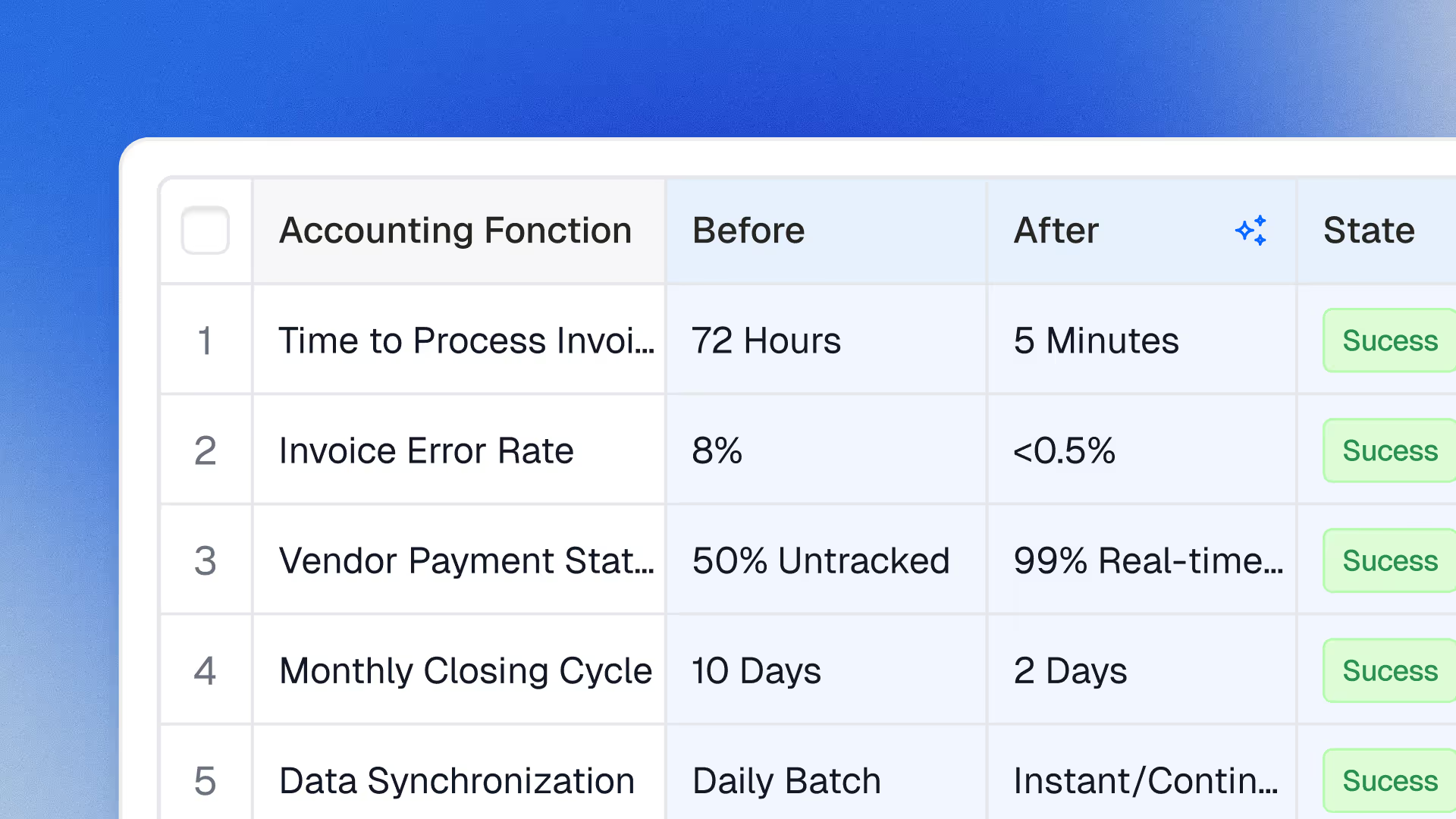
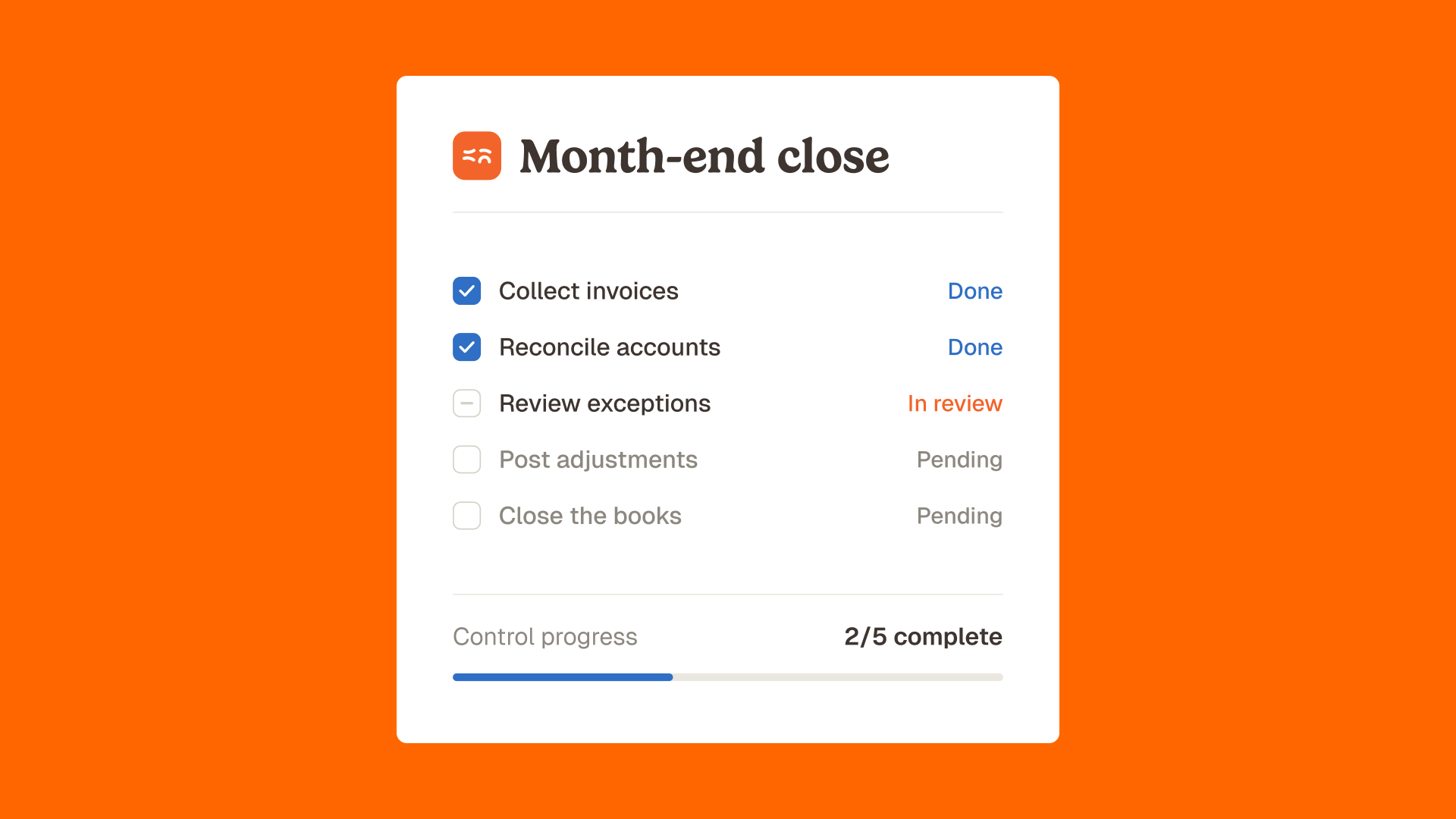
The impact on workflows is transformative. By centralizing tasks, from invoice receipt to payment, these tools create an immediate effect on efficiency. Phacet’s agents, for instance, learn from human validation to reconcile inconsistencies and apply contextual logic, turning days of manual work into automated processes. This redefines how finance teams operate, enabling them to focus on strategic decisions rather than repetitive data entry. For example, a mid-sized company cut month-end closing from 10 days to two days by automating reconciliation, freeing teams for strategic analysis. As AI evolves, its role shifts to strategic compliance and risk management in real-time financial governance.
The evolution of automation: from RPA to intelligent AI agents
The limits of traditional automation (RPA)
Robotic Process Automation (RPA) automates repetitive tasks through rule-based bots that mimic human actions. These systems excel at structured workflows like data transfer between systems or invoice processing. However, their rigidity becomes apparent when handling exceptions, such as a supplier invoice with a shifted field placement, where they require manual intervention.
Traditional RPA struggles with unstructured data, failing to interpret free-text fields or adapt to format changes. While effective for simple tasks, their lack of learning capability means every new scenario demands reprogramming. This creates bottlenecks in environments where document formats and transaction patterns frequently evolve.
The rise of intelligent process automation (IPA)
Intelligent Process Automation (IPA) builds on RPA by integrating AI and machine learning. This combination enables systems to process both structured and unstructured data, like handwritten notes or digital receipts, while making context-aware decisions. Unlike RPA’s static rules, IPA adapts through pattern recognition and historical data analysis.
For finance teams, IPA transforms tasks like bank reconciliation. When faced with a payment memo containing ambiguous references (e.g., "INV1234–6"), IPA infers connections between transaction fragments. It normalizes disparate data formats and flags anomalies, reducing manual cleanup by 70% compared to rule-based systems. For example, IPA maps a supplier’s "Payment Reference" to the buyer’s "Invoice Number" field by learning from historical data.
Introducing AI agents for finance
AI agents represent the next frontier, digital workers trained to manage end-to-end financial processes while learning from human validation. Phacet’s intelligent agents, for instance, cross-verify invoice data against multiple systems, suggest corrections, and refine accuracy with each transaction review. This creates audit-proof workflows that evolve with business needs.
These agents handle tasks previously requiring human judgment, such as resolving partial matches between purchase orders and invoices. By analyzing validation patterns, they suggest rules that adapt to changing transaction behaviors. For multi-entity companies, AI agents maintain cross-entity reconciliation across currencies, identifying imbalances in real time.
Their power lies in continuous improvement. Each human correction becomes a learning input, ensuring accuracy improves over time. This human-in-the-loop approach addresses RPA’s fragility while delivering scalability for teams managing 10,000+ monthly transactions. Phacet’s agents reduce manual effort in supplier verification by cross-checking vendor details against internal records, flagging discrepancies for review.
The core benefits of intelligent accounting automation
Intelligent accounting automation drastically reduces manual workloads, accelerating tasks like month-end closing and invoice reconciliation. For example, automated systems can cut manual reconciliation time by 95% for specific processes, transforming multi-day efforts into one-click operations. Teams save 2–3 days monthly on financial closing alone, while AI agents handle repetitive tasks like data categorization and supplier verification without human intervention. Phacet’s agents, for instance, automate intercompany reconciliations across 15+ currencies, dynamically adjusting for exchange rate fluctuations to eliminate manual currency conversion errors.
Accuracy improves through consistent rule application and error elimination. Phacet’s AI agents, for instance, learn from human validation to ensure audit-proof precision. Automated systems reduce manual data-entry errors by up to 8.5%, while creating immutable digital trails for every transaction. This ensures compliance with standards like Sarbanes-Oxley, simplifies audits, and flags anomalies in real time, critical for fraud detection and regulatory adherence. For example, a multinational corporation reduced compliance-related discrepancies by 70% after implementing AI-driven transaction monitoring, which automatically flags mismatched invoice-payment pairs and irregular expense patterns.
The strategic value lies beyond productivity. Automation frees teams from transactional tasks, enabling focus on forecasting, risk analysis, and business advisory roles. One firm reported a 50% increase in high-value tasks after implementation, with employees reallocating saved hours to strategic initiatives. This shift transforms accounting from a back-office function to a proactive business partner, driving better financial decision-making. Teams now dedicate 30% more time to predictive modeling for cash flow optimization and scenario planning, directly impacting budget accuracy and long-term financial health.
- Enhanced speed: accelerate month-end closing and daily processing cycles through AI-driven automation, including real-time bank reconciliations and intercompany settlements.
- Superior accuracy: eliminate manual data entry errors and ensure consistent, audit-ready records with AI that learns from human validation.
- Audit-proof compliance: maintain tamper-proof transaction trails that meet regulatory standards like SOX, with automated anomaly detection for fraud prevention.
- Strategic empowerment: redirect resources toward predictive analytics, risk modeling, and business strategy to drive measurable financial outcomes.
Key accounting processes transformed by automation
Automated invoice processing and 3-way matching
Phacet automates reconciliation and invoice control through intelligent agents that extract critical data from invoices, purchase orders, and receiving reports. These AI agents handle diverse formats, from PDFs to supplier emails, digitizing key fields like amounts and dates. The system's 3-way matching automation for finance teams compares invoice details against POs and goods receipts, flagging mismatches in quantities or pricing. By analyzing historical supplier data, the platform identifies recurring invoice errors and predicts delivery timelines to preemptively flag delayed shipments.
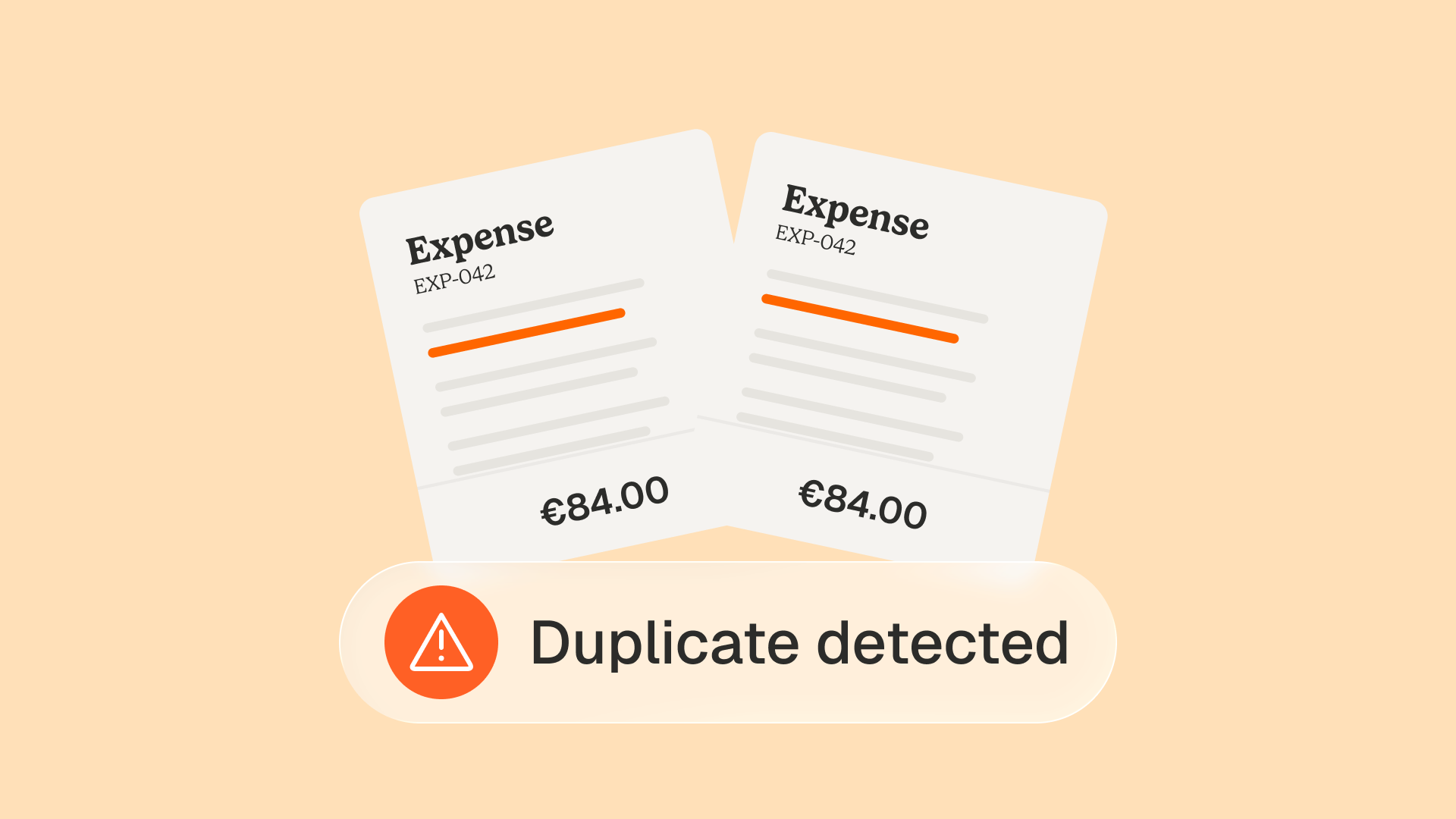
This approach eliminates manual verification bottlenecks causing 20-30% of invoice processing delays. Phacet's AI achieves 99.9% matching accuracy through continuous learning from human validation, with audit-proof records. Companies report 75% faster cycles and 40% fewer duplicate payments post-implementation. For example, a manufacturing firm reduced processing costs by $250,000 annually by automating 15,000+ monthly invoices while securing early payment discounts through accelerated workflows.
Seamless bank and cash reconciliation
Phacet's AI ingests bank statements, payment gateways, and ERP data, automatically matching 98% of transactions despite format variations. When discrepancies arise, the platform surfaces them with metadata for quick review. The solution handles multi-currency transactions and intercompany transfers, generating adjusting entries for timing differences while maintaining clean sub-ledgers. Real-time anomaly detection identifies irregular patterns like duplicate payments or systemic errors.
This automated bank reconciliation with AI reduces month-end closing time by 60% for most clients. Real-time cash visibility improves working capital decisions, for instance, a retail chain with 200+ locations now reconciles 15,000 daily transactions across 8 currencies, cutting cash positioning errors by 80%. The system’s ability to auto-correct intercompany imbalances reduced manual adjusting entries by 90% for a multinational corporation.
Intelligent data categorization and reclassification
Phacet's AI standardizes accounting data by learning from historical patterns and manual corrections. When a "Marketing Conference" receipt arrives with inconsistent vendor descriptions, the system maps it to the correct GL code. This extends to complex scenarios like tax jurisdiction identification or intercompany transaction tagging. For instance, a SaaS company with 500+ vendors automated 92% of expense coding without manual intervention, freeing 200+ monthly hours for strategic work.
- Accounts Payable (AP): automating invoice data capture and coding with 95%+ accuracy. One logistics firm reduced AP processing time from 10 to 2 days per 1,000 invoices.
- Accounts Receivable (AR): real-time payment-invoice matching reduces DSO by 15-25%. A professional services firm recovered $180K in missed payments through automated matching.
- Bank reconciliation: processes 10,000+ transactions in under 5 minutes across entities. A fintech company improved intercompany accuracy from 83% to 99.5%.
- Expense management: automated receipt validation reduces non-compliant spending by 65% by enforcing policy rules at entry.
Each AI agent learns from human validation, maintaining traceability for audit compliance. The system generates SOX-ready documentation while adapting to evolving business needs. Clients achieve 70% time savings in monthly reporting through structured data governance. By combining explainable AI with continuous learning, Phacet delivers financial operations that improve precision with every transaction processed.
The technology behind next-generation accounting automation
AI-powered data extraction
Modern accounting automation transcends basic OCR by combining character recognition with contextual understanding. Unlike traditional systems that merely "read" text, AI identifies patterns across diverse invoice formats, recognizing critical fields like "Total Due" or "Balance" regardless of labeling. This adaptability reduces manual intervention by 80%, achieving 99%+ accuracy compared to 90-95% with standard OCR. Phacet’s technology exemplifies this evolution, extracting structured data from complex documents while maintaining audit trails and handling inconsistencies, such as mismatched totals, by flagging discrepancies for review. For example, a Japanese invoice with "合計金額" and a French invoice with "Total à payer" both get mapped to the same "Total" field automatically.
Automated data labeling and categorization
Machine learning transforms transaction classification by learning from historical human decisions. Phacet’s AI agents analyze millions of past categorizations to identify patterns, creating self-improving logic that adapts to company-specific practices and reduces manual corrections by 70%. The technology uses vector embeddings to map transaction relationships mathematically. When a payment arrives from "ACME Corp" for "Office Supplies," the system compares it to similar transactions in vector space, using cosine similarity to determine the optimal category without predefined rules. Over time, these mathematical representations evolve to reflect organizational nuances, such as distinguishing between "Office Supplies" and "IT Equipment" based on vendor history and purchase patterns.
Human-in-the-loop review process
True automation success requires human-AI collaboration. Phacet’s system handles 95% of routine transactions while flagging complex cases, like first-time vendors or unusual amounts, for human validation. This division maintains control over critical financial decisions while eliminating repetitive work. Each validation becomes a learning opportunity: when finance professionals confirm categorizations, the AI refines its models. Continuous improvement creates audit-proof accuracy, with error rates dropping 43% after six months of system use. Teams recover 12+ hours monthly for strategic work, while month-end closing time decreases by 7.5 days on average. Behind the scenes, algorithms like Hierarchical Navigable Small World Graphs (HNSW) optimize vector searches, ensuring recommendations evolve with organizational needs while maintaining sub-second response times for high-volume processing.
The future of accounting: new skills and roles
From data processor to automation strategist
Automation isn’t eliminating roles, it’s repositioning accountants as strategic assets. Phacet automates reconciliation and invoice control through AI agents that learn from human validation, ensuring audit-proof accuracy. Teams now prioritize validating insights over manual data entry, transforming accountants into process architects. For example, Phacet’s agents reduce invoice matching errors by 85%, letting professionals focus on resolving AI-flagged discrepancies rather than processing all transactions manually.
Key skills for the modern finance professional
Modern roles demand technical fluency blended with business acumen. Critical competencies include:
- Process Optimization: Diagnosing workflow inefficiencies and redesigning them with automation.
- Data Analysis: Translating AI-categorized expense data into strategic recommendations, like identifying supplier overspending.
- Systems Management: Configuring platforms like Phacet’s AI agents to adapt to compliance changes, such as VAT adjustments.
- Strategic Advisory: Using time saved from automation to model scenarios for cost optimization or investment decisions.
A strategic partner to the business
Automation elevates finance teams from compliance tasks to strategic advisory roles. By automating most data entry, professionals dedicate 40% more time to forecasting cash flow or stress-testing financial models. Phacet’s agents improve accuracy by 99.5% within six months, building trust in outputs. Market trends confirm this: 83% of French firms use AI tools, and 63% report cost reductions post-automation. As 39% of French accountants prepare to double their advisory focus by 2025, the profession’s strategic evolution is undeniable. The future belongs to teams merging technical expertise with business insight, bridging automation’s potential to practical results.
How AI agents are redefining the future of accounting?
Accounting automation has evolved beyond rigid rule-based systems into adaptive AI agents capable of managing complex workflows. These agents combine speed, precision, and audit-ready decision-making to transform error-prone processes like invoice matching and reconciliation. Unlike traditional tools, they learn from human validation, ensuring compliance while reducing manual effort by up to 80% in high-volume tasks.
Adopting intelligent automation is no longer optional, it’s the standard for modern finance teams. AI agents for finance automation act as tireless team members, handling repetitive tasks like data categorization and supplier verification. This shift allows professionals to focus on strategic decisions, turning accounting from a back-office function into a proactive growth driver. By 2030, the market for these agents is projected to grow 815%, reflecting their critical role in scalable, compliant operations.
To stay competitive, finance leaders must rethink workflows through intelligent automation. Phacet’s platform demonstrates how AI agent platform for finance & admin teams can address unique operational challenges, from real-time bank reconciliation to adaptive fraud detection. The future belongs to teams that harness AI not as a replacement, but as an enabler for higher-value work, redefining efficiency, reliability, and strategic impact in accounting. The journey starts today.
Accounting automation, powered by AI, delivers radical efficiency, unmatched accuracy, and audit-proof compliance. As finance teams shift from manual tasks to strategic advisory roles, AI agents become indispensable partners. Embrace this transformation to unlock smarter decision-making. Explore next-gen solutions at [AI agent platform for finance & admin teams](https://www.phacetlabs.com/product).
FAQ
What does automation mean for modern accounting practices?
Automation in accounting refers to using digital tools, often powered by AI and OCR, to analyze, categorize, and record financial transactions with minimal human intervention. It goes beyond basic software by centralizing and automatising entire workflows – from invoice capture to payment processing. Think of it as part d'une transformation, reshaping how teams handle data while maintaining audit-ready accuracy. Unlike traditional systems, modern solutions adapt to unstructured data like PDFs or emails, turning them into actionable insights with immediate impact.
Can AI replace Certified Public Accountants (CPAs)?
CPAs won't disappear, but their roles will evolve. AI handles repetitive tasks like data entry or invoice matching, while humans focus on interpretation and strategy. The most effective systems use human-in-the-loop approaches, where AI manages 95% of routine work and flags exceptions for review. This shift lets CPAs move beyond productivity to higher-value work, advising on financial strategy or analyzing trends, instead of chasing paperwork.
Which accounting tasks benefit most from automation?
Tasks involving repetitive data handling see the biggest gains. This includes automated invoice processing with 3-way matching, bank reconciliation, expense categorization, and financial reporting. For example, AI agents can process thousands of transactions in minutes, standardize data categorization at scale, and even flag anomalies in real-time. Even complex workflows like multi-currency management or VAT compliance become smoother when combined with machine learning systems that adapt through human validation.
What steps transform bookkeeping through automation?
Start by identifying error-prone workflows like manual data entry or month-end closing. Implement solutions combining RPA for rule-based tasks, IPA for unstructured data handling, and APA for autonomous decision-making. Tools like AI-powered data extraction platforms or reconciliation software integrate with existing ERP systems without overhauling your tech stack. The goal? Create a human-supervised AI ecosystem where machines handle 90%+ of transactional work, letting teams focus on strategic analysis.
How do automation tools impact accounting career earnings potential?
Automation creates opportunities for strategic roles. While entry-level bookkeepers might see job evolution, professionals who master process optimization, systems management, and data analysis become invaluable. The $500k+ earners often combine technical expertise with business advisory skills, think CFOs guiding AI-driven financial transformations or consultants building automation strategies for Fortune 500 companies. The key lies in leveraging automation to focus on high-value advisory work.
What are the four main automation categories in finance?
1. RPA (Robotic Process Automation) handles rule-based tasks like data transfer between systems.
2. IPA (Intelligent Process Automation) adds AI/ML capabilities for unstructured data, think invoice extraction from PDFs.
3. APA (Agentic Process Automation) introduces autonomous decision-making agents, like real-time fraud detection systems.
4. Hybrid approaches combine these technologies, using RPA for basic tasks, IPA for cognitive work, and APA for complex scenarios, creating a tiered automation strategy.
Is accounting becoming obsolete in the AI era?
Quite the opposite, automation is revitalizing the field. While clerical tasks get automated, demand grows for professionals who can design automation workflows, interpret AI-generated insights, and provide strategic guidance. The profession evolves from "number crunching" to "value creation." Think of it as accounting's next chapter: professionals now act as automation strategists and financial advisors rather than just data processors.
Latest Resources

Unlock your AI potential
Go further with your financial workflows — with AI built around your needs.


