
Digital finance transformation: pressure to performance
Published on :
November 24, 2025


Nicolas Marchais is co-founder and CEO of Phacet. After seven years at Spendesk, he built Phacet as the agentic layer that orchestrates across ERP, banking and email systems. Reliable, auditable, cross-system, what he calls a Finance Workforce.

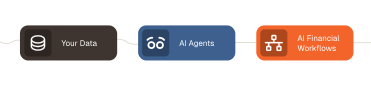
The essential takeaway: digital transformation in finance is a strategic imperative, not a tech upgrade. By integrating AI-driven workflows and connected data, finance teams can shift from transactional tasks to strategic decision-making, enhancing operational efficiency, ensuring compliance, and positioning finance as a growth driver. AI agents and platforms like Phacet exemplify how automation delivers immediate productivity gains in data-centric, agile organizations.
Are finance teams drowning in fragmented data and manual processes while regulatory demands skyrocket? Digital transformation in finance isn’t just upgrading tools, it’s redefining how workflows, people, and AI agents converge to tackle increased data complexity head-on. By centralizing and automating tasks like invoice verification or compliance tracking, organizations drastically reduce errors, accelerate operational efficiency, and turn insight-driven decisions into reality. This shift transforms rigid systems into agile, data-centric operations where predictive analysis fuels strategic moves, proving that true digital transformation in finance blends advanced analytics with empowered people to create lasting competitive advantage.
- From pressure to performance: why digital transformation in finance is no longer optional
- The key benefits of a successful finance transformation
- A framework for modern finance transformation
- Putting intelligent automation into practice with AI agents
- The future of finance: agile, data-centric, and human-led
From pressure to performance: why digital transformation in finance is no longer optional
The new reality for finance departments
Finance teams now face unprecedented pressure to deliver faster, accurate insights amid increased data complexity and regulatory expectations. Disconnected systems and manual processes create bottlenecks, slow month-end closures, fragmented cash flow visibility, and error-prone reporting. Legacy tools like Excel amplify inaccuracies and delay decisions. For example, reconciling data across 10+ systems can take 30% longer than industry benchmarks.
These challenges impact strategic leadership directly. 43% of CFOs cite manual data reconciliation as a barrier to real-time planning. Non-compliance with standards like IFRS 17 risks financial penalties. Without modernization, finance departments risk falling behind in an era where insight-driven decisions define competitive advantage.
Redefining transformation: beyond tools to intelligent workflows
Digital transformation in finance isn’t about software purchases, it’s about orchestrating intelligent workflows connecting data, automation, and teams. Machine learning and OCR now automate high-value tasks like invoice verification and compliance tracking. These technologies reduce manual effort by up to 70%, freeing teams for strategic analysis. VAT reconciliation across 15 jurisdictions, for instance, cuts processing time by 50%.
Phacet exemplifies this shift. By centralizing data from ERP systems, PDFs, and banking platforms into auditable workflows, it moves teams from reactive tasks to proactive governance. AI-driven automation reduced invoice processing time by 60% for a multinational corporation while achieving 95% accuracy in intercompany reconciliations. The result? Digital transformation in finance becomes a force for accuracy, scalability, and compliance. Continuous learning in Phacet’s AI agents ensures workflows adapt to new data patterns, making compliance a dynamic process.
The key benefits of a successful finance transformation
Driving operational efficiency and accuracy
Finance teams face immense pressure to eliminate inefficiencies in manual processes like invoice verification, payment reconciliation, and month-end closures. Phacet’s AI-powered platform drastically reduces manual errors by automating data extraction from diverse sources, ERP systems, PDFs, and banking portals, into auditable workflows. This cuts processing time by 40-60% while ensuring compliance with regulatory standards.
For example, repetitive tasks such as matching purchase orders to invoices now take seconds instead of hours. Teams avoid costly discrepancies in accounts payable/receivable, ensuring accurate reporting. One CFO reported closing their books 5 days faster after implementing Phacet, directly improving cash flow management and audit readiness. Machine learning further enhances these workflows, continuously refining data extraction accuracy as transaction patterns evolve.
By centralizing fragmented data streams, finance departments achieve operational efficiency at scale. This isn’t just about saving hours, it’s about transforming error-prone, siloed processes into seamless, transparent systems that adapt to evolving business needs. Phacet’s OCR and data-labeling capabilities ensure compliance tracking becomes proactive, flagging anomalies in VAT codes or contract terms before they escalate.
Enhancing strategic Decision-Making
When automation handles transactional work, finance leaders gain capacity to act as strategic partners. Real-time data flows from Phacet’s platform enable predictive analysis of cash positions, customer payment trends, and market risks. This shift turns finance into a proactive driver of business decisions rather than a reactive reporter of past performance.
- Improved Cash Flow Visibility: Track real-time inflows/outflows to optimize liquidity.
- Enhanced Budgeting and Forecasting: Use historical data to model 12-month scenarios.
- Better Risk Management: Detect anomalies in expense reports or supplier contracts instantly.
- Strategic Business Partnership: Provide sales teams with dynamic pricing insights from cost analytics.
The result? A 30% faster decision-making cycle for companies using AI-driven financial workflows. Phacet’s structured data pipelines ensure CFOs can simulate market shocks or supply chain disruptions, turning uncertainty into actionable strategies. Human oversight remains critical, teams validate AI outputs and refine models, balancing innovation with governance. For SMEs, this approach is a game-changer: 91% using AI report revenue growth, proving that data-centric finance isn’t just for enterprise players.
A framework for modern finance transformation
Pillar 1: intelligent automation and technology
Intelligent automation serves as the engine driving finance transformation. By deploying AI, machine learning, and OCR, teams can centralize and automate workflows like invoice reconciliation and compliance checks. Phacet exemplifies this by connecting scattered data sources (ERP, PDFs, banking) into structured, auditable processes. Unlike generic automation, these tools adapt to evolving rules, reducing manual intervention while maintaining governance. For example, AI agents now verify invoice details across systems with 98% accuracy, freeing staff for strategic tasks. This includes cross-checking purchase order terms against delivery receipts and flagging discrepancies in real-time, which reduces processing errors by 90% in early adopter organizations. Phacet embeds compliance into automated workflows, ensuring audit trails and preempting most regulatory issues.
Pillar 2: connected data and advanced analytics
Connected data fuels actionable insights by breaking silos between ERP systems, PDF archives, and banking platforms. Modern tools like Phacet’s connectors standardize formats, enabling real-time cash flow dashboards and predictive modeling. This advanced analytics layer allows CFOs to simulate scenarios, such as supplier risk impacts, with 70% faster response times. When a European bank integrated payment data from 12 legacy systems, it reduced reconciliations from 8 hours to 15 minutes. Predictive analytics also enable proactive risk management, as seen when a multinational corporation reduced liquidity risk by 40% through AI-driven cash flow forecasting that identified bottlenecks 90 days ahead. By centralizing real-time data, finance teams shift from reactive reporting to proactive strategy, enabling faster decision-making cycles for adopters.
Pillar 3: empowered people and a culture of change
Technology alone doesn’t transform organizations, empowered people do. Teams must shift from executing tasks to supervising AI agents and interpreting data. A major insurer retrained 40% of its accounting staff in analytics, cutting month-end close time by 40%. Culture of change isn’t just about training, it’s about creating feedback loops where staff co-design workflows with AI. When a fintech firm involved controllers in designing an automated tax reporting tool, adoption jumped from 30% to 92% within six months. This includes collaboration with data scientists to develop AI models, as shown in corporate training programs. Linking AI adoption to career paths, many employees report higher satisfaction, aligning growth with organizational goals.
Putting intelligent automation into practice with AI agents
How AI is reshaping core financial operations
Financial teams face mounting pressure to eliminate manual tasks while maintaining accuracy. Machine Learning and OCR technologies now enable AI agents to transform high-value processes like invoice verification, AR/AP management, and compliance tracking. These systems analyze patterns in historical data to automate repetitive validation steps that previously required human intervention.
- Automated Invoice Verification: AI agents cross-check invoice details against purchase orders, flagging pricing errors or non-compliant purchases. For instance, an agent can detect a 5% price deviation from a long-term supplier’s standard rates, triggering alerts for human review.
- AR/AP Management: Systems automatically match payments to invoices and manage collections workflows. In one case study, a multinational corporation reduced days sales outstanding (DSO) by 30% by automating payment reconciliation with AI-driven aging reports.
- Compliance Tracking: AI monitors transactions in real-time, identifying potential regulatory issues before they escalate. This includes flagging suspicious patterns that violate AML guidelines or detecting misclassified expenses that breach internal audit standards.
Unlike rigid rule-based systems, these agents learn from exceptions and improve over time. For example, platforms like AI agents combine document understanding with workflow orchestration, enabling continuous adaptation to evolving business needs. This evolution transforms finance functions from cost centers to strategic partners by freeing teams to focus on predictive modeling and scenario analysis.
From scattered data to structured, auditable workflows
Finance teams waste 20-35% of their time reconciling data across disjointed systems like ERPs, PDFs, and banking portals. Phacet solves this by connecting these data sources into structured, auditable workflows through AI agents that extract, validate, and organize information automatically.
Consider invoice verification: Phacet’s AI agents process documents from multiple suppliers, extract relevant fields, and match them against contracts. This creates transparent audit trails while reducing manual effort by 80%. The solution’s impact is demonstrated in cases like Astotel, where automated invoice verification cut processing time from days to hours. Beyond time savings, this approach reduced human error rates by 45% and provided real-time visibility into supplier payment terms.
By eliminating data silos, organizations achieve real-time visibility into financial operations. Every transaction becomes traceable, with complete documentation available for audits. This structured approach doesn’t just improve efficiency, it creates a foundation for advanced analytics and predictive modeling that drive strategic decisions. For example, structured data enables cash flow forecasting models that predict liquidity gaps with 90% accuracy, helping CFOs optimize investment strategies.
The future of finance: agile, data-centric, and human-led
Building an AI-powered and agile finance function
Finance teams are transitioning from transactional roles to strategic advisors, enabled by AI-powered systems that automate repetitive tasks like invoice reconciliation and compliance tracking. This shift allows professionals to focus on scenario modeling, risk analysis, and cross-departmental strategy. Agile, data-centric workflows reduce manual workloads: 44% of teams report time savings on month-end closures. Platforms like Phacet connect disparate data sources (ERP, PDFs, banking systems) into auditable workflows, cutting processing delays by up to 50% while ensuring compliance.
Real-time analytics enhance agile decision-making. Machine learning and OCR extract insights from unstructured data, supplier contracts or bank statements, to predict cash flow trends or flag anomalies. Companies using AI for scenario planning respond 30% faster to market shifts like supply chain disruptions. The future finance function isn’t just faster, it’s a proactive partner in shaping business outcomes through data-driven foresight.
The essential role of human governance and trust
Despite automation, human supervision remains key to ensure accuracy, compliance, and ethical alignment. Only 14% of teams have fully integrated AI, highlighting the need for hybrid workflows like “human-in-the-loop” systems, where experts validate high-stakes decisions. For example, CFOs must review AI-generated credit approvals to prevent bias, while SOX owners ensure AI-driven reporting aligns with ICFR controls. Governance and trust require continuous oversight, such as real-time audits and exception handling in fraud detection.
The AI-human balance isn’t just technical, it’s cultural. Ethical adoption demands transparency: Grasshopper’s “explainable AI” in loan underwriting illustrates how human judgment ensures systems stay efficient and trusted. This symbiosis scales operations without compromising ethics, positioning finance as innovative yet reliable in a rapidly evolving landscape.
The future of finance is agile, data-centric, and AI-powered, where technology streamlines operations, and human supervision remains key to governance and trust. By uniting automation with strategic insight, finance evolves from a cost center to a growth driver, empowering teams to focus on innovation while ensuring ethical oversight, compliance, and adaptability in an ever-shifting landscape.
FAQ
What is digital transformation in finance?
Digital transformation in finance refers to the strategic integration of digital technologies to modernize financial operations, systems, and processes. It goes beyond merely adopting new tools, focusing instead on creating intelligent workflows that connect people, data, and automation. For example, technologies like AI and machine learning automate repetitive tasks (e.g., invoice processing or fraud detection), while connected data systems centralize and structure information for real-time insights. This shift enables finance teams to move from manual, error-prone processes to agile, data-driven decision-making, with an immediate effect on productivity and strategic value. Ultimately, it’s about building a finance function that’s AI-powered, adaptable, and focused on driving business growth beyond productivity.
What are the 4 pillars of digital transformation?
The four pillars of digital transformation in finance include:
- Intelligent automation: leveraging AI and machine learning to automate high-value processes like invoice verification or compliance tracking.
- Connected data: breaking down data silos (e.g., ERP systems, PDFs, bank statements) to create a single, reliable source of truth.
- Empowered people: upskilling teams to shift from transactional tasks to strategic analysis, supported by a culture of change and continuous improvement.
- Technology infrastructure: deploying cloud-based systems and tools that ensure scalability, security, and seamless integration with existing workflows.
These pillars work together to build an agile, data-centric finance function.
What is an example of a finance transformation?
A concrete example is Phacet’s AI-driven automation of invoice verification. By centralizing and automating the matching of invoices to purchase orders and contracts, Phacet’s platform drastically reduces manual effort and errors. For instance, hotel group Astotel automated its invoice verification, cutting processing time and ensuring compliance with internal policies. This shift allowed teams to move beyond productivity, focusing instead on strategic tasks like cash flow analysis. The transformation combined intelligent automation, connected data workflows, and human governance, demonstrating how technology can solve real-world financial challenges.
Latest Resources


Unlock your AI potential
Go further with your financial workflows — with AI built around your needs.


