
Automate financial planning: drive strategy in 2026
Published on :
February 2, 2026


Nicolas Marchais is co-founder and CEO of Phacet. After seven years at Spendesk, he built Phacet as the agentic layer that orchestrates across ERP, banking and email systems. Reliable, auditable, cross-system, what he calls a Finance Workforce.

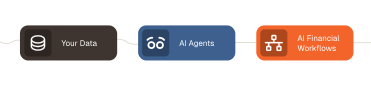
The essential takeaway: automating financial planning with AI-driven workflows eliminates spreadsheet dependency, reduces manual errors by up to 70%, and transforms static budgets into dynamic, real-time insights. This shift empowers finance teams to focus on strategic analysis rather than data reconciliation, accelerating planning cycles from months to days while ensuring audit-ready accuracy. For modern CFOs, it’s a critical step toward proactive decision-making in volatile markets.
Are endless spreadsheet battles and error-prone financial forecasts holding your business back? Automate financial planning isn’t just about streamlining tasks, it’s about transforming how teams turn messy data into strategic insights. Modern solutions eliminate data silos, unify financial and operational workflows, and slash manual workloads by centralizing processes. With AI-driven tools, companies can standardize data extraction, reduce errors, and generate real-time forecasts. Discover how these systems transform static spreadsheets into dynamic models, enabling faster scenario analysis, audit-ready compliance, and a strategic shift from reactive reporting to proactive decision-making, unlocking growth and agility in volatile markets.
- From manual overload to strategic insight: the new era of financial planning
- What it means to automate financial planning today
- Core applications of automation in financial planning and analysis (FP&A)
- The measurable benefits of an automated financial planning process
- Beyond the numbers: automating documentation for compliance and audit
- Making the shift to proactive financial leadership in 2026
From manual overload to strategic insight: the new era of financial planning
The limits of traditional financial planning
Finance teams still relying on spreadsheets face a paradox: tools designed for simplicity now create complexity at scale. Manual processes trap 78% of financial analysts in repetitive tasks like data collection and validation, leaving minimal time for analysis. Disconnected data sources across departments result in siloed insights, while fragile cell-based formulas propagate errors that cascade through entire models. A single misplaced decimal in a revenue projection, or a delayed interdepartmental data submission, can derail strategic decisions affecting millions.
Legacy systems compound these challenges. Manual data consolidation from ERPs, bank feeds, and operational dashboards demands weeks of painstaking work, with 94% of spreadsheets containing material errors. This reactive cycle forces finance leaders to defend numbers rather than interpret them, turning budget cycles into bureaucratic exercises rather than strategic dialogues.
Why manual processes lead to delays and errors?
When financial planning depends on human intervention, three critical vulnerabilities emerge:
- Data inconsistency: discrepancies between data from different departments or systems.
- Slow reporting cycles: weeks or months spent on budget and forecast preparation.
- High risk of errors: Manual data entry and formula mistakes compromising financial accuracy.
- Lack of strategic focus: teams are bogged down in low-value tasks instead of providing strategic analysis.
These issues create a vicious cycle. The same survey revealing 88% spreadsheet error rates also found 65% of CFOs cite delayed reporting as a barrier to agile decision-making. When 60% of time goes to data verification, finance teams become transactional clerks rather than strategic partners, a reality that leaves organizations vulnerable to market shifts and operational blind spots.
What does it mean to automate financial planning today?
Moving beyond spreadsheets with connected workflows
Traditional financial planning struggles with spreadsheet dependency, fragmented data, and manual delays. Studies reveal 70% of manufacturers still collect data manually, while finance teams spend 30% of their time on repetitive tasks like reconciliation. Modern automation solves this with connected, real-time workflows. By integrating finance tools, accounting systems, and operational dashboards, it creates a single source of truth. This cuts manual effort, eliminates errors from siloed data, and accelerates decisions. A CFO can instantly reconcile budget forecasts with actuals, no more waiting weeks for updates. Data orchestration ensures seamless system integration, transforming finance from reactive reporting to proactive strategy.
The role of AI in building reliable data foundations
AI doesn’t predict in isolation, it converts unstructured financial data into structured formats. Phacet’s AI agents extract metrics from invoices, payments, and reports, ensuring accuracy at the source. They detect anomalies like mismatched figures or inconsistent transaction codes, flagging issues before they skew forecasts. Using NLP and machine learning, these systems standardize data while avoiding errors through human validation. Structured data becomes the backbone for scenario modeling. A finance team using Phacet reduced invoice processing time by 70% and compliance risks by standardizing audit trails. By processing PDFs, emails, and contracts, AI ensures no critical detail is lost in manual transfers.
Augmenting teams, not replacing them
Automation handles repetitive tasks like data entry and reconciliation, freeing teams for strategic work. With AI managing daily data hygiene, finance professionals focus on scenario analysis and cross-departmental collaboration. A controller at a mid-sized firm saved 30% of their time on data cleanup, redirecting efforts to growth strategies. This shift transforms finance from a back-office role to a proactive business partner, driving decisions with real-time insights instead of historical reports. By automating tasks like cost categorization, AI enables teams to prioritize value creation, such as optimizing resource allocation or spotting contract anomalies.
Core applications of automation in financial planning and analysis (FP&A)
Improving forecasting and budgeting accuracy
Traditional financial forecasting often relies on manual data consolidation from spreadsheets, leading to delayed updates and error-prone outputs. AI-driven systems address this by centralizing data flows from accounting platforms, operational dashboards, and external market indicators, creating dynamic models that self-correct as new information arrives.
For instance, a manufacturer reduced forecasting errors by 50% by implementing AI to analyze historical sales trends, supplier lead times, and macroeconomic shifts. This approach doesn't "predict" outcomes but identifies patterns in structured data, like invoice payment delays or seasonal demand spikes, to refine budgeting hypotheses iteratively.
Phacet's AI agents enhance this process by transforming unstructured documents (e.g., supplier contracts, expense reports) into standardized datasets. By automatically reconciling discrepancies between planned and actual figures, finance teams gain confidence in real-time forecasts, reducing manual validation time by 70%.
Automating data extraction and reconciliation
Manual reconciliation of invoices, purchase orders, and bank statements consumes up to 30% of monthly FP&A workloads. Phacet automates this through AI-powered data orchestration, extracting key fields from unstructured documents with 98% accuracy and matching them against ERP records in seconds.
Consider a multinational firm processing 10,000 monthly transactions across 20 currencies. Previously, teams spent 80 hours monthly on manual 3-way matching. Post-automation, exception handling became the sole human task, freeing 65+ hours for strategic analysis.
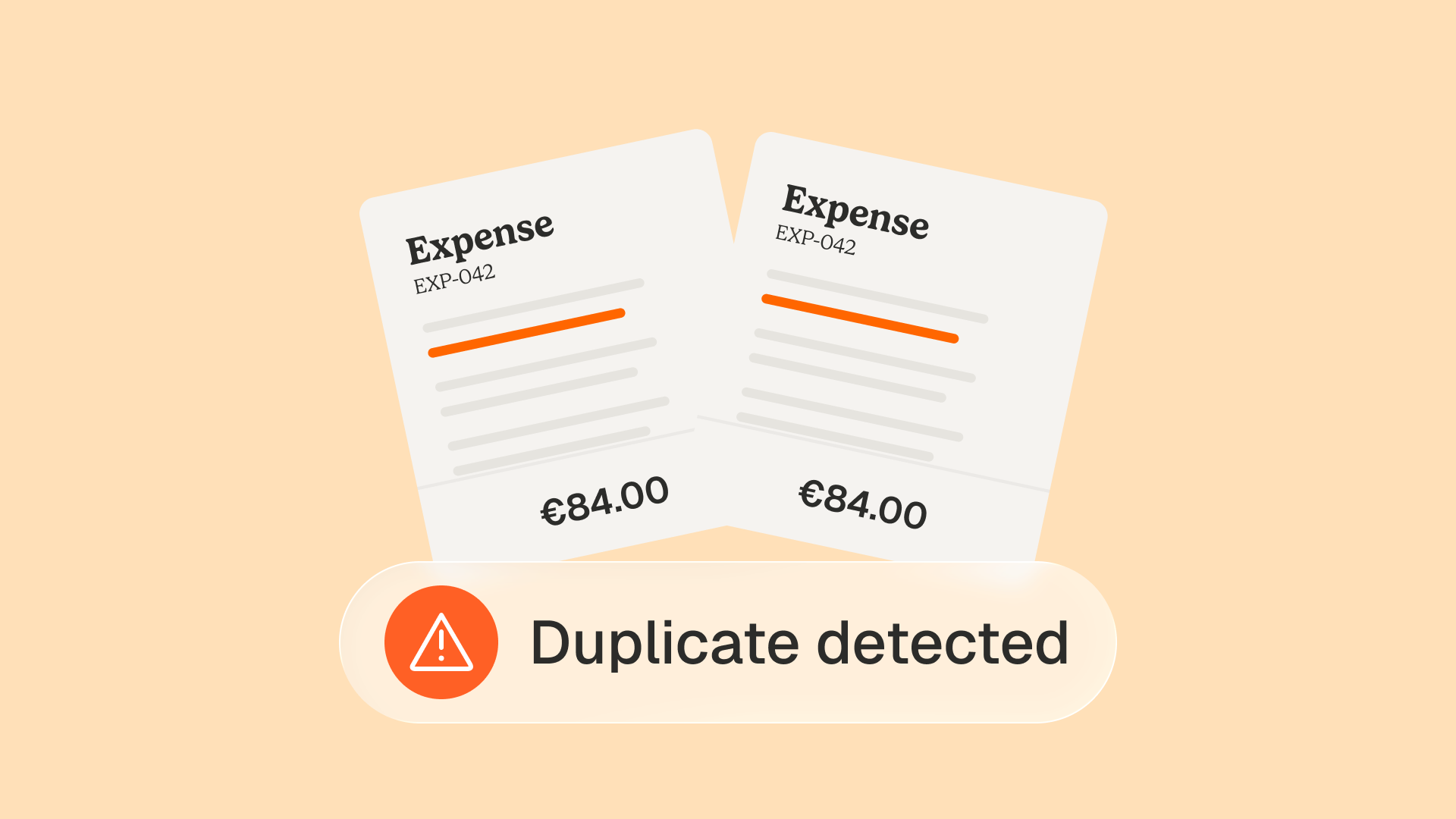
This structured data foundation directly impacts financial planning. Real-time reconciled cash positions enable precise working capital modeling, while automated anomaly detection flags payment delays or duplicate entries before they distort cash flow projections.
Enabling dynamic scenario modeling
Static annual budgets are obsolete in volatile markets. Automation unlocks continuous planning: finance teams can now simulate 20+ scenarios in the time once spent on a single model. What-if analyses for raw material price swings or regional demand shifts execute in minutes, not weeks.
A retail chain used this capability to assess pandemic-driven supply chain disruptions. By adjusting variables like shipping costs and inventory turnover rates in Phacet's platform, they identified optimal cost-allocation strategies 85% faster than with legacy tools.
This agility transforms finance from a reporting function to a strategic partner. Real-time data connectivity across sales, procurement, and operations systems allows CFOs to stress-test business resilience against macroeconomic shocks, regulatory changes, or competitive threats with mathematical rigor.
The measurable benefits of an automated financial planning process
From weeks to days: accelerating planning cycles
Manual financial planning drags on for weeks due to spreadsheet inefficiencies and fragmented data. Automated workflows compress timelines by integrating accounting systems and operational dashboards. A Fortune 500 bank automated invoice processing, cutting check-clearing time by 76%, from 7 minutes to 90 seconds. CFOs gain real-time rolling forecasts instead of static annual budgets, enabling agile responses to market shifts. Planning cycles that once took months now finalize in days, freeing teams for strategic analysis and scenario modeling.
Achieving higher accuracy and financial control
- Shorter planning cycles: reduce budget and forecast preparation time significantly.
- Enhanced data accuracy: eliminate manual errors for reliable financial statements.
- Improved scenario modeling: test multiple business scenarios quickly.
- Greater confidence in forecasts: base decisions on real-time data.
Human errors cause 60% of payment delays, but AI standardizes data extraction and reconciliation. One firm improved forecasting accuracy by 50% using AI to flag inconsistencies pre-reporting. Phacet’s AI agents convert unstructured data like invoices into audit-ready records. Automated systems cut reporting errors by up to 90%, while AI detects fraud with 87-94% accuracy, slashing false positives by 40-60%. For finance leaders, this means precise, auditable outcomes and fewer reporting surprises.
Automation empowers, rather than replaces, finance teams. By saving 200+ annual hours on manual tasks, teams focus on risk modeling and strategic planning. As CFOs evolve into proactive advisors, these tools transform financial planning into a dynamic, data-driven asset. A 30% faster planning cycle and 20-30% higher productivity position finance as a strategic partner in enterprise growth. With 66% of financial leaders seeing automation as augmentation, not replacement, teams gain capacity to drive insights while systems handle transactional work.
Beyond the numbers: automating documentation for compliance and audit
Standardizing internal reporting and governance
Traditional financial planning often leaves documentation as an afterthought. Manual processes lead to fragmented records, inconsistent assumptions, and delayed audits. For CFOs, this creates operational friction and compliance risks.
Automation changes this dynamic by embedding documentation into workflows. Phacet’s AI agents, for example, transform unstructured data, like invoices, payments, and reports, into structured, auditable formats. This ensures every financial assumption and scenario justification is automatically captured, standardized, et documenté.
Imagine a system that auto-generates variance analysis reports, complete with explanations for deviations from forecasts. This isn’hui just streamlines governance, it creates a single source of truth for decision-makers. Teams spend less time chasing documentation and more time on strategic analysis.
Streamlining audit trails and compliance
Automated workflows naturally produce audit-ready trails. Every data transformation, from source systems to final reports, is tracked in real-time. This eliminates the scramble to reconstruct narratives during audits.
- Automated variance analysis reports: generate reports explaining deviations from budget or forecast.
- Standardized scenario justifications: document the "why" behind planning assumptions.
- Audit-proof data trails: maintain a clear record of data transformation from source to report.
For finance teams, this means shorter audit cycles and higher confidence in regulatory filings. Phacet’s ability to standardize accounting data at scale ensures consistency across regions and entities. One global CFO reported a 42% reduction in audit preparation time after implementing such systems.
The strategic benefit? Compliance becomes a continuous process, not an annual stress test. Automation doesn't replace human expertise but amplifies it, freeing teams to focus on risk mitigation and strategic planning rather than data chases.
Making the shift to proactive financial leadership in 2026
From reactive reporting to proactive decision-making
Traditional financial planning struggles with spreadsheets, fragmented data, and manual processes. Manual consolidation forces 43% of finance teams to waste time reconciling figures, risking errors and missed opportunities.
AI-driven automation connects finance systems to operational dashboards. Phacet’s AI agents extract structured data from documents like invoices, enabling real-time scenario modeling. This cuts planning cycles by 76%, freeing teams for strategic analysis. Automated anomaly detection flags cash flow discrepancies early, preventing risks from escalating.
For CFOs, automation shifts focus from past performance to risk anticipation. By refining forecasts with auditable data, decisions gain precision. With 54% of CFOs prioritizing AI investments, automation becomes a competitive necessity. This enables faster scenario modeling aligned with evolving business needs.
Your next step toward intelligent financial planning
Automation augments, rather than replaces, finance teams. Real-time data orchestration boosts forecast confidence and market agility. Teams can simulate "what-if" scenarios rapidly, adapting to disruptions without compromising accuracy.
Phacet’s AI integrates transactions, payments, and reports into a unified financial narrative. This reduces errors, accelerates reporting, and enables dynamic scenario planning. By 2026, users of these workflows will outpace competitors on legacy systems with faster decision-making.
Finance leaders must act: Invest in automation to transform finance into a proactive growth engine. The future rewards those prioritizing precision, agility, and actionable insights, starting today.
Automation transforms financial planning from error-prone manual work into a strategic asset. Eliminating spreadsheet chaos, it gives CFOs real-time insights, faster cycles, and reliable data. This redefines finance’s role, from reactive historian to growth architect, enabling scenario modeling, risk prediction, and confident strategy. The future belongs to those who automate.
FAQ
How can AI transform my financial planning process?
AI transforms financial planning by automating data collection, pattern recognition, and predictive analysis. Modern solutions centralize financial workflows while learning from historical data to identify spending trends, forecast cash flows, and detect anomalies. This creates a reliable foundation for strategic decisions. For instance, AI-powered platforms automatically reconcile transactions across systems, standardize reporting formats, and generate variance analyses - tasks that traditionally consumed 60%+ of FP&A teams' time. The result? Analysts shift from spreadsheet maintenance to scenario modeling and strategic advisory.
Can ChatGPT create financial models?
While ChatGPT excels at natural language processing, financial modeling requires structured data integration and mathematical precision. LLMs shine when paired with dedicated financial platforms that provide auditable data pipelines. Think of ChatGPT as the "language layer" that makes complex models more accessible through conversational interfaces, while specialized tools handle number crunching. This combination enables intuitive what-if analysis and documentation generation without compromising calculation integrity.
Is AI suitable for personal finance management?
Absolutely - AI excels at personal finance through automated budgeting, spending insights, and goal tracking. Intelligent platforms categorize transactions in real-time, flag unusual patterns, and suggest optimization opportunities (e.g., subscription audits). The key advantage? Continuous monitoring that adapts to changing financial situations. Unlike static Excel templates, AI systems evolve with your financial journey, providing proactive alerts about potential cash flow gaps or investment opportunities.
What's required for full financial automation?
True automation demands three components: connected data sources, intelligent processing engines, and human oversight. Connect your banking apps, accounting software, and investment platforms to a central system. AI handles data validation and reconciliation while maintaining audit trails. Critical decisions still require human judgment, but now with enriched insights. Leading platforms achieve this through "AI agents" that specialize in specific financial tasks while maintaining system-wide coherence.
Latest Resources

Unlock your AI potential
Go further with your financial workflows — with AI built around your needs.


