Intelligent document processing for financial services
Published on :
February 9, 2026

Nicolas Marchais is co-founder and CEO of Phacet. After seven years at Spendesk, he built Phacet as the agentic layer that orchestrates across ERP, banking and email systems. Reliable, auditable, cross-system, what he calls a Finance Workforce.

The key takeaway: Intelligent Document Processing (IDP) transforms financial services by automating data extraction from unstructured documents using AI and ML. This technology streamlines workflows, cuts operational costs by up to 75%, and ensures compliance with regulations like GDPR. By achieving over 99% accuracy in loan processing, IDP not only accelerates decision-making but also enhances data security, positioning itself as a cornerstone for future-ready financial automation.
Manual data entry in financial services is error-prone, time-consuming, and costly, can your team afford to keep up? Intelligent document processing (IDP) redefines efficiency by automating extraction, classification, and validation of financial data using AI and machine learning, turning paper chaos into structured, actionable insights. Imagine slashing invoice processing times by 75% while achieving 99%+ accuracy, or accelerating client onboarding by automating KYC checks, IDP makes this possible. By replacing manual workflows with scalable automation, it future-proofs compliance, reduces operational costs, and transforms document-heavy tasks like mortgage approvals or expense reporting into seamless, audit-ready processes. Ready to unlock smarter, faster financial operations?
- Definition of Intelligent Document Processing (IDP) in financial services
- How IDP transforms financial documents
- Tangible benefits of intelligent document processing for finance teams
- Specific use cases of IDP in financial operations
- IDP, regulatory compliance and financial data security
- The future of IDP: towards smarter finance
Definition of Intelligent Document Processing (IDP) in financial services
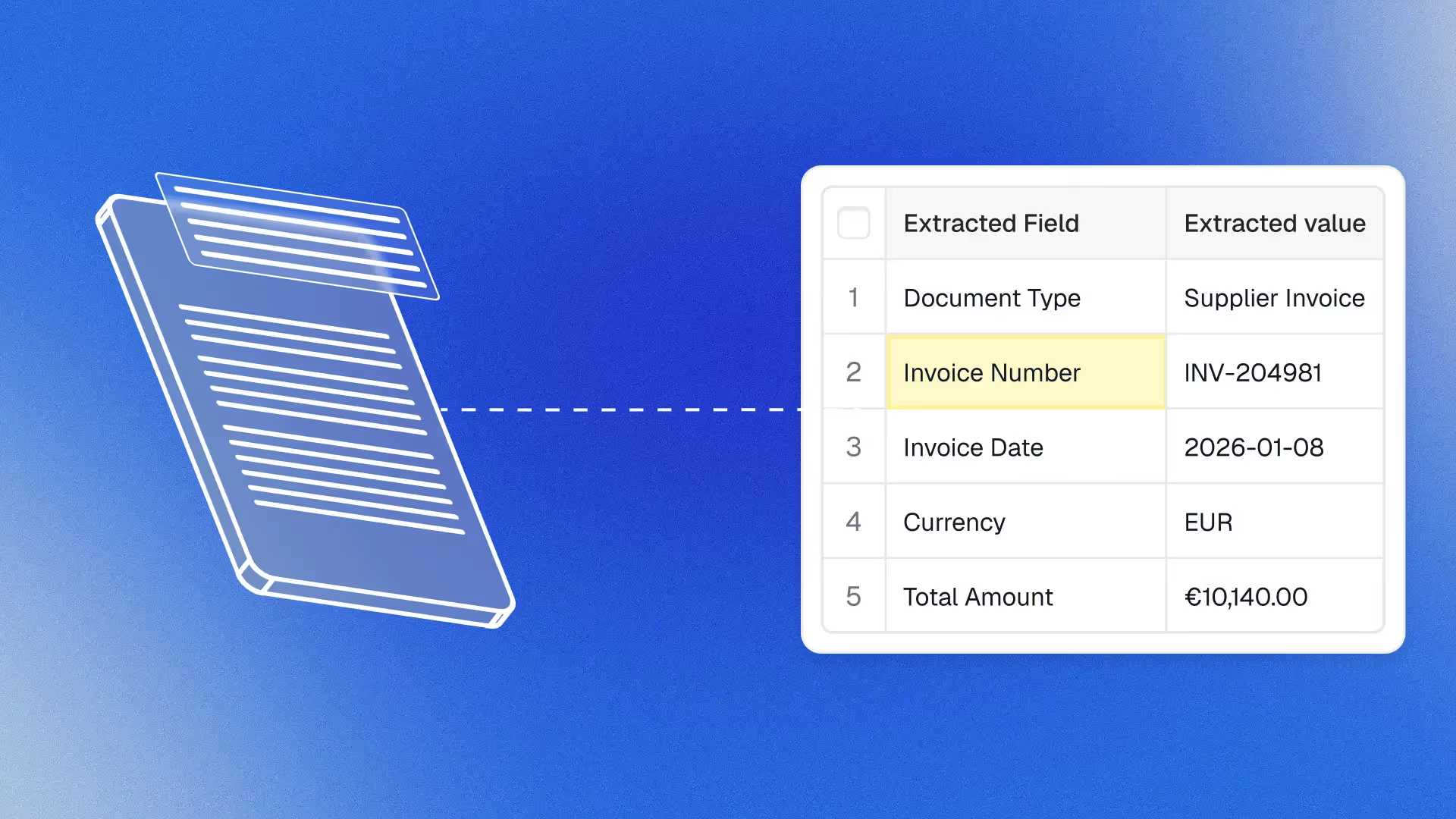
IDP automates data extraction, classification, and validation from financial documents like invoices and contracts. Unlike basic OCR, it combines AI, machine learning (ML), and NLP to convert unstructured data into structured insights, integrating directly with ERP systems to minimize manual work and errors.
Beyond OCR: transforming unstructured data
While OCR converts text images into machine-readable data, IDP adds contextual understanding. For instance, Phacet’s AI agents extract multi-currency amounts from invoices and map them to GL codes automatically, enabling seamless ERP updates without human input.
Technological foundations of financial IDP
IDP integrates AI, ML, and NLP. AI identifies document types, while ML improves accuracy by learning from corrections, like resolving invoice mismatches. NLP interprets contract clauses, flagging anomalies for review. Together, they ensure >98% accuracy across diverse formats.
AI agents in financial operations
Phacet’s AI agents automate document workflows while ensuring compliance. In accounts payable, they extract vendor details, cross-check against orders, and flag exceptions. GDPR compliance is embedded: every data point is traceable, with audit logs documenting validation details.
- IDP adds semantic understanding to OCR output
- Uses AI/ML for self-correction (e.g., fixing decimal errors)
- Converts data into actionable formats for risk analysis
How IDP transforms financial documents
From capture to intelligent classification
Intelligent Document Processing (IDP) digitizes physical or digital financial documents like invoices and contracts. AI algorithms automatically categorize them, eliminating manual sorting. Phacet’s AI agents adapt to diverse formats, reducing misclassification errors while identifying critical data points, such as invoice numbers, to direct documents into precise workflows. This ensures regulatory compliance by aligning document types with predefined templates tied to financial standards like IFRS or GAAP.
Data extraction and validation
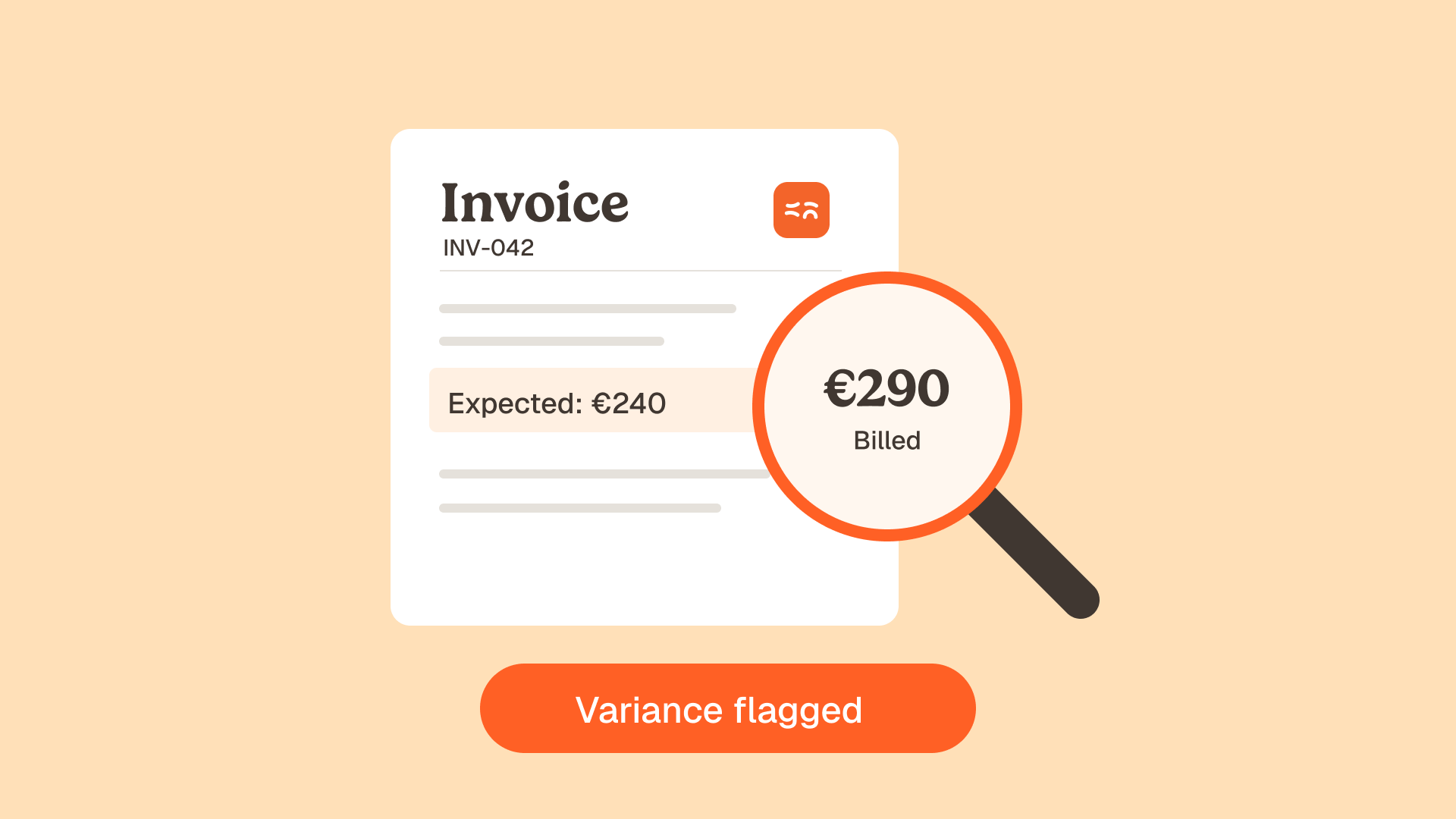
AI-powered OCR and NLP extract key financial data from complex formats. Unlike basic OCR, these tools contextualize dates, amounts, and terms for accuracy, even in multilingual or handwritten documents. Extracted data is cross-referenced with databases or rulesets, for example, mismatched invoice totals trigger reviews, ensuring compliance and traceability for audits. Phacet’s system flags anomalies in real-time, such as duplicate payments or mismatched purchase order numbers, preventing costly errors.
Integration and continuous learning
Validated data flows directly into ERPs, CRMs, or accounting systems, automating tasks like accounts payable. Phacet’s AI achieves up to 90% straight-through processing, freeing teams for strategic work. Machine learning adapts to evolving document layouts, preserving accuracy as formats change, no manual reprogramming required. For instance, a new supplier invoice template is automatically learned and validated. Discover how Phacet’s AI platform for finance teams centralizes document workflows while ensuring compliance, human oversight, and GDPR-aligned data management.
Tangible benefits of intelligent document processing for finance teams
Accelerated processes and cost reduction
IDP automates data extraction and validation, slashing processing times by up to 70% for invoices, loans, and compliance workflows. This cuts labor costs and minimizes errors delaying decisions. Mid-sized banks using IDP for client onboarding reduced time by 70%, freeing teams for strategic tasks without compromising compliance. For instance, invoice reconciliation workflows now operate 90% faster, enabling early payment discounts and reducing manual verification bottlenecks.
Precision and scalability
AI-driven IDP achieves 98%+ accuracy in financial data extraction, outperforming manual methods. Machine learning adapts to document variations, maintaining quality during peak volumes like quarter-end reconciliations. A Spanish bank automated 75% of loan applications with 99% precision, avoiding bottlenecks during surges. Phacet’s AI agents ensure full auditability, tracing every data point to its source for regulatory compliance.
Enhanced customer satisfaction and employee experience
Automated KYC workflows validate documents in seconds, accelerating client onboarding and payment processing. Internally, IDP reduces burnout: 99% of finance professionals report exhaustion from repetitive tasks. Automation saves hundreds of hours annually, enabling teams to focus on high-value analysis. Faster turnaround times also improve client retention, as 82% of businesses cite quicker service delivery as a key satisfaction driver.
- 98%+ accuracy in financial document processing
- 70% faster client onboarding
- 75% automation in loan applications
Specific use cases of IDP in financial operations
Invoice management and payment reconciliation
IDP automates extraction of key data from supplier invoices, like dates, amounts, and vendor details, integrating directly into ERP systems to streamline workflows. Phacet’s AI agents automate 3-way matching, validating purchase orders, delivery confirmations, and invoices, to ensure compliance before payments, achieving over 98% accuracy. 3-way matching automation for finance teams reduces discrepancies and speeds up audit-ready processing, cutting manual review time by up to 70%.
Client Onboarding (KYC)
IDP extracts and validates client data from IDs, bank statements, and pay slips, flagging inconsistencies in real time. Phacet’s solution uses OCR and machine learning to classify documents, ensuring AML/KYC compliance while freeing teams for strategic tasks instead of manual entry. This reduces onboarding time from days to hours, with automated checks against government databases ensuring document authenticity.
Loan and mortgage request processing
Phacet’s AI agents extract and validate income statements, tax returns, and IDs for loan files, achieving 75% automation and over 99% accuracy. This slashes approval times: a Spanish institution processed 20 million loan pages with minimal human intervention, ensuring compliance and faster funding. Automated validation also cuts operational costs by reducing manual data entry errors.
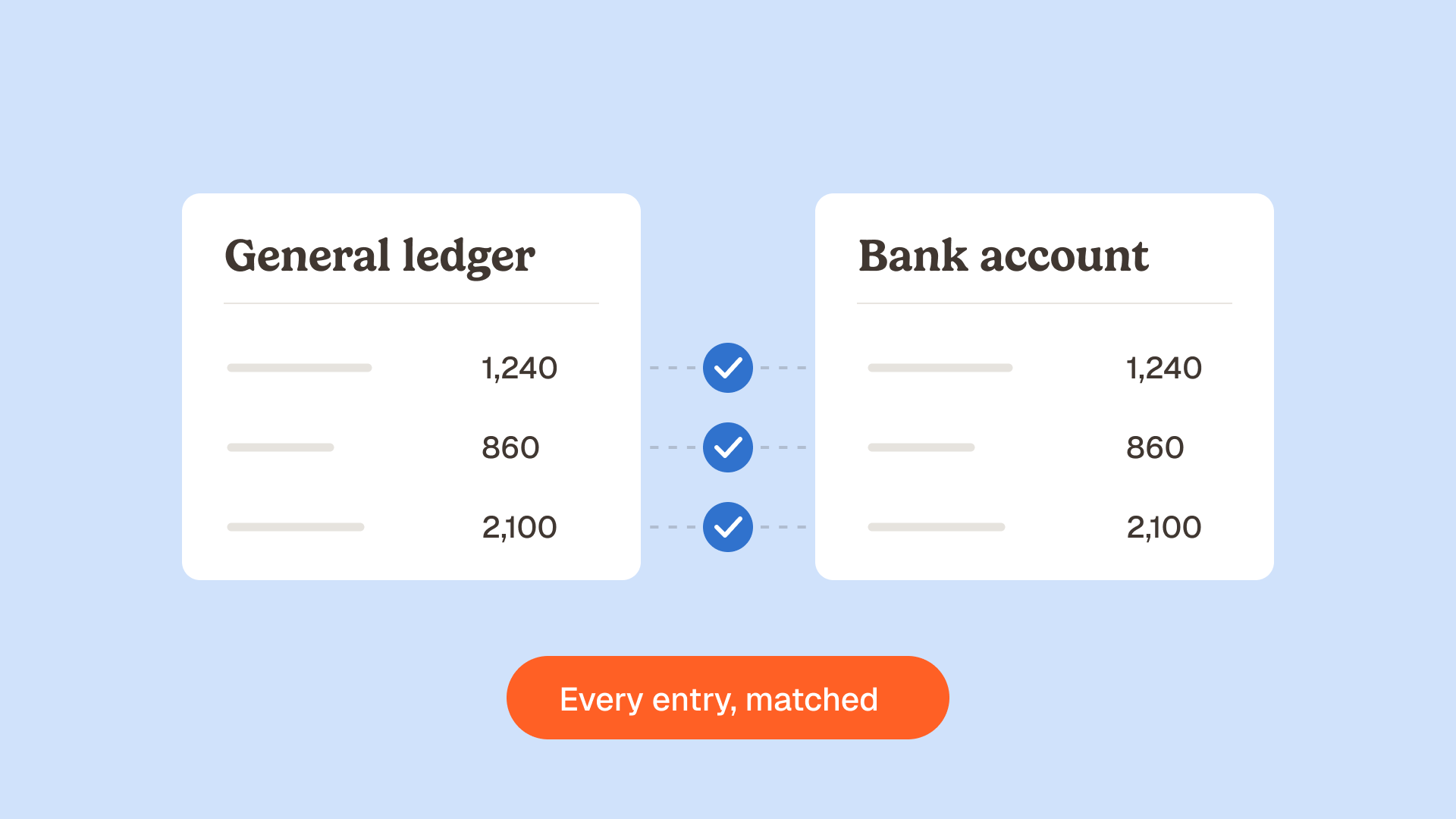
Bank reconciliation and cash flow management
IDP automates tagging of cash movements, providing real-time visibility into balances while reducing manual effort by 90%. Phacet’s AI agents feed data into dashboards for precise liquidity tracking, enabling proactive treasury decisions. For example, daily cash flow reports are generated in minutes, improving short-term financial planning accuracy.
- Supplier invoice automation achieves high straight-through processing rates.
- Accelerates client onboarding and KYC verifications.
- Simplifies loan applications with automated data validation.
IDP, regulatory compliance and financial data security
Navigating regulatory complexity with IDP
Financial institutions face relentless regulatory demands like KYC, AML, and GDPR. IDP automates compliance tasks by extracting and structuring critical data from documents, reducing human errors by over 98% accuracy rates. This precision ensures audit trails are ready for inspections, minimizing risks of non-compliance penalties. Phacet’s AI agents streamline these workflows while maintaining human oversight for critical decisions.
Auditability and data traceability
Every IDP action, data extraction, validation, classification, is logged in immutable audit trails. These trails simplify regulatory reporting by providing timestamped records of document origins, transformations, and access points. For instance, Phacet’s system traces invoice fields back to source documents, ensuring auditors can verify data lineage. This transparency cuts audit preparation time by up to 40% compared to manual methods.
Data security and risk mitigation
IDP secures sensitive data through granular access controls and dynamic masking. For example, Phacet’s platform anonymizes personally identifiable information (PII) in real-time, adhering to GDPR. Techniques like substitution and encryption protect data in testing environments while maintaining usability. These features reduce breach risks, critical in a sector where violations cost an average $6.08M per incident. By automating compliance checks, IDP proactively flags anomalies, preventing regulatory fines and reputational damage.
The future of IDP: towards smarter finance
Continuous evolution and improved capabilities
IDP goes beyond traditional OCR solutions by integrating AI and machine learning for a contextual understanding of documents. Phacet's AI agents learn to improve accuracy and adapt to contract or invoice formats. This evolution provides integrated predictive analytics and increased customization to meet financial needs.
Strategic integration for complete automation
IDP integrates with systems such as ERP, CRM, and RPA. This synergy creates automated workflows for financial processes, while ensuring the traceability necessary for regulatory compliance. Humans remain involved in supervision, ensuring rigor and flexibility.
Empowering finance teams
IDP transforms finance roles by automating data collection. Teams focus on strategic analysis. Benefits include:
- IDP is the foundation of AI-driven financial automation.
- It enables teams to gain speed and intelligence.
It paves the way for predictive analytics and better decision-making.
Intelligent Document Processing (IDP) transforms financial workflows by converting unstructured data into insights using AI, ML, and NLP. Automating tasks like invoice processing and KYC compliance, it boosts efficiency, accuracy, and regulatory alignment. With predictive analytics and ERP/CRM integration, IDP empowers teams to prioritize strategy, enabling faster, secure, and scalable operations that adapt to evolving regulations.
FAQ
What is intelligent document processing in financial services?
Intelligent Document Processing (IDP) in financial services automates extracting, interpreting, and organizing data from documents like invoices, contracts, and KYC forms. By combining AI, machine learning (ML), and natural language processing (NLP), IDP transforms unstructured data (e.g., PDFs, handwritten forms) into structured, actionable insights. This streamlines workflows, reduces manual errors, and integrates directly with ERP or accounting systems. As one finance leader explains, "IDP centralizes and automates what used to take days, now it’s done with an immediate impact."
What is the intelligent document processing?
IDP goes beyond basic OCR (Optical Character Recognition) by adding context and understanding to document data. It uses AI and ML to classify documents, extract key details (names, dates, amounts), and validate them against existing records. For example, a bank might use IDP to process thousands of loan applications daily, ensuring compliance while slashing processing time. Unlike simple digitization tools, IDP learns from each document, improving accuracy over time, making it a core part of digital transformation in finance.
How is AI being used in financial services?
AI reshapes finance by automating fraud detection, risk assessment, and customer service. For example, AI identifies transaction anomalies to flag fraud or analyzes market trends for investment strategies. In IDP, AI reads and validates documents like loan applications, achieving over 98% accuracy. One bank used AI-powered IDP to automate 75% of its loan approvals, reducing processing time by 90%. By centralizing data and minimizing errors, AI drives efficiency far "beyond productivity."
What is the main purpose of IPA?
Intelligent Process Automation (IPA) combines RPA (Robotic Process Automation) with AI to automate end-to-end workflows. Its purpose is to handle complex, judgment-based tasks, like auditing a contract or approving a loan, that traditional RPA alone can’t manage. In banks, IPA and IDP work together: IDP extracts data from documents, while IPA routes it to the right system or team. This partnership "drastically reduces" processing time while maintaining compliance.
What are the use cases of intelligent document processing?
IDP shines in finance for:
- Invoice processing: automating expense management by extracting line items, amounts, and vendor details.
- KYC onboarding: validating client identities and documents in seconds, not days.
- Loan applications: handling 100+ page dossiers with 99%+ accuracy, as seen in Spanish banks.
- Bank Reconciliation: tagging cash flows for real-time treasury insights.
These use cases slash operational costs, reduce errors, and free teams to focus on strategy, proving IDP is "more than automation; it’s a competitive edge."
Latest Resources
Unlock your AI potential
Go further with your financial workflows — with AI built around your needs.