AI-powered procurement: real-time control & visibility
Published on :
February 16, 2026

Nicolas Marchais is co-founder and CEO of Phacet. After seven years at Spendesk, he built Phacet as the agentic layer that orchestrates across ERP, banking and email systems. Reliable, auditable, cross-system, what he calls a Finance Workforce.

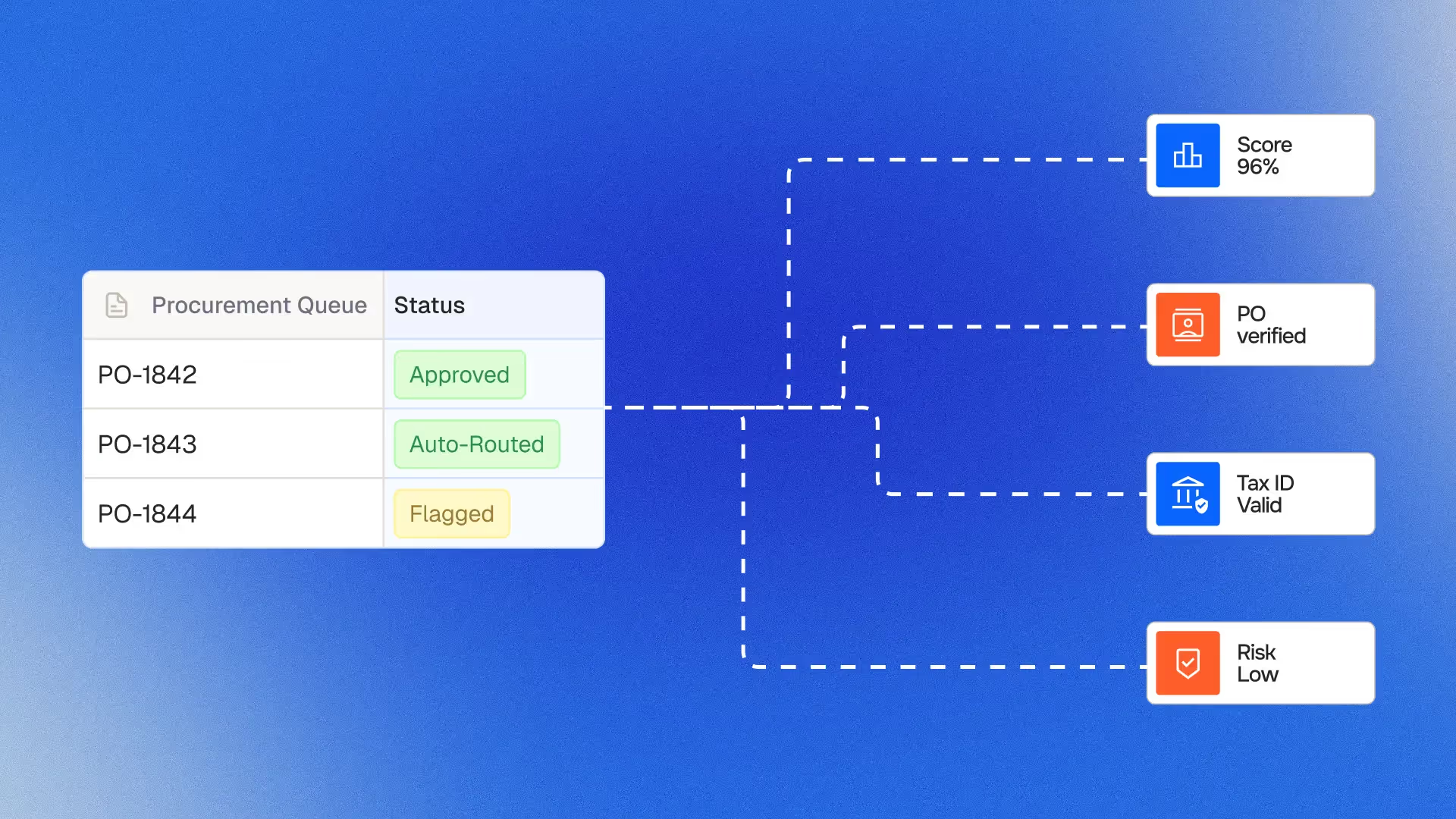
Key takeaway: procurement automation leverages AI agents to centralize and automate the entire procure-to-pay process, turning it into a strategic asset. It delivers real-time visibility, drastically reduces errors, and ensures strict compliance. With invoice processing cut from days to minutes, businesses gain immediate financial control and operational efficiency for smarter decisions.
Procurement automation solves manual purchasing headaches, endless data entry, costly invoice errors, and lack of real-time visibility into spending across departments. Finance leaders spend countless hours on manual paperwork, missing opportunities to negotiate better deals or identify risks early. Procurement automation centralizes all purchasing data, automates the entire procure-to-pay cycle with precise 3-way matching, and leverages AI for real-time compliance checks and fraud detection. It slashes processing time by over 80%, reduces costs by up to 25% through error elimination, and strengthens supplier relationships via transparent communication. This strategic shift frees teams from repetitive tasks, enabling focus on high-value work and turning procurement into a profit center with immediate results.
- What is procurement automation?
- The immediate impact of procurement automation on your operations
- Which procurement processes should you automate first?
- How AI agents are transforming procurement
- A practical roadmap to implementing procurement automation
- Get started on your procurement automation journey
What is procurement automation?
Procurement automation uses AI to centralize and streamline the entire procure-to-pay cycle from requisition to payment. It replaces manual tasks like invoice entry, purchase approvals, and supplier onboarding with intelligent workflows that minimize human error. This reduces processing errors by up to 90% and speeds up purchase order processing by 90%. Finance teams gain real-time visibility into all spending data, ensuring accurate budgeting and forecasting. Centralized data eliminates compliance gaps and improves transparency across operations. Manual demand processing is reduced by 25-35% within the first month of implementation. This shift turns procurement from a cost center into a strategic asset. Process standardization ensures consistent execution across all departments, driving operational excellence.
CFOs benefit from automated supplier validation that checks compliance and financial health instantly, reducing risk exposure. With 65% of procurement staff time previously spent on manual work, teams now focus on strategic negotiations and data analysis. Real-time spend analytics prevent budget overruns and uncover hidden savings opportunities across departments. Automated three-way matching of purchase orders, receipts, and invoices cuts payment delays by 30% with 99% accuracy. This enhances cash flow management and strengthens governance across all operations. The result is a more agile, cost-efficient operation driven by data-driven decisions and proactive risk mitigation. Supplier performance is monitored continuously, ensuring reliable partnerships. AI-driven insights optimize purchasing decisions for maximum cost savings. Compliance with regulations is maintained effortlessly through automated checks. This creates a foundation for sustainable growth and long-term financial health.
The immediate impact of procurement automation on your operations
Drastically reduce costs and eliminate errors
Manual invoice processing frequently causes errors like duplicate payments or overbilling. AI systems automatically compare invoices against approved price lists and contracts, identifying discrepancies instantly. This real-time validation prevents costly mistakes before they happen.
By eliminating manual data entry, companies reduce payment errors by up to 90%. Automated systems flag anomalies such as duplicate invoices or price deviations, ensuring only accurate transactions are processed. This precision directly protects profit margins.
The Hackett Group's study showed automation reduces invoice processing costs from $107 to $32 per document. Combined with 20-30% lower fraud, this delivers a 10.7x ROI for top-performing companies.
Gain real-time visibility and strengthen governance
Procurement automation centralizes all spending data into a single source of truth. Finance leaders access real-time dashboards showing supplier performance, contract compliance, and expenditure trends. Fragmented data from multiple systems is eliminated.
Every transaction follows predefined policies with immutable audit trails. This ensures unwavering compliance and tight governance across all procurement activities. With real-time monitoring, any policy violations are flagged immediately for review, reducing compliance risks.
Real-time visibility empowers proactive decision-making. For instance, identifying underutilized contracts or supplier risks early allows for timely negotiations. This transparency enhances financial control and supports strategic planning.
Accelerate the entire procurement cycle
Manual PO approvals and invoice matching took days. Automation reduces these steps to minutes, eliminating administrative bottlenecks instantly. For instance, 3-way matching of purchase orders, receipts, and invoices happens automatically, speeding up the entire process.
Faster payments improve supplier relationships while freeing internal teams to focus on strategic tasks. Teams no longer waste time on manual reconciliation, allowing them to optimize supplier contracts and negotiate better terms.
The accelerated cycle time delivers measurable efficiency gains. Companies see 50% faster invoice processing and 30% quicker PO approvals, directly improving operational agility and cash flow. This speed ensures timely supplier payments and reduces administrative overhead.
Which procurement processes should you automate first?
Automating supplier invoice and payment processing
Automating supplier invoice and payment processing streamlines the entire invoice lifecycle. AI extracts data from PDFs, emails, and other formats, eliminating manual entry errors. This ensures accurate data capture from the start. The system then performs automated 3-way matching, comparing purchase orders, delivery receipts, and invoices to verify consistency before payment. Automated 3-way matching prevents costly mistakes, overpayments, and delays. Finance teams save hours weekly while ensuring timely supplier payments.
Manual invoice processing often leads to duplicate payments or missed discounts. Automated validation catches discrepancies immediately, reducing disputes and correcting errors in real time. With real-time tracking, cash flow management improves significantly. Suppliers receive payments on schedule, strengthening partnerships.
P2P platforms improve visibility and expense management by up to 60%, enabling better control over spending. Automated processing reduces average invoice costs and reconciliation time. Finance teams shift focus from data entry to strategic initiatives like supplier negotiations and risk management, enhancing overall ROI.
Centralizing supplier management and compliance
Centralizing supplier management and compliance ensures all vendor data is stored securely in one platform. Contracts, certifications, and performance metrics are tracked automatically. Real-time alerts flag compliance issues before they escalate, minimizing risks. This proactive approach maintains regulatory adherence and reduces audit complexities.
Automated supplier compliance monitoring continuously checks against internal policies and external regulations. Any deviations trigger immediate alerts, allowing quick corrective actions. This reduces the risk of penalties and strengthens governance. Finance leaders gain complete visibility into supplier risks and performance.
This centralized approach eliminates data silos and ensures a single source of truth. It simplifies supplier onboarding and performance evaluations. Teams can quickly identify high-risk vendors and take preventive measures. Overall, it enhances procurement transparency and control, driving better financial outcomes.
- Purchase Requisition & Order Generation: automating the creation and approval of purchase requests and generating digital purchase orders.
- Invoice Management & Payment: automating data extraction, validation (including three-way matching), and payment processing.
- Supplier Onboarding & Data Management: centralizing supplier information, automating validation checks, and monitoring performance.
- Contract Lifecycle Management: tracking contract renewals, terms, and compliance automatically.
- Spend Analysis & Reporting: generating real-time reports on spending patterns to identify savings opportunities.
How AI agents are transforming procurement?
From basic automation to intelligent decision-making
RPA handles simple tasks like data entry from spreadsheets. AI agents process unstructured data such as PDF invoices and vendor emails, detecting price anomalies by comparing current invoices against historical spending. They identify duplicate invoices by matching vendor and amount data, preventing overpayments.
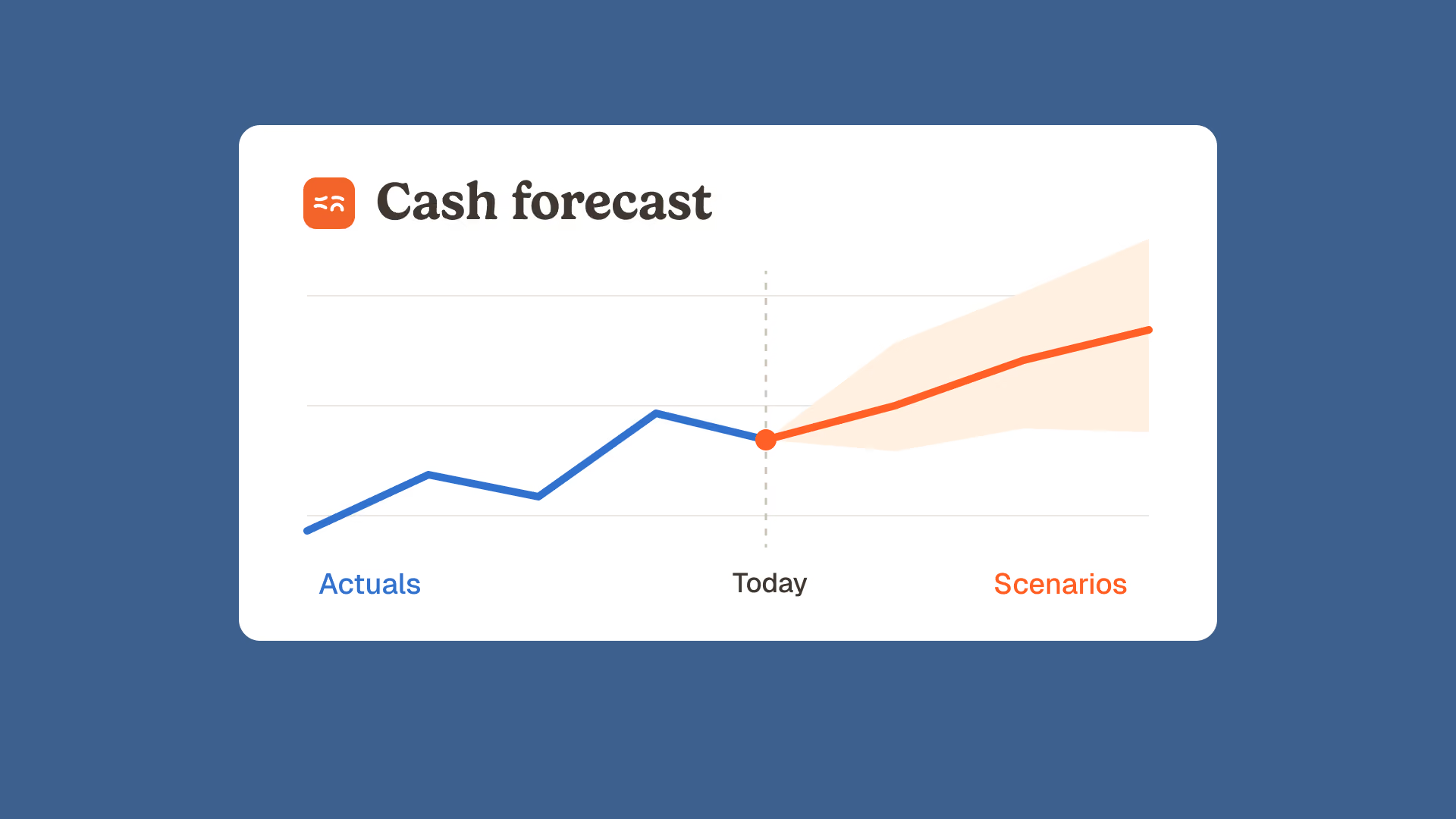
AI agents analyze contract terms, predict payment delays, optimize purchase orders based on real-time inventory, and forecast cash flow needs. These capabilities transform procurement into strategic decision-making, enabling CFOs to prioritize high-impact purchases and optimize cash flow.
Ensuring compliance and mitigating risk with AI
AI continuously scans transactions for fraud while monitoring regulatory changes. It assesses supplier risk using real-time financial data, geopolitical news, and ESG compliance metrics. This proactive approach prevents costly disruptions before they impact operations.
When a supplier’s credit score drops, AI cross-references payment histories and news events to flag high-risk vendors. Procurement teams receive alerts to switch suppliers or renegotiate terms, avoiding delays. CFOs gain immediate visibility into financial exposure for quick budget adjustments.
Real-time dashboards display supplier performance metrics like delivery timeliness and defect rates. Finance managers use this data to negotiate better terms, reduce waste, and strengthen partnerships. Automated compliance checks ensure adherence to regulations and internal policies.
- Transactional Automation (RPA): automates invoice data entry and PO-receipt matching, eliminating errors and speeding up payments.
- Cognitive Automation (AI/ML): processes contracts, emails, and invoices to uncover risks, pricing issues, and savings opportunities.
- Decision-Making Automation: routes high-risk issues to finance managers and resolves low-severity ones automatically, ensuring compliance without delays.
A practical roadmap to implementing procurement automation
Identifying quick wins: where to start
Start by mapping your existing procurement workflows to pinpoint inefficiencies. Focus on high-volume, error-prone tasks like supplier invoice processing. Calculate opportunity score to prioritize quick wins. These initial improvements build momentum for larger-scale transformation.
Automating invoice validation can reduce processing time by 50% and cut errors by 45%. Immediate gains demonstrate tangible ROI with minimal effort. Finance teams gain confidence in automation, expanding to PO approvals or supplier onboarding.
High-volume processes with frequent manual errors are ideal starting points. They prove automation's value early, ensuring smooth transition to complex automations.
By targeting specific pain points first, you avoid overwhelming your team. Quick wins create a positive feedback loop, increasing buy-in for future automation initiatives. This strategic start sets the stage for success and drives long-term organizational change.
Empowering your team, not replacing It
Automation elevates staff roles instead of replacing them. Teams shift from repetitive tasks to strategic work like supplier negotiations and spend analysis. This transformation goes beyond productivity to drive real business value. It’s about enhancing human capabilities, not removing them from the equation.
By centralizing and automating routine work, finance teams gain real-time visibility into spending data. They can focus on high-value activities that drive growth and cost savings, enabling smarter decisions and strategic partnership.
Addressing team concerns is critical for successful adoption. Position automation as a tool that enhances capabilities rather than replacing jobs. This mindset shift ensures smoother implementation and higher engagement across the finance and procurement teams.
Finance leaders should emphasize that automation complements human expertise. This collaboration leads to better decision-making and stronger supplier relationships, boosting financial health.
- Discovery: map workflows and select a high-impact process like invoice validation.
- Pilot: test with a small group to identify friction points and gather feedback.
- Deployment: roll out with clear training and documentation for wider adoption.
- Feedback & Optimization: continuously refine the process based on user input.
Get started on your procurement automation journey
AI-powered procurement automation transforms supplier validation, compliance monitoring, and purchasing decisions. ZeroCater reduced Amazon invoices from 200 to 4 monthly. Cozen O’Connor saved 10% through data-driven sourcing. McKinsey reports up to 40% faster procurement cycles with AI and RPA. Real-time analytics ensure supplier reliability and regulatory compliance.
CFOs gain immediate visibility into spending patterns and risks, reducing errors and strengthening governance across the organization. This strategic shift turns procurement from a cost center into a competitive advantage, driving sustainable growth and operational excellence.
Phacet’s AI agents centralize procurement operations, delivering instant control for finance leaders. Our platform monitors spending in real-time, flags anomalies, and optimizes purchasing decisions automatically. Automated governance reduces maverick spend and prevents costly errors.
Book a demo with Phacet to see how our solutions drive ROI through intelligent automation. Experience the transformation today and turn procurement into a competitive edge for your business, ensuring long-term financial health and efficiency.
Procurement automation is no longer optional, it's a strategic imperative for financial control, operational agility, and compliance. By transforming manual processes into intelligent workflows, businesses gain real-time visibility and drive efficiency. Ready to elevate your procurement strategy? Book a demo with Phacet to see AI agents in action and unlock immediate value.
FAQ
What exactly is procurement automation, and how does it transform business processes?
Procurement automation uses smart technology to streamline your entire purchasing workflow, from initial requests to final payments. As a finance director shared, "It's not just about cutting manual work, it's about gaining real-time visibility into every dollar spent." This shift turns procurement from a back-office task into a strategic function, where teams focus on high-impact activities like supplier negotiations and data analysis instead of paperwork.
By automating repetitive tasks, companies see immediate reductions in errors and processing times. For instance, automated three-way matching ensures invoices are validated against purchase orders and delivery notes, preventing costly mistakes. This isn't just efficiency, it's a transformation that empowers your team to drive better business outcomes.
What are the four main types of procurement?
The four primary procurement types are direct, indirect, capital, and MRO (Maintenance, Repair, and Operations). Direct procurement covers raw materials used in production, while indirect handles everyday supplies like office equipment. Capital procurement involves high-value assets such as machinery, and MRO focuses on tools and parts needed to keep operations running smoothly.
Understanding these types helps organizations prioritize automation efforts. For example, automating MRO procurement ensures critical maintenance tasks never stall production, while direct procurement automation can secure better pricing through strategic supplier partnerships.
What are the four types of automation used in procurement?
Procurement automation spans four key categories: robotic process automation (RPA) for rule-based tasks like data entry, cognitive automation for handling unstructured data like PDF invoices, intelligent automation for decision-making (e.g., flagging compliance issues), and hyperautomation, which integrates all these technologies for end-to-end process control.
As one operations manager explained, "RPA handles the grunt work, but intelligent automation actually thinks, it spots anomalies in supplier pricing or predicts delivery delays before they happen." This layered approach ensures workflows adapt to real-time challenges while maintaining accuracy and speed.
What are the four key stages of implementing process automation?
Implementing procurement automation follows four clear stages: discovery (mapping current workflows to identify pain points), pilot (testing solutions with a small team), deployment (rolling out to the wider organization), and feedback & optimization (refining based on user input). This phased approach minimizes disruption while building momentum.
"Start small to prove value," advises a procurement leader. "A pilot for invoice processing might take weeks, but once you see 70% fewer errors, the rest of the team gets excited. The real magic happens when you keep listening and improving." This iterative mindset ensures automation evolves with your business needs.
Latest Resources
Unlock your AI potential
Go further with your financial workflows — with AI built around your needs.